
Carausius’ Rebellion and the Creation of the …
Years: 287 - 287
Carausius’ Rebellion and the Creation of the Britannic Empire (286 CE)
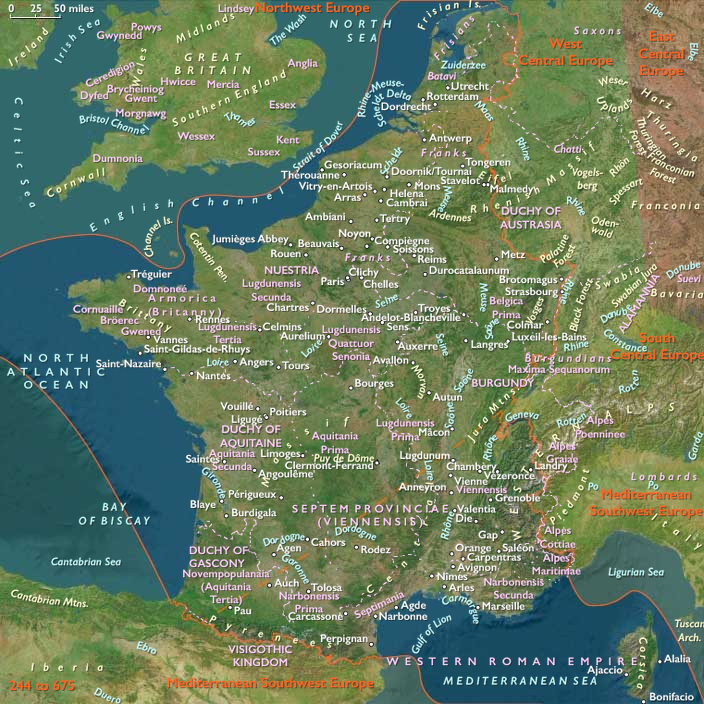
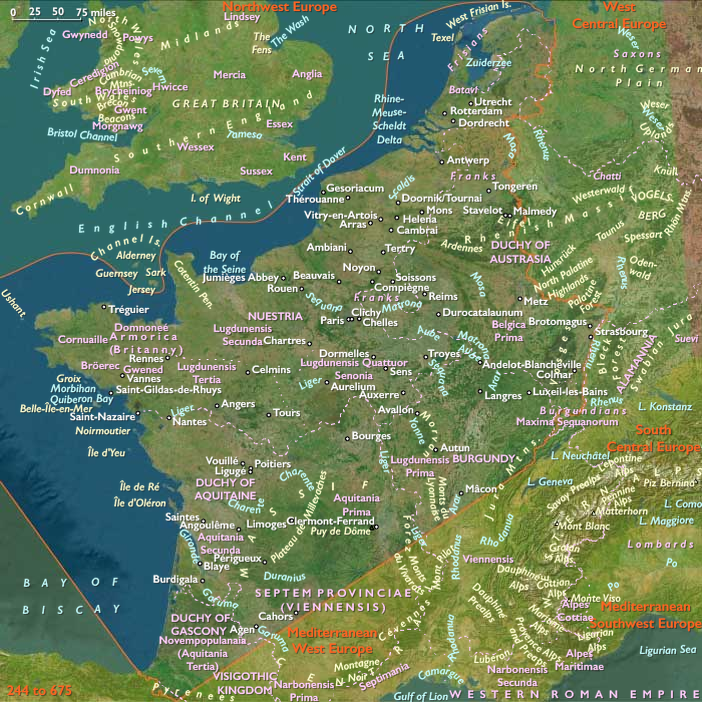
After being entrusted by Emperor Maximian with the command of the Roman fleet at Gesoriacum (Boulogne) to combat Saxon and Frankish pirates, Mausaeus Carausius was soon accused of corruption. His alleged crime was:
- Allowing pirates to raid Roman territories first, then attacking them afterward and seizing their stolen cargoes for himself rather than returning them to the imperial treasury.
Maximian’s Response and Carausius’ Escape to Britain
- Furious at this betrayal, Maximian ordered the execution of Carausius.
- Before he could be arrested, Carausius fled with his loyal troops to Britain in 286 CE.
- Once in Britain, he declared himself ruler, taking the imperial title of Augustus, effectively seceding from the Roman Empire and forming an independent state, later known as the Britannic Empire.
The Britannic Empire: A Breakaway Roman State
- Carausius established a power base in Britain, securing support from British legions, local elites, and even some northern Gallic territories.
- He minted his own coins, emphasizing his legitimacy with the phrase "Restorer of Britain" (Restitutor Britanniae).
- His control over naval forces allowed him to dominate the English Channel, making any Roman attempt to retake Britain difficult.
Significance of Carausius’ Revolt
- His rebellion exposed the weaknesses of Roman control over Britain and the northern provinces.
- The Franks and Saxons continued their raids, taking advantage of Rome’s internal instability.
- His rule set a precedent for future breakaway states in the Western Roman Empire, showing that provincial military leaders could defy central authority and establish their own rule.
Though Carausius would eventually be assassinated by his own finance minister, Allectus, in 293 CE, his secession from Rome marked a major turning point in the empire’s struggle to maintain control over its far-flung provinces.
Locations
People
Groups
Topics
Commodoties
Subjects
Regions
Subregions
Related Events
Showing 10 events out of 60125 total
Years: 287 - 287
Locations
People
Groups
Topics
Commodoties
Subjects
Regions
Subregions