
Filters:
Carausius’ Naval Dominance and Expansion into Gaul …
Years: 288 - 288
Carausius’ Naval Dominance and Expansion into Gaul (286–293 CE)
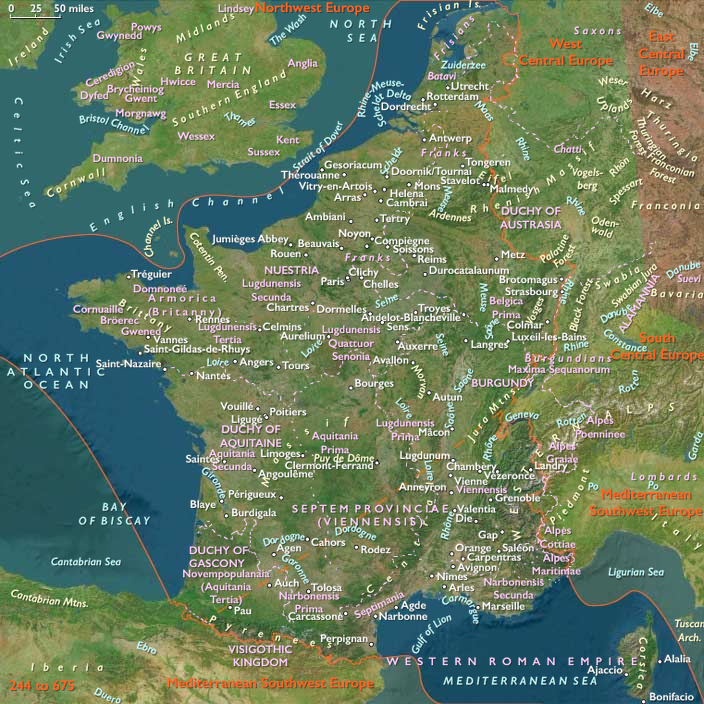
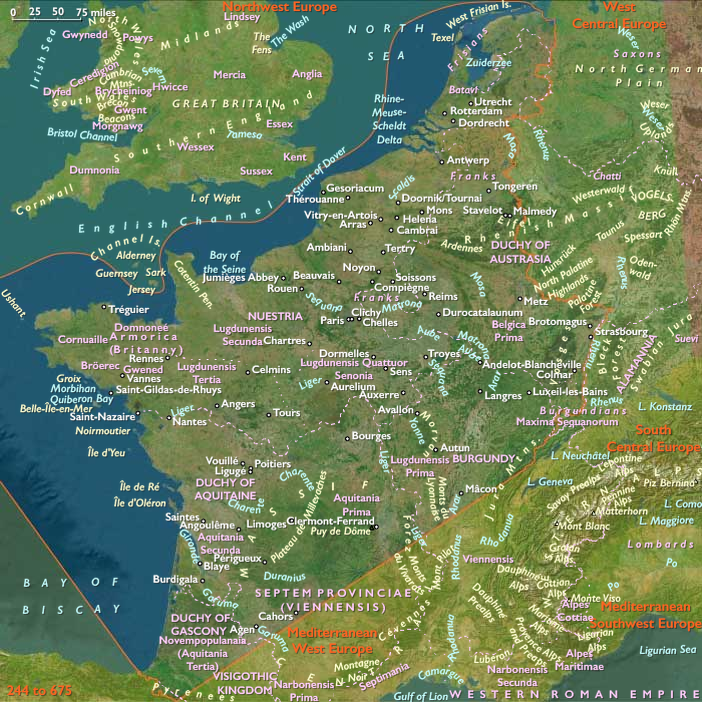
After seizing power in Britain in 286 CE, Carausius strengthened his rule by training local barbarians as sailors, allowing him to control the western sea. His naval supremacy enabled him to extend his rule beyond Britain, securing parts of northern Gaul, including Rotomagus (modern Rouen).
1. Naval Supremacy and Control of the English Channel
- Carausius, a former pilot and naval commander, understood the strategic importance of controlling the sea.
- He trained local Britons and Germanic mercenaries as sailors, creating a powerful fleet.
- With command over the western sea, he was able to prevent Rome from launching an immediate counterattack.
- His fleet patrolled the Channel and North Sea, securing trade routes and blocking Roman military movements.
2. Expansion into Northern Gaul
- By securing maritime dominance, Carausius was able to expand into Gaul, taking control of coastal cities and river routes.
- His rule extended as far as Rotomagus (modern Rouen), a strategically important city along the Seine River.
- He maintained Roman-style governance in his territories, minting his own coins and presenting himself as a legitimate emperor.
3. A Challenge to Rome’s Authority
- By controlling Britain and northern Gaul, Carausius posed a serious threat to Roman rule in the West.
- His ability to defend his domain for nearly seven years demonstrated the effectiveness of his military and naval strategies.
- His breakaway state, often referred to as the "Britannic Empire," was the first lasting secession from Roman central authority.
4. Rome’s Response and Carausius’ Downfall
- In 293 CE, Emperor Constantius Chlorus, the western Caesar under Diocletian's Tetrarchy, launched a campaign to reclaim northern Gaul.
- He successfully recaptured Gesoriacum (Boulogne), cutting Carausius off from his continental holdings.
- Soon after, Carausius was assassinated by his finance minister, Allectus, who briefly ruled before being defeated by Roman forces in 296 CE.
Conclusion: A Temporary Maritime Empire
- Carausius' naval supremacy gave him unparalleled control over Britain and the English Channel, allowing him to rule parts of northern Gaul.
- His ability to hold power for seven years demonstrated that Rome’s control over its western provinces was weakening.
- Though ultimately defeated, Carausius' rule foreshadowed the fragmentation of the Western Roman Empire, proving that regional commanders could defy central Rome and create independent states.
His reign remains a fascinating episode in Roman history, where a rogue commander leveraged naval power to challenge the might of the empire.
Locations
People
Groups
Topics
Commodoties
Subjects
Regions
Subregions
Years: 288 - 288
Locations
People
Groups
Topics
Commodoties
Subjects
Regions
Subregions