
Seeking to secure his own legacy, Caracalla …
Years: 216 - 216
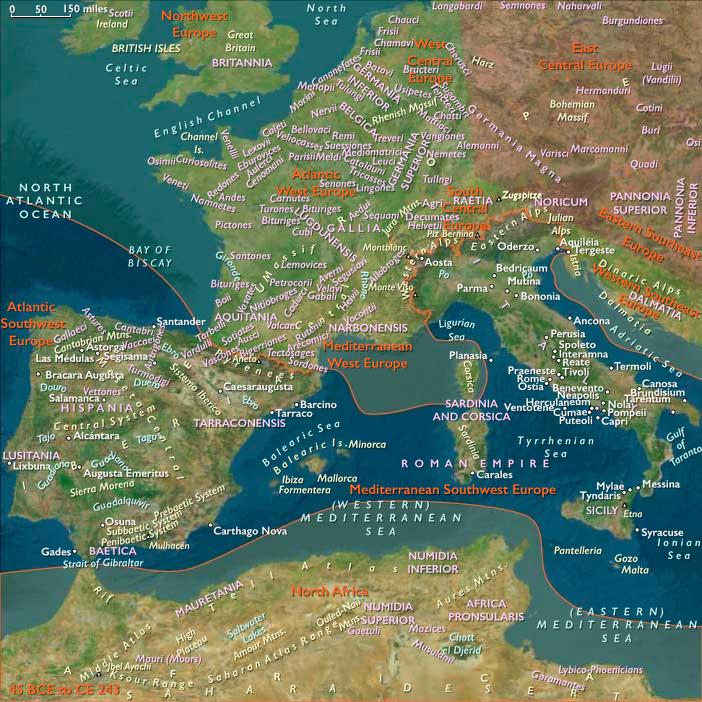
Seeking to secure his own legacy, Caracalla also commissions one of Rome's last major architectural achievements, the colossal and richly decorated Baths of Caracalla, the largest public baths ever built in ancient Rome.
Reportedly built in Rome between 212 and 216, the builders would have had to install over 2,000 tons of material every day for six years in order to complete it in this time period.
Chris Scarre provides a slightly longer construction period 211-217 CE. ("Seventy Wonders of the Ancient World" edited by Chris Scarre [1999], p. 178).
Records show that the idea for the baths had been drawn drawn up by Septimius Severus, and merely completed or opened in the lifetime of Caracalla.
This would allow for a longer construction time frame.
The main room of the baths is larger than St. Peter's Basilica, and can easily accommodate over two thousand Roman citizens at one time.
The bath house opens in 216, complete with libraries, private rooms and outdoor tracks.
Internally it is lavishly decorated with gold-trimmed marble floors, columns, mosaics and colossal statuary.
Colossal cisterns rest beneath the stadium against the rear walls.
Opposite, across the acres of gardens, is the enormous central building.
Planned in strict symmetry, the four main halls, on a central axis, are the circular caldarium (hot bath), topped with a dome more than one hundred feet (thirty-three meters) high; the tepidarium (warm bath); the huge triple-vaulted frigidarium (cold bath), which is two hundred feet (sixty-six meters) long; and the even bigger natatio (swimming pool, probably open to the sky).
Marble revetments, mosaic floors, and decorative statuary ornament the awesome concrete structure.
Locations
People
Groups
Topics
Subjects
Regions
Subregions
Years: 216 - 216
Locations
People
Groups
Topics
Subjects
Regions
Subregions