
Caracalla had devalued the Roman currency around …
Years: 213 - 213
Caracalla had devalued the Roman currency around the time of his accession, decreasing the silver purity of the denarius from 56.5% to 51.5%, the actual silver weight dropping from 1.81 grams to 1.66 gram—though the overall weight has slightly increased.
Caracalla raises the annual pay of an average legionary to 675 denarii during his time as emperor and lavishes many benefits on the army that he both fears and admires, as instructed by his father Septimius Severus, who had told him on his deathbed to always mind the soldiers and ignore everyone else.
Caracalla does manage to win the trust of the military with generous pay rises and popular gestures, like marching on foot among the ordinary soldiers, eating the same food, and even grinding his own flour with them.
His official portraiture marks a break with the detached images of the philosopher–emperors who preceded him: his close-cropped haircut is that of a soldier, his pugnacious scowl a realistic and threatening presence.
This rugged soldier–emperor iconic archetype will be adopted by most of the following emperors who depend on the support of the military to rule, like his eventual successor Maximinus Thrax.
Faced with a rapidly expanding military budget and cost overruns on his elaborate building projects, Caracalla has increased taxes as well as devalued the currency.
The Roman economy plunges into depression.
In 212 or 213, he issues—probably for financial reasons—an edict extending Roman citizenship to nearly all free provincials throughout the empire, including subject peoples, thereby widening the base of the inheritance tax, which only Roman citizens pay, and further undermining Italy's special status.
He grants benefits to property owners and makes them responsible for imperial taxes and services.
All Jews in the empire, who share in the newly granted citizenship and its privileges, gain access to Roman magistracies.
Caracalla leaves the capital in 213, about a year after the murder of Geta, and will spend the rest of his reign in the provinces, particularly those of the East.
He keeps the Senate and other wealthy families in check by forcing them to construct, at their own expense, palaces, theaters, and places of entertainment throughout the periphery.
New and heavy taxes are levied against the bulk of the population, with additional fees and confiscations targeted at the wealthiest families.
Locations
People
Groups
Topics
Commodoties
Subjects
Regions
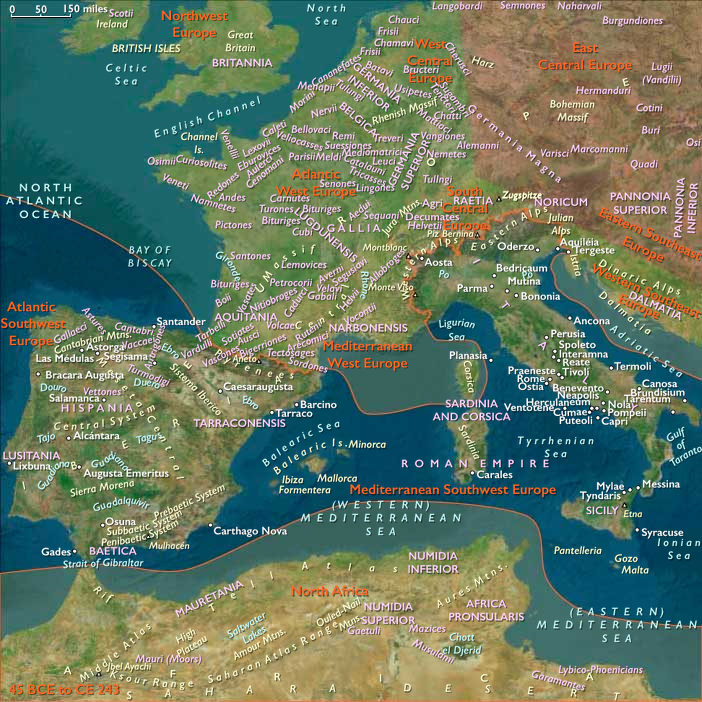
Subregions
Years: 213 - 213
Locations
People
Groups
Topics
Commodoties
Subjects
Regions
Subregions