
Cappadocia under Ariarathes IV had come into …
Years: 130BCE - 130BCE
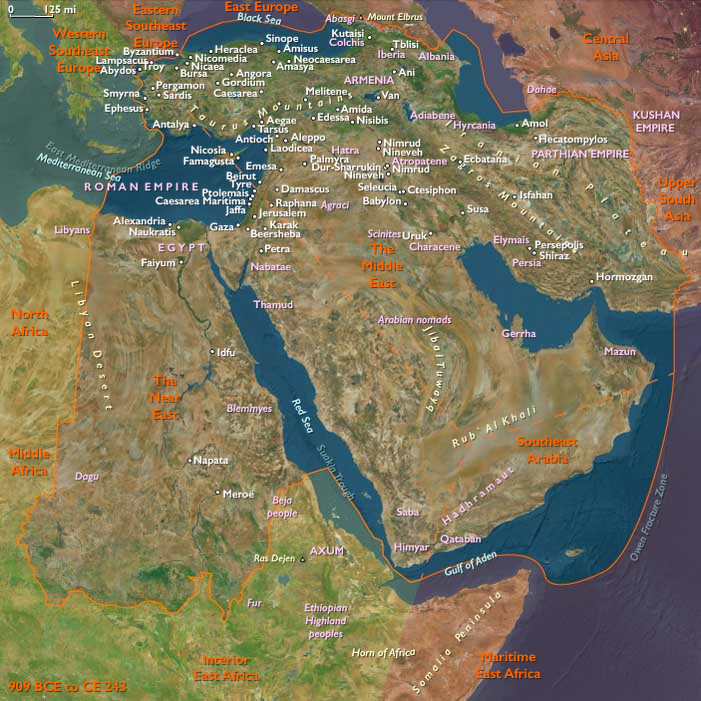
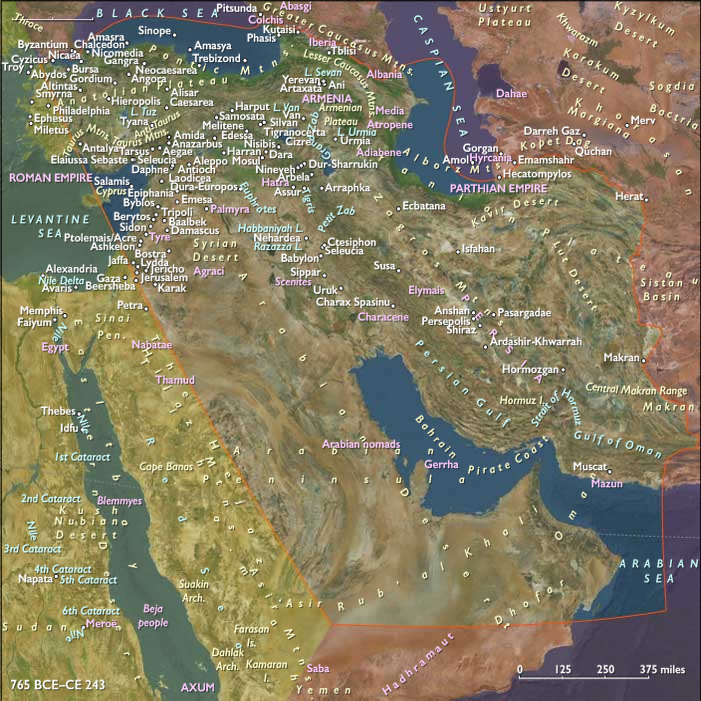
Cappadocia under Ariarathes IV had come into relations with Rome, first as a foe espousing the cause of Antiochus the Great, then as an ally against Perseus of Macedon.
The kings henceforward had throws in their lot with the Republic as against the Seleucids, to whom they had been from time to time tributary.
Ariarathes V marches with the Roman proconsul Publius Licinius Crassus Dives Mucianus against Aristonicus, a claimant to the throne of Pergamon, and their forces are annihilated in 130 BCE.
The imbroglio that follows his death will ultimately lead to interference by the rising power of Pontus and the intrigues and wars that end in the failure of the dynasty.
Locations
People
Groups
- Roman Republic
- Cappadocia, Kingdom of
- Greeks, Hellenistic
- Pontus, Kingdom of
- Pergamon (Pergamum), Kingdom of
Topics
Commodoties
Subjects
Regions
Subregions
Related Events
Showing 10 events out of 63030 total
Years: 130BCE - 130BCE
Locations
People
Groups
- Roman Republic
- Cappadocia, Kingdom of
- Greeks, Hellenistic
- Pontus, Kingdom of
- Pergamon (Pergamum), Kingdom of
Topics
Commodoties
Subjects
Regions
Subregions