
Cao Rui had commenced large-scale palace and …
Years: 237 - 237
Cao Rui had commenced large-scale palace and temple-building projects almost immediately after ascending the throne.
Part of it was to be expected—the Luoyang palaces had been remnants of the ones not destroyed by Dong Zhuo, and the temples were needed for the cults of his ancestors.
However, he has gone beyond the minimally required constructions, and continues to build temples and palaces throughout his reign, severely draining the imperial treasury.
While he occasionally halts projects at the officials' behest, the projects restart after brief breaks.
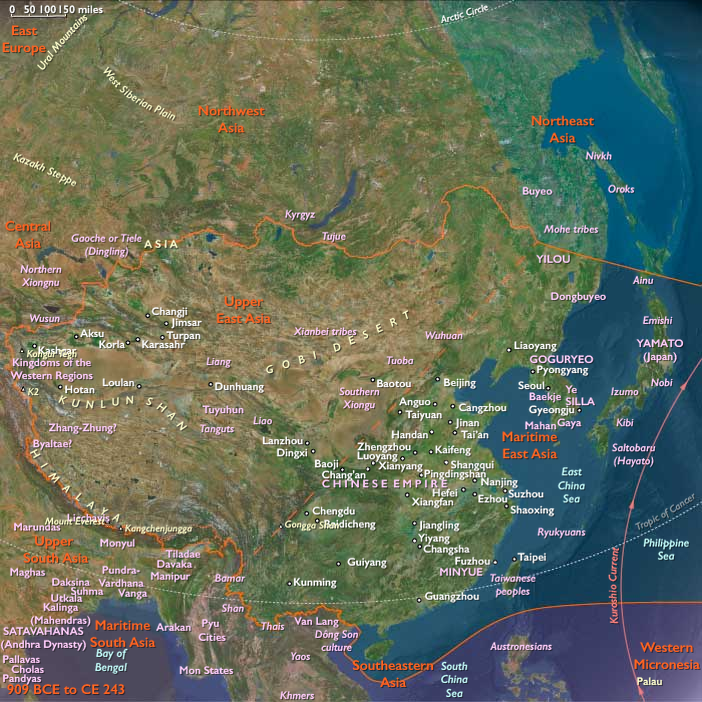
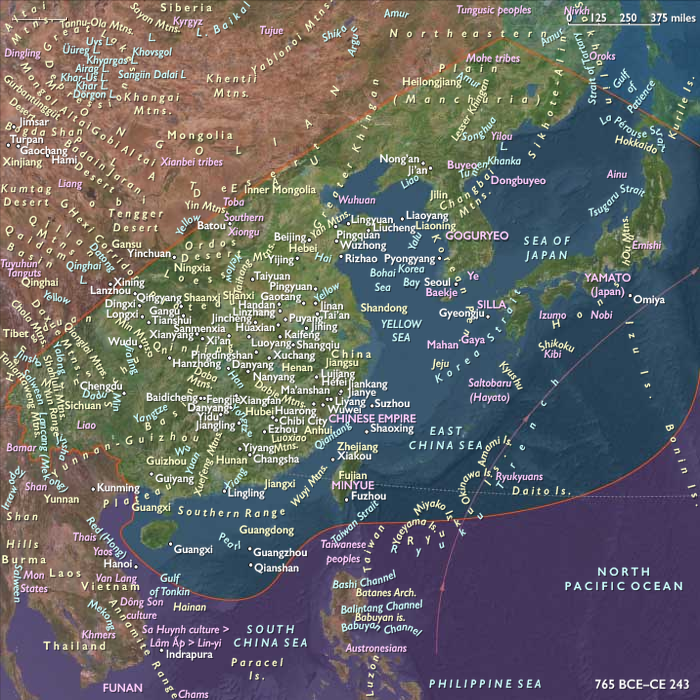
He not only builds palaces in Luoyang, but also builds a palace in Xuchang.
In 237, he further moves many of the magnificent statues and monuments that had been commissioned by Emperor Wu of Han from Chang'an to Luoyang, at great expenses and the cost of many lives.
He further builds gigantic bronze statues of his own and places them on a man-made hill inside his palace, surrounded by rare trees and plants and populated by rare animals.
Cao Rui is also increasing his collection of women, as his concubines and ladies-in-waiting number in the thousands.
His palace-building projects might have been with intent to house them.
In 237, he even orders that beautiful married women all be formally seized unless their husbands are able to ransom them, and that they will be married to soldiers instead—but that the most beautiful among them will become his concubines.
Despite some officials' protestations, this decree is apparently carried out, much to the distress of his people.
Despite his harem, however, Cao Rui is without any son who survives infancy.
He had adopted two sons to be his own—Cao Fang and Cao Xun, whom he had created princes in 235.
(It is usually accepted that they were sons of his cousins, although the exact parentage is not clear.)
In 237, Cao Rui takes the unprecedented (and unrepeated in Chinese history) action of setting his own temple name of Liezu and ordering that his temple never be torn down in the future.
(Based on Confucian regulations, except for the founder of the dynasty, rulers' temples are destroyed after six generations.)
He carries out these actions apparently in apprehension that he will be given an unflattering temple name (or none at all) and that his temple will eventually be destroyed, due to his lack of biological issue and unclear origin.
By 237, Cao Rui's favorite is no longer Empress Mao, but Consort Guo.
In this year, when Cao Rui is attending a feast hosted by Consort Guo, Consort Guo requests that Empress Mao be invited to join as well, but Cao Rui refuses and further orders that no news about the feast be given to Empress Mao.
However, the news leaks, and Empress Mao talks about the feast with him anyway.
He becomes exceedingly angry, and kills a number of his attendants whom he suspected of leaking the news to Empress Mao, and, inexplicably, orders Empress Mao to commit suicide, even though she is still buried with honors due an empress, and her family remains honored.
Locations
People
Groups
- Chinese (Han) people
- Cao Wei, (Chinese) kingdom of
- Shu Han (minor Han), (Chinese) kingdom of
- Wu, Eastern, (Chinese) kingdom of
Topics
Commodoties
Subjects
Regions
Subregions
Years: 237 - 237
Locations
People
Groups
- Chinese (Han) people
- Cao Wei, (Chinese) kingdom of
- Shu Han (minor Han), (Chinese) kingdom of
- Wu, Eastern, (Chinese) kingdom of
Topics
Commodoties
Subjects
Regions
Subregions