
Cao Cao, chancellor of the Eastern Han …
Years: 220 - 220
January
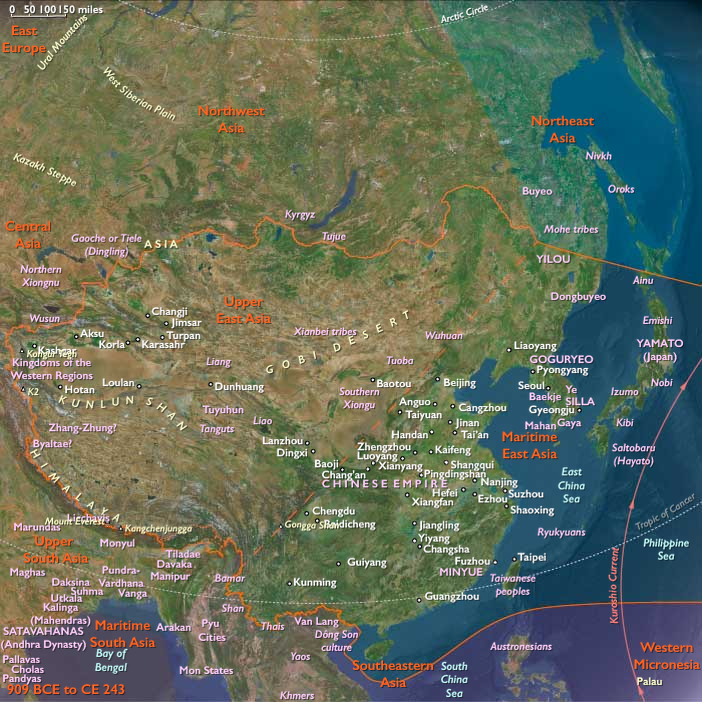
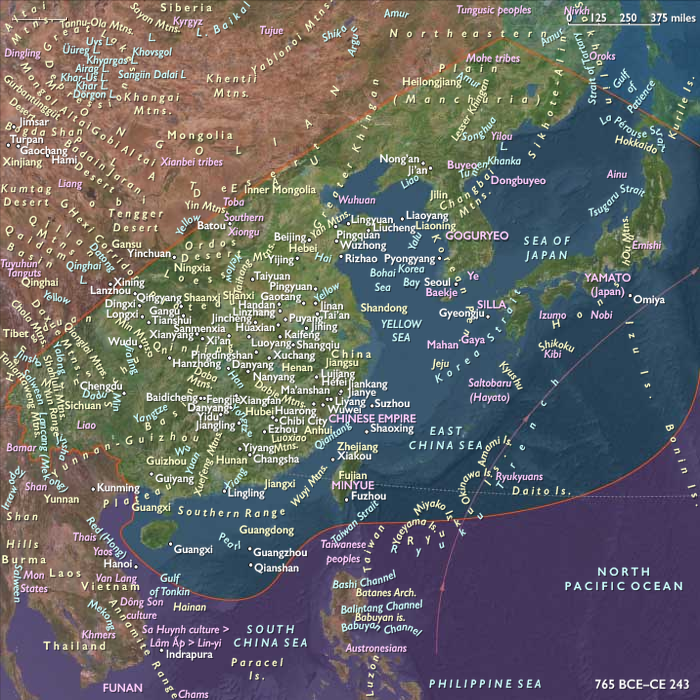
Cao Cao, chancellor of the Eastern Han Dynasty and Prince of Wei, as well as the warlords Liu Bei and Sun Quan, have continued over the past several years, to consolidate their power in their respective regions.
Through many wars, China has become divided into three powers—Wei, Shu and Wu, which have fought sporadic battles without the balance tipping significantly in anyone's favor.
Cao Cao is an accomplished poet, as are his sons Cao Pi and Cao Zhi, collectively known as the "Three Caos".
Cao Cao is also a a patron of poets such as Xu Gan.
Of Cao's works, only a remnant remain today.
His verses, unpretentious yet profound, help to reshape the poetic style of his time and beyond, eventually contributing to the poetry styles associated with Tang Dynasty poetry.
Together with certain other poets, the poetry of the “Three Caos” forms the backbone of what is known as the Jian'an style.
Jian'an is the era name for the period from 196 to 220, the final era of the Han Dynasty; however, poets such as those of the Cao family will continue to write and develop poetry in this style after the end of the Han and after the founding of the Cao Wei dynasty: these are the "Jian'an" poets.
Poetry has been affected by civil strife towards the end of the Eastern Han Dynasty, contributing to the Jian'an poems' often solemn yet heart-stirring tone, frequently lamenting the ephemeral nature of life.
From the early folk songs characteristic of Han poetry, the Jian'an poetry represents a transition towards a more scholarly poetry characteristic of Six Dynasties poetry.
Cao Cao and other Jian'an poets are specifically noted for developments to the characteristic Han fu (or yuefu).
While keeping some features, the uneven line lengths derived from the folksong or ballad tradition are eliminated, or changed into a regular five-character line-length style—very similar and inspirational to the regular five-character line shi poetry of the Tang Dynasty.
Cao Cao himself also is noted for his ballad style verse, which he apparently sets to music.
At this time, elaborate percussion orchestras of bells, cymbals, drums, gongs and triangles accompany the chants of Chinese Buddhism.
Cao Cao also writes verse in the older four-character per line style characteristic of the Shijing "Classic Odes".
One of Cao's most celebrated poems is in the old four-character line style: written during the Battle of White Wolf Mountain against the northern Wuhuan in 207, it is titled Though the Tortoise Lives Long.
Another of Cao Cao's most well known poems, written right before the Battle of Red Cliffs in the winter of 208, is Short Song Style.
Cao Zhi uses folk songs and simple language styles.
Locations
People
Groups
Topics
Commodoties
Subjects
Regions
Subregions
Years: 220 - 220
January
Locations
People
Groups
Topics
Commodoties
Subjects
Regions
Subregions