
Filters:
The Battle of Alesia (September 52 BCE): …
Years: 52BCE - 52BCE
September
The Battle of Alesia (September 52 BCE): The Decisive Roman Victory Over Gaul
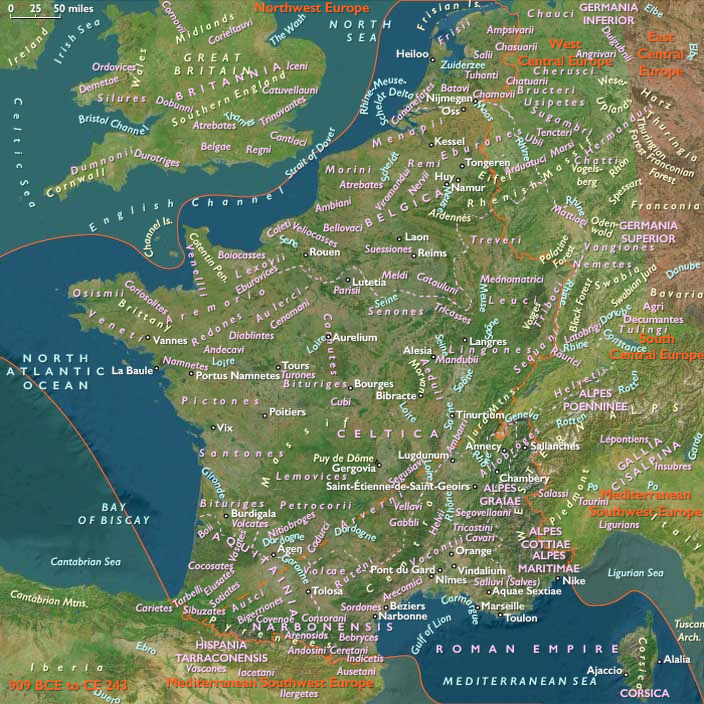
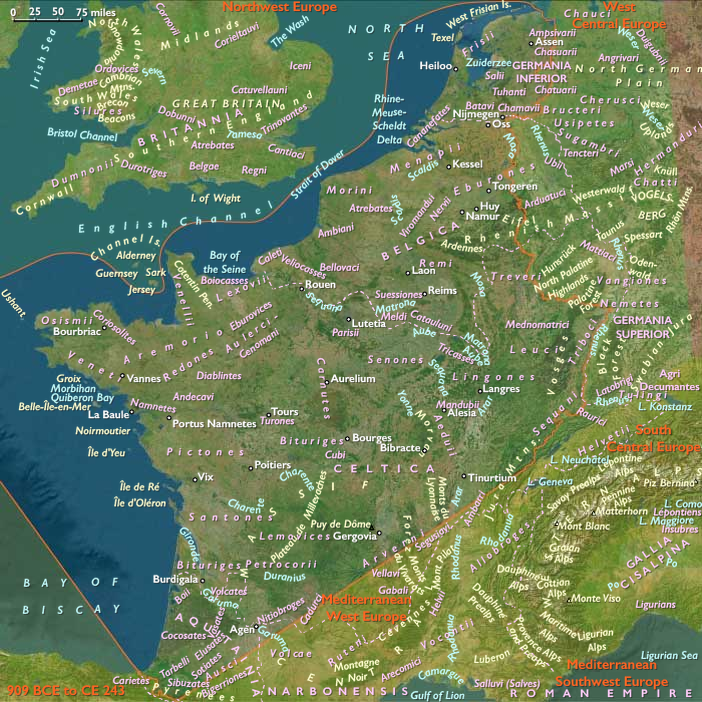
The Battle of Alesia in September 52 BCE was the culminating battle of the Gallic Wars, where Julius Caesar decisively defeated Vercingetorix, ending the last major resistance to Roman rule in Gaul. It is regarded as one of the greatest military sieges in history and played a crucial role in the creation of the Roman Empire.
Caesar’s Double Fortifications: The Siege of Alesia
- Caesar besieged Alesia, a fortified hilltop stronghold occupied by Vercingetorix and his army, with 60,000 Roman troops.
- To prevent Vercingetorix from escaping, Caesar built a circumvallation—a fortified wall surrounding Alesia.
- However, Vercingetorix had summoned Gallic reinforcements, leaving Caesar’s army now at risk of being trapped between two forces.
- Anticipating a relief army, Caesar ordered the construction of a second, outer fortification (contravallation) to defend against attacks from outside.
- This resulted in a doughnut-shaped double fortification, effectively turning the besiegers into the besieged.
The Arrival of the Gallic Relief Army and the Breakthrough Attempt
- Estimates of the relief force range from 80,000 to 250,000 soldiers, but their attacks initially failed due to lack of coordination.
- Vercingetorix, the tactical leader, was trapped inside Alesia, unable to direct the outside forces effectively.
- However, the repeated assaults exposed a weak point in Caesar’s fortifications, and coordinated attacks from inside and outside nearly resulted in a Roman defeat.
- The situation became critical as famine gripped the defenders, but the Gauls launched a final, desperate attack, nearly overwhelming the Romans.
Caesar’s Personal Intervention and the Roman Victory
- As the Gallic forces broke through in some areas, Caesar personally led his last reserves into battle.
- With one final push, the Roman counterattack crushed the Gallic rear attack, forcing the reinforcements to retreat.
- Inside Alesia, starvation finally broke the defenders, and Vercingetorix surrendered.
Vercingetorix’s Surrender: The End of Gallic Independence
- According to Plutarch, Vercingetorix rode out in full ceremonial armor, circled Caesar’s camp, and then dismounted, stripped off his armor, and knelt silently at Caesar’s feet.
- Caesar, however, describes a less dramatic surrender, with Vercingetorix simply laying down his arms.
- He was imprisoned in the Tullianum in Rome for five years and then publicly displayed in chains during Caesar’s triumph in 46 BCE.
- Afterward, he was executed, likely by strangulation, as per ancient Roman custom.
The Significance of the Battle of Alesia
- Alesia was a decisive battle that solidified Roman control over Gaul, paving the way for its full integration into the Roman world.
- The victory elevated Caesar’s status, providing him with immense political power, which he would later use to seize sole control of Rome.
- It marked the end of organized Gallic resistance, ushering in a new era of Roman administration, trade, and cultural assimilation in Gaul.
The Battle of Alesia remains one of Caesar’s greatest military achievements, demonstrating his strategic genius, engineering ingenuity, and ability to inspire his troops even in the face of near defeat.
Locations
People
Groups
Topics
- Classical antiquity
- Pre-Roman Iron Age of Northern Europe
- Roman Age Optimum
- Roman Republic, Crisis of the
- Gallic Wars
- Alesia, Battle of
Commodoties
Subjects
Regions
Subregions
Years: 52BCE - 52BCE
September
Locations
People
Groups
Topics
- Classical antiquity
- Pre-Roman Iron Age of Northern Europe
- Roman Age Optimum
- Roman Republic, Crisis of the
- Gallic Wars
- Alesia, Battle of
Commodoties
Subjects
Regions
Subregions