
The Illyrians, profiting from a long tradition …
Years: 304 - 315
The Illyrians, profiting from a long tradition of martial habits and skills, had by the time the empire began to decline acquired great influence in the Roman military hierarchy.
Indeed, several of them go on from there to become emperors.
The reins of empire from the mid-third to the mid-fourth century are almost continuously in the hands of emperors of Illyrian origin: Gaius Decius, Claudius Gothicus, Aurelian, Probus, Diocletian, and Constantine the Great.
The reigns of the latter two mark a critical turning point in the fortunes of the empire.
People
Groups
Topics
Subjects
Regions
Related Events
Filter results
Showing 10 events out of 60029 total
The War of the Eight Princes, at its conclusion in 306, devastates the Jin heartland in northern China, and is a major cause of the Wu Hu ravaging that brings the Western Jin to an end.
Technically, the term "War of the Eight Princes" is somewhat of a misnomer: rather than one continuous conflict, the War of the Eight Princes sees intervals of peace interposed with short and intense periods of internecine conflict.
At no point in the whole conflict are all of the eight princes on one side of the fighting (as opposed to, for example, the Rebellion of the Seven States).
The literal Chinese translation, “Disorder of the Eight Princes”, may be more appropriate in this regard.
A series of uprisings, occurring between 304 and 316, is carried out by five non-Chinese tribes or tribal confederacies against the Western Jin Dynasty.
The five tribes, namely the Xiongnu, Xianbei, Jie, Qiang and Di, successfully capture the Western Jin capital of Luoyang as well as Emperor Huai of Jin, destroying the Western Jin regime, after which a large series of regional states and regimes are set up, the most prominent of which are known as the Sixteen Kingdoms ('sixteen kingdoms of the five barbarians').
Many ethnic groups are involved, including ancestors of the Turks, Mongols, and Tibetans.
Most of these nomadic peoples had, to some extent, been sinicized long before their ascent to power.
Some of them, notably the Qiang and the Xiongnu, had already been allowed to live in the frontier regions within the Great Wall since late Han times.
The Collapse of the Tetrarchy and the Struggle for Power (305–307 CE)
Diocletian’s Tetrarchy, designed to prevent civil wars and succession crises, quickly unraveled after his abdication in 305 CE, leading to a chaotic struggle for imperial control. Within just two years, Rome found itself fragmented among multiple rival emperors, marking the beginning of the wars that would ultimately lead to Constantine’s rise.
1. The Abdication of Diocletian and the Division of Power (305 CE)
- In an unprecedented move, both Diocletian and Maximian—the two senior emperors (Augusti)—abdicated together, retreating into retirement.
- Their successors, Constantius Chlorus (West) and Galerius (East), were elevated to Augustus.
- To maintain the system, two new Caesars were appointed:
- Severus (West, under Constantius Chlorus).
- Maximinus Daia (East, under Galerius).
While this transition initially appeared stable, the system began to unravel almost immediately after Constantius Chlorus' death.
2. The Tetrarchy Unravels (306 CE)
- July 25, 306 CE – Constantius Chlorus dies in Eboracum (modern York) while campaigning in Britain.
- His troops immediately proclaim his son, Constantine, as Augustus, challenging the Tetrarchic system, which had not accounted for dynastic succession.
- August 306 CE – Galerius rejects Constantine’s claim, instead promoting Severus to Augustus of the West.
- October 28, 306 CE – A revolt in Rome leads to the Praetorian Guard proclaiming Maxentius (son of Maximian) as Augustus, further complicating the power struggle.
By the end of 306 CE, the empire was now ruled by five competing claimants:
- Four Augusti: Galerius, Constantine, Severus, and Maxentius.
- One Caesar: Maximinus Daia.
3. Further Fragmentation and the Return of Maximian (307 CE)
-
In 307 CE, the political crisis deepened as Maximian came out of retirement, reclaiming the title of Augustusalongside his son, Maxentius.
-
With Maximian's return, the empire now had six rulers, further destabilizing the situation.
-
Galerius and Severus launched a campaign against Maxentius and Maximian in Italy, but it ended in disaster:
- Severus was captured and executed on September 16, 307 CE, by order of Maxentius.
-
To secure his position, Maxentius arranged a political alliance with Constantine:
- Constantine married Fausta, Maximian’s daughter and Maxentius’ sister, strengthening ties between the two rulers.
4. The Political Map of the Roman Empire (End of 307 CE)
By the end of 307 CE, the Tetrarchy was in complete disarray, with power divided among:
-
Four Augusti:
- Maximian (Italy, ally of Maxentius).
- Galerius (Eastern Roman Empire).
- Constantine (Western provinces, Britain, Gaul, and Spain).
- Maxentius (Rome and parts of Italy, self-declared Augustus).
-
One Caesar: Maximinus Daia, further signaling the collapse of the once carefully structured Tetrarchy.
5. The Road to Further Conflict (308–324 CE)
- The situation would continue to deteriorate as rivalries deepened, leading to further wars of succession.
- Over the next two decades, Constantine would gradually eliminate his rivals, culminating in the Battle of the Milvian Bridge (312 CE) against Maxentius and his ultimate defeat of Licinius (324 CE), becoming sole ruler of the Roman Empire.
The collapse of the Tetrarchy exposed the inherent flaws in Diocletian’s system, demonstrating that dynastic ambition and military loyalty ultimately dictated imperial succession, rather than any structured administrative plan.
The End of Christian Persecution and the Reforms of Constantine (311–313 CE)
By the early 4th century CE, the Roman Empire witnessed a major shift in religious policy. After decades of Christian persecution under Diocletian (303–311 CE), Emperor Galerius officially ended the repression of Christians in 311 CE, signaling a significant turning point in imperial attitudes toward Christianity.
1. The Edict of Toleration (311 CE) and the End of Persecution
- Galerius, once a strong opponent of Christianity, issued an edict of toleration, acknowledging that:
- The persecution of Christians had failed to eradicate the faith.
- Christianity should be tolerated, provided its followers prayed for the empire’s well-being.
- While this edict ended official state persecution, it did not fully legalize Christianity.
2. The Edict of Milan (313 CE) and the Full Legalization of Christianity
- Two years later, in 313 CE, Constantine the Great and Licinius issued the Edict of Milan, which:
- Granted Christians full legal status in the Roman Empire.
- Guaranteed religious tolerance for all faiths.
- Restored confiscated Christian properties, further legitimizing the Church.
- The Edict of Milan marked a decisive shift in imperial policy, paving the way for Christianity to become deeply intertwined with Roman governance.
3. Constantine’s Gradual Personal Conversion
- While Constantine became a protector of Christianity, his personal conversion unfolded gradually:
- He continued to patronize both Christian and pagan traditions, maintaining political flexibility.
- His famous vision of the Cross before the Battle of the Milvian Bridge (312 CE) strengthened his faith in Christianity.
- He was only baptized on his deathbed in 337 CE, reflecting a slow transformation rather than an abrupt conversion.
4. The Reforms of Diocletian and Constantine: Temporary Stability, Long-Term Challenges
The combined reforms of Diocletian and Constantine temporarily strengthened the Roman Empire by:
- Reorganizing the administration through the Tetrarchy and later centralized rule.
- Reforming the military, reinforcing the empire’s defensive capabilities.
- Stabilizing the economy, although Constantine’s introduction of the solidus (gold coin) had mixed long-term effects.
However, despite these efforts, chronic governance challenges persisted, including:
- Internal power struggles, leading to civil wars even after Constantine’s reign.
- Frontier pressures, as Germanic and Persian threats continued.
- Economic difficulties, as taxation and inflation weakened Rome’s financial stability.
5. Conclusion: The Transition to a Christian Empire and the Road Ahead
- The legalization of Christianity marked the beginning of a new era, leading to its eventual status as the official state religion under Theodosius I (381 CE).
- Constantine’s reforms prolonged the empire’s survival, but deep-seated issues remained, foreshadowing the eventual decline of the Western Roman Empire in the 5th century.
Though imperial stability was temporarily restored, the challenges faced by Rome would continue to evolve, shaping the empire’s fate in the centuries to come.
East Central Europe (304–315 CE): Constantine’s Rise and Sustained Frontier Stability
Between 304 and 315 CE, East Central Europe—covering Poland, Czechia, Slovakia, Hungary, and those portions of Germany and Austria lying east of 10°E and north of a line stretching from roughly 48.2°N at 10°E southeastward to the Austro-Slovenian border near 46.7°N, 15.4°E—experienced continued frontier stability, supported initially by the Tetrarchy’s efficient administration and subsequently maintained by Emperor Constantine the Great (306–337 CE). Roman provinces along the Danube (Pannonia Prima, Pannonia Secunda, Pannonia Savia, Pannonia Valeria, and Noricum) benefited from robust defensive measures, active diplomatic relations, and flourishing regional trade, ensuring a sustained period of stability and prosperity.
Political and Military Developments
Transition from Tetrarchy to Constantine
-
The early part of the era saw continued stability from the Tetrarchic system. After Constantine’s rise to power (306 CE), he maintained and enhanced frontier security, further solidifying Roman administrative control in East Central Europe.
-
Constantine prioritized the strategic importance of the Danube provinces, reinforcing military defenses, fortifications, and provincial governance.
Effective Diplomacy with Tribal Confederations
-
Continued diplomatic engagement successfully maintained stable relations with key tribal groups, notably the Marcomanni, Quadi, Iazyges, and limited threats from the Vandals and Goths.
-
Roman diplomacy focused on managing tribal alliances and territorial arrangements, preventing major incursions, and fostering peaceful economic exchanges.
Economic and Technological Developments
Sustained Economic Prosperity
-
Stability along the frontier allowed robust trade networks to flourish, significantly benefiting both Roman settlements and neighboring tribal communities. Commerce in agricultural goods, metals, amber, textiles, and ceramics remained vibrant.
Frontier Infrastructure Enhancement
-
Infrastructure investment continued actively under Constantine, including improved roads, bridges, fortifications, and public buildings, facilitating both military and economic vitality throughout the region.
Cultural and Artistic Developments
Cultural Flourishing and Artistic Productivity
-
The stable conditions fostered continued cultural exchange between Romans and tribal societies. Material culture, including pottery, jewelry, metalwork, and religious artifacts, demonstrated a high level of artistic refinement and cultural integration.
Constantine’s Influence on Frontier Culture
-
Constantine’s rule introduced subtle shifts toward greater imperial unity and Christian influence, though the region maintained significant cultural diversity. Tribal-Roman interactions retained rich traditional expressions alongside these emerging influences.
Settlement and Urban Development
Continued Urban Growth and Fortification
-
Frontier towns, including Carnuntum, Vindobona, and Aquincum, continued their expansion as fortified administrative and economic centers, benefiting from sustained regional prosperity and effective governance.
Stabilization of Tribal Settlements
-
Tribal settlements remained economically prosperous and increasingly permanent, maintaining stable trade and diplomatic relationships with Roman frontier towns.
Social and Religious Developments
Stability in Tribal Social Hierarchies
-
Tribal leadership maintained strong internal stability, guided by leaders adept at managing peaceful diplomatic and economic relationships with Roman authorities.
Religious Diversity and Emerging Christianity
-
Traditional tribal religious practices remained prevalent, emphasizing community unity and prosperity. Concurrently, Constantine’s rise introduced Christianity into frontier settlements, initiating gradual religious shifts alongside continuing pagan and tribal traditions.
Long-Term Consequences and Historical Significance
The era from 304 to 315 CE represented continued stability and economic prosperity along the Roman Danube frontier, facilitated by effective Roman governance and strategic diplomacy under Constantine the Great. The maintenance of peaceful tribal relations, combined with flourishing trade and cultural integration, reinforced the foundation for ongoing stability and significantly influenced the historical trajectory of East Central Europe through the early fourth century.
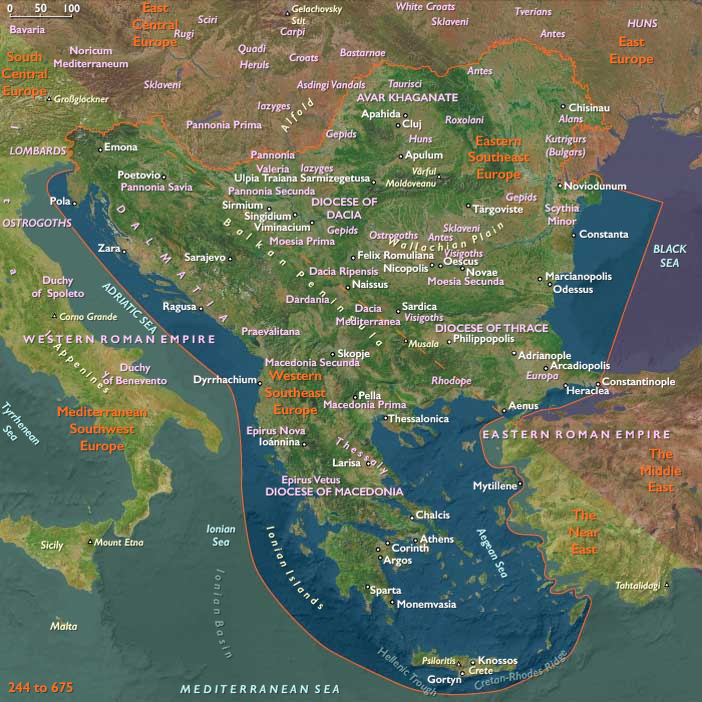
Eastern Southeast Europe (304–315 CE): Administrative Reforms and Religious Shifts
Settlement and Migration Patterns
Continued Frontier Pressures
Frontier pressures persisted from migrating tribes, including the Goths and Sarmatians, leading to increased defensive fortifications along the Danube and throughout Eastern Southeast Europe. The Roman military presence intensified in key strategic areas to secure provincial borders.
Economic and Technological Developments
Infrastructure Enhancements under Diocletian and Constantine
Significant infrastructure and administrative reforms occurred under Emperor Diocletian (284–305 CE) and his successor Constantine the Great (306–337 CE). Diocletian’s provincial reorganization improved administrative efficiency, directly impacting the economy through stabilized taxation and enhanced trade routes.
Strengthened Military Infrastructure
Military fortifications, bridges, and roadways received considerable investment, particularly along strategic frontier points such as the Lower Danube and around critical urban centers like Serdica (modern Sofia), ensuring more effective control and improved logistics.
Cultural and Artistic Developments
Artistic Resilience and Patronage
Despite persistent external threats, regional cultural life remained vibrant. Roman and Hellenistic artistic traditions continued, with new monumental architecture, mosaics, and sculptures commissioned by local elites and imperial administrators, especially in cities such as Constantinople and Philippopolis.
Rise of Christian Iconography
Christian art and iconography began gaining prominence, reflecting Christianity’s growing influence in the region. Early Christian symbols, frescoes, and funerary art became more common, particularly within urban centers and trade hubs.
Social and Religious Developments
Diocletian's Persecution and Religious Turmoil
The period saw significant religious turmoil, highlighted by Diocletian’s persecution (303–311 CE), the most severe persecution of Christians in Roman history. Eastern Southeast Europe experienced widespread enforcement of anti-Christian edicts, leading to social tension and resistance.
Edict of Toleration and Religious Transformation
In 311 CE, the Edict of Serdica (Sofia)—also known as Galerius’ Edict of Toleration—officially ended the persecution of Christians. Issued by Emperor Galerius in the provincial capital Serdica, it granted Christianity legal recognition, marking a significant turning point for religious freedom and integration within the empire.
Long-Term Consequences and Historical Significance
This era (304–315 CE) profoundly shaped Eastern Southeast Europe through significant administrative reforms, strengthened frontier defenses, and transformative religious shifts. The cessation of persecution and subsequent legalization of Christianity laid the foundation for Christianity’s ascendancy, influencing the cultural, social, and political development of the region for centuries to come.
The Middle East: 304–315 CE
Persecution, Toleration, and Regional Realignments
The period from 304 to 315 CE is marked by significant religious and political upheaval throughout the Middle East, coinciding with the latter years of Roman Emperor Diocletian and the rise of Constantine the Great.
Diocletian’s Persecution and its Aftermath
Diocletian initiates one of the most severe persecutions of Christians—the Great Persecution—beginning in 303 CE and continuing into 305 CE. This persecution profoundly affects Christian communities across the Middle East, including Syria, Palestine, Anatolia, and Egypt, resulting in widespread martyrdom, destruction of scriptures, and dismantling of churches. The persecution leaves deep scars on Christian memory and galvanizes communities toward greater solidarity and resilience.
Constantine and Religious Toleration
The abdication of Diocletian in 305 CE sets the stage for a rapid shift in religious policy. Emperor Constantine, who gains prominence during this era, dramatically alters Roman religious policy toward Christianity following his ascent to power. His vision before the Battle of the Milvian Bridge in 312 CE—interpreted as divine intervention—prompts Constantine to embrace Christianity openly. The issuance of the Edict of Milan in 313 CE, co-authored with Emperor Licinius, officially ends Roman persecution and grants Christianity legal status, paving the way for its eventual dominance throughout the empire, including the Middle Eastern provinces.
Armenia and the Consolidation of Christianity
Armenia, under King Tiridates III, continues to solidify its identity as the world's first officially Christian state. Tiridates III actively promotes Christianity throughout Armenia, strengthening its ecclesiastical structure and developing religious institutions and clergy training centers. The kingdom’s Christian alignment significantly influences its diplomatic and cultural relationships with neighboring Rome and Persia, as both powers vie for influence over this strategically located kingdom.
Continued Roman–Sassanid Tensions
Despite shifts toward religious toleration, Roman–Persian tensions persist. The Sassanid Empire, under Shapur II, who comes to the throne in 309 CE as an infant ruler, begins preparations for renewed conflicts with Rome. Although direct large-scale warfare remains limited during Shapur II's early reign, both empires continually fortify their borders and seek strategic alliances. Armenia remains a contentious buffer, caught between competing Roman and Persian ambitions.
Thus, from 304 to 315 CE, the Middle East experiences a profound transition from persecution to religious toleration, amidst ongoing geopolitical rivalry between Rome and Persia, setting the stage for significant religious, cultural, and political developments in the centuries that follow.
A tradition of Christian monasticism begins in the deserts of Egypt and Syria.
Anthony (later called Saint Anthony the Great), the orphaned son of well-to-do parents, gives away his inheritance and joins a group of ascetics near his village.
Wishing greater solitude, he advances by stages ever further into the desert, but disciples flock to him and form colonies of hermits, which he develops into the first Christian monastic communities.
People seek Anthony in the desert to receive his advice and help.
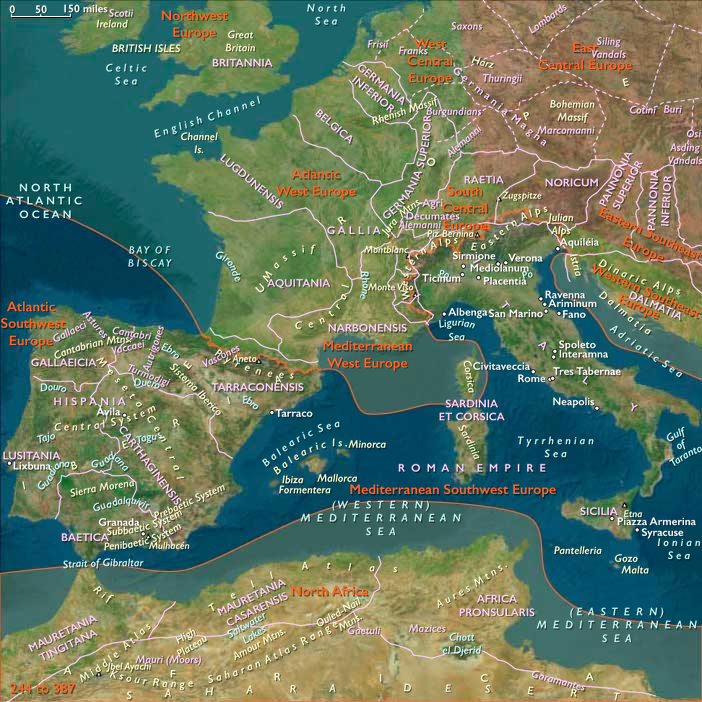
Mediterranean Southwest Europe (304–315 CE): From Persecution to Constantine’s Rise
The era 304–315 CE in Mediterranean Southwest Europe transitions from the peak of Diocletian’s persecution of Christianity to the profound political and religious transformations under Constantine the Great. This period is marked by the collapse of the Tetrarchy, Constantine’s consolidation of power, and significant changes in the religious landscape.
Collapse of the Tetrarchy
After Diocletian’s abdication in 305 CE, the carefully constructed Tetrarchy quickly deteriorates into rivalry and conflict. Internal power struggles among the successors destabilize imperial unity, leading to civil wars and intense competition among ambitious claimants to the throne.
End of Diocletian’s Persecution
Diocletian’s severe anti-Christian campaign—the Great Persecution—continues until about 311 CE. Galerius, a senior Tetrarch, eventually issues an edict of toleration on his deathbed, reluctantly recognizing Christianity’s right to exist. This edict marks a significant turning point, leading to a rapid decline in systematic persecution.
Rise of Constantine
The turmoil of the Tetrarchy’s collapse paves the way for Constantine the Great. Emerging victorious from a series of decisive battles, notably the Battle of Milvian Bridge in 312 CE, Constantine dramatically reshapes the political and religious trajectory of the empire, ultimately unifying imperial authority under his rule.
Edict of Milan and Religious Tolerance
In 313 CE, Constantine and his co-emperor Licinius issue the landmark Edict of Milan, granting official tolerance and freedom of worship to Christianity. This edict significantly alters the empire’s religious landscape, enabling Christianity to emerge openly and rapidly expand throughout Mediterranean Southwest Europe.
Economic and Administrative Stability
Constantine maintains and builds upon Diocletian’s economic and administrative reforms. He stabilizes currency, continues infrastructure enhancements, and refines provincial administration, fostering greater regional prosperity and stability despite the preceding political turmoil.
Cultural and Intellectual Revival
The period sees a revival of cultural and intellectual activities, energized by newfound religious freedoms and political stabilization under Constantine. Art, literature, and philosophical discourse flourish, significantly influenced by the rising prominence of Christian intellectual traditions.
Legacy of the Era
The era 304–315 CE profoundly reshapes Mediterranean Southwest Europe, transitioning from intense persecution to a groundbreaking era of religious tolerance and imperial unity under Constantine. This transformative period lays crucial foundations for Christianity’s future prominence and significantly influences Roman imperial culture and governance for centuries to come.
North Africa (304–315 CE)
Imperial Transitions, Religious Turmoil, and Regional Adaptation
Imperial Reorganization and Administrative Continuity
From 304 to 315 CE, North Africa undergoes significant imperial transitions marked by the retirement of Emperor Diocletian in 305 CE and the complex succession struggles of the Tetrarchy. Despite these challenges, the region largely sustains the administrative stability established by Diocletian’s reforms. Effective governance structures remain intact, ensuring continued regional efficiency and economic vitality amid broader imperial uncertainties.
Frontier Security and Military Vigilance
Roman military garrisons in Numidia and Mauretania maintain vigilant defenses along critical frontier zones, particularly between Vescera (Biskra) and Ad Majores (Hennchir Besseriani). These strategically positioned defenses continue to manage persistent threats from Berber tribes and Saharan nomadic incursions, safeguarding agricultural productivity and commercial stability.
Economic Stability and Sustained Agricultural Productivity
Economic prosperity endures in North Africa, driven by stable agricultural production of grain and olive oil, vital commodities within the Roman Empire. Prominent trading cities like Utica, Leptis Magna, and Caesarea (Cherchell) continue flourishing through extensive Mediterranean trade networks, reinforcing their crucial role in regional commerce and imperial supply chains.
Numidia and Mauretania: Consistent Economic Resilience
Numidia continues benefiting from stable Roman administration and infrastructural investments, effectively merging indigenous practices with Roman governance to sustain economic and social stability.
Mauretania similarly maintains economic vitality, driven by robust trade in grain, olive oil, and luxury goods. Caesarea further consolidates its status as an influential economic center, supported by consistent Roman infrastructural enhancements and strategic commercial activity.
Cyrenaica: Continued Cultural and Economic Strength
Cyrenaica preserves its scholarly and economic influence. The Greek Pentapolis—Cyrene, Barce (Al Marj), Euhesperides (Benghazi), Teuchira (Tukrah), and Apollonia (Susah)—remains actively engaged in Mediterranean trade and intellectual pursuits, bolstering regional stability and cultural continuity.
Tripolitania: Persistent Prosperity and Cultural Heritage
Tripolitania maintains robust economic activity through sustained olive oil exports and active trans-Saharan trade facilitated by the Garamantes. The Punic-influenced city of Leptis Magna continues thriving as a dynamic cultural and commercial hub, preserving its distinct heritage amidst broader Roman cultural influences.
Berber, Garamantian, and Saharan Communities
Berber communities remain economically active through vibrant coastal urban centers such as Oea (Tripoli), while inland tribes uphold traditional governance structures, benefiting indirectly from coastal prosperity.
The Garamantes persist in their essential role as trans-Saharan trade facilitators, maintaining strong economic linkages between sub-Saharan Africa and Mediterranean markets.
Pastoral groups including the Mauri (Moors) sustain their roles as key intermediaries, significantly contributing to regional stability and trade connectivity.
Christianity: Persecution, Resilience, and Expansion
The period is marked by the Great Persecution under Diocletian and his successors, significantly impacting Christian communities across North Africa. Despite intense persecution, Christian communities demonstrate remarkable resilience, further consolidating their social cohesion and expanding their influence as martyrdoms and steadfast faith strengthen local and regional Christian identities.
Cultural Syncretism Amid Religious Tensions
Despite religious turmoil, interactions among diverse communities—including Berber, Roman, Greek, Jewish, Garamantian, Mauri, and Saharan nomads—continue enriching the cultural landscape. Persistent religious and cultural syncretism, blending traditional Berber customs with Roman, Greek, Phoenician, and Saharan spiritual traditions, ensures ongoing cultural vibrancy and resilience.
Sustained Regional Stability and Strategic Significance
By 315 CE, North Africa successfully navigates a turbulent period marked by imperial transitions and religious persecution, maintaining strong governance, economic productivity, fortified military defenses, and enduring cultural integration. The region’s resilience underscores its strategic importance within the Roman Empire, poised to thrive despite broader imperial fluctuations
Atlantic Southwest Europe (304–315 CE): Imperial Transitions, Provincial Stability, and Emerging Christian Influence
Between 304 and 315 CE, Atlantic Southwest Europe—encompassing northern and central Portugal, Galicia, Asturias, Cantabria, and northern Spain south of the Franco-Spanish border (43.05548° N, 1.22924° W)—experienced significant transformations during the final phase of Emperor Diocletian’s reign (ending in 305 CE), the collapse of the first tetrarchy, and the subsequent rise of Constantine the Great (306–337 CE). Amid these imperial transitions, the region maintained provincial stability, economic resilience, and robust cultural continuity, while beginning to encounter the early influence of Christianity, reshaping local religious landscapes and cultural dynamics.
Political and Military Developments
Stability Amid Imperial Power Shifts
-
The abdication of Diocletian in 305 CE and subsequent political struggles within the empire did not significantly disrupt Atlantic Southwest Europe’s provincial stability. The region’s well-established governance structures, local bureaucracies, fortified urban centers, and integrated tribal leadership ensured continuity of effective administration and internal peace.
-
Local civic elites continued to manage provincial affairs effectively, adapting to evolving central authorities and successfully maintaining internal order despite external uncertainties.
Continued Integration and Stability of Northern Tribes
-
Northern tribes—including the Gallaeci, Astures, and Cantabri—remained peaceful, stable, and actively integrated into provincial administration. Their cooperation with regional authorities maintained effective governance and internal cohesion.
-
The Vascones preserved territorial autonomy, cultural distinctiveness, diplomatic neutrality, and internal stability, significantly contributing to overall regional resilience.
Economic and Technological Developments
Economic Resilience and Local Adaptation
-
Atlantic Southwest Europe sustained economic resilience through increased regional self-sufficiency and internal trade networks, continuing to produce agricultural goods, livestock, metals (silver, copper, tin), textiles, pottery, and timber. Although Mediterranean trade gradually recovered under Constantine, local production remained key to economic stability.
-
Provincial elites effectively adapted to shifting economic conditions and imperial taxation policies, maintaining regional prosperity through prudent management of resources and trade relations.
Continued Decline in Slavery and Rise of Local Labor Systems
-
The transition away from traditional reliance on widespread slavery further intensified, with local economies increasingly depending on tenant farmers, free artisans, semi-free laborers (coloni), and community-based labor arrangements.
Infrastructure Maintenance and Technological Innovation
-
Maintenance and limited expansion of provincial infrastructure—including roads, aqueducts, public amenities, fortifications, and temples—continued, supporting economic efficiency, urban resilience, and administrative effectiveness.
-
Local technological innovations persisted, particularly in agriculture, metallurgy, and construction, enhancing productivity and supporting regional economic sustainability.
Cultural and Religious Developments
Persistent Cultural Identity and Early Christian Presence
-
Traditional indigenous cultures remained vibrant, dynamically blending Iberian, Celtic, and Roman influences. Material culture, including metalwork, jewelry, fine pottery, and ceremonial artifacts, continued reflecting robust regional identities and sustained cultural vitality.
-
Early Christian influences began emerging in urban centers, particularly among provincial elites and merchant communities. Christianity slowly spread along trade routes and through urban networks, initiating gradual religious and cultural transformations within the region.
Continued Ritual Practices and Religious Adaptation
-
Indigenous Iberian, Celtic, and traditional Roman religious practices persisted strongly in rural and tribal communities, reinforcing social cohesion, regional identity, and cultural continuity.
-
While traditional ancestral rites, warrior ceremonies, and local festivals remained prevalent, Christian ideas began subtly reshaping religious discourse and urban religious practices, laying foundations for later broader religious shifts.
Civic Identity and Imperial Integration under Constantine
-
Under Constantine’s early rule, regional civic identities continued reflecting a blend of local traditions and stronger imperial administrative integration. The foundational universal citizenship established by Caracalla remained influential, yet regional identities adapted increasingly to new imperial realities and emerging religious changes.
Notable Tribal Groups and Settlements
-
Lusitanians: Maintained economic stability and vibrant cultural traditions, adapting effectively to imperial transitions and emerging religious influences.
-
Vettones and Vaccaei: Preserved prosperity, autonomy, and stability, effectively managing economic and political shifts while actively engaging with early Christian influences in urban areas.
-
Gallaeci, Astures, Cantabri: Continued stable governance and active cultural resilience, preserving indigenous traditions amid evolving religious and imperial dynamics.
-
Vascones: Successfully preserved diplomatic neutrality, territorial autonomy, cultural distinctiveness, and internal stability, contributing significantly to regional cohesion.
Long-Term Significance and Legacy
Between 304 and 315 CE, Atlantic Southwest Europe:
-
Navigated complex imperial transitions effectively, maintaining significant provincial stability and administrative continuity amid broader imperial power struggles.
-
Sustained resilient economic adaptation, further shifting away from traditional reliance on slavery toward local labor systems and regional self-sufficiency.
-
Experienced initial exposure to Christianity, subtly reshaping religious practices and cultural identities, laying crucial foundations for subsequent religious transformations within the region.
This era marked a significant transitional phase, reinforcing Atlantic Southwest Europe's stability and resilience while introducing transformative religious influences, ultimately shaping its long-term cultural and historical trajectory.
Years: 304 - 315
People
Groups
Topics
Subjects
Regions