
The Netherlands regains responsibility in 1816 for …
Years: 1816 - 1827
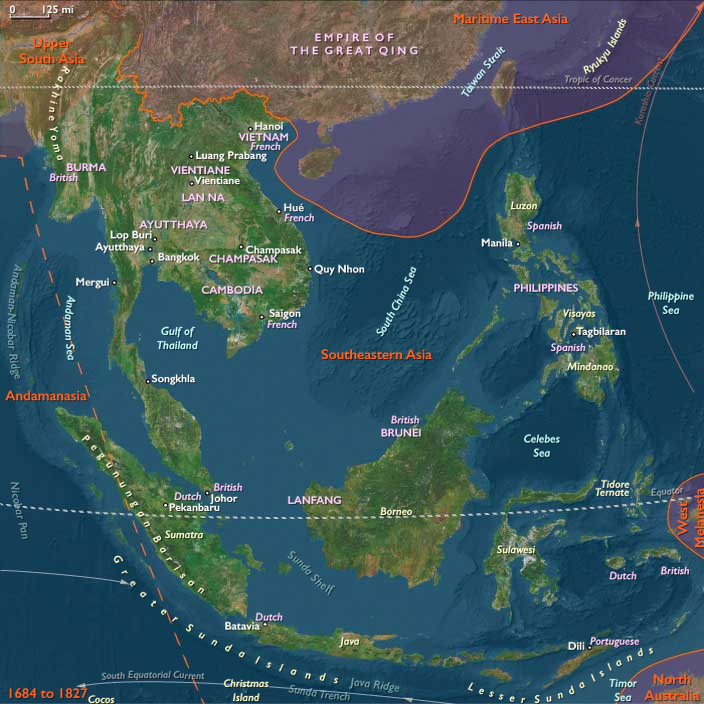
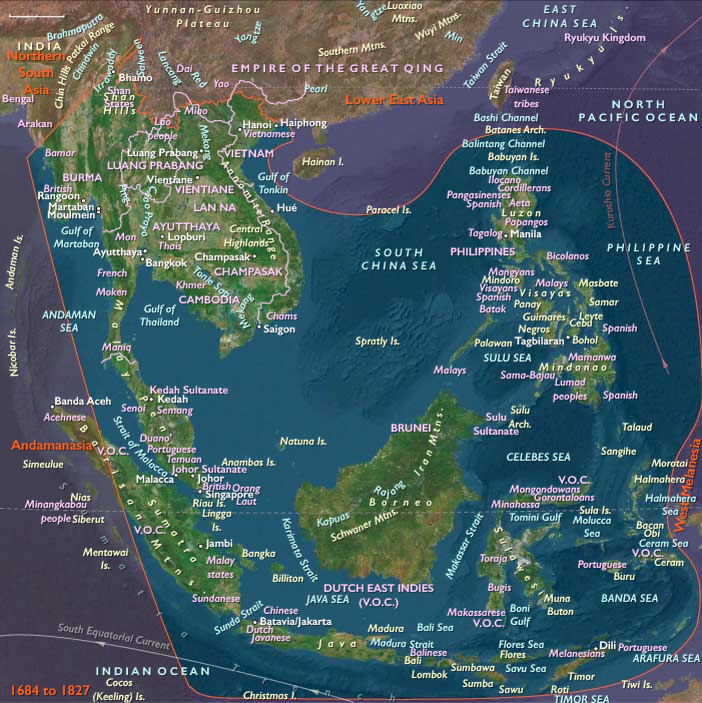
The Netherlands regains responsibility in 1816 for the East Indies—actually a welter of mostly coastal territories, some controlled directly and many others engaged through varying treaties—but the way forward is uncertain.
The growth of trade with Sulawesi and the establishment of plantation economies, especially those producing sugar (eastern and central Java) and coffee (western Java and western Sumatra) have begun to loosen customary ties and introduce elites to new sources of both riches and indebtedness.
In Java, the general population increases and grows more prosperous but, on the other hand, falls victim to increasing crime, heavier taxation, and exploitation by local Chinese, especially in their roles of tax farmers, tollkeepers, and leasers of plantation lands.
The legitimacy of ruling elites is questioned more widely.
Both traditionalists and Muslims feel their ways of life threatened by changes they tend to identify with growing European influence.
A Dutch decision in 1823 to end what it views as the abusive leasing of land and labor among central Java's aristocracy alienates many who had begun to adjust to the new circumstances and pushes them to support rebellion.
The general atmosphere of restlessness in a time of change that few understand also becomes charged with superstition and millennial expectations in reaction to crop failures, outbreaks of disease, and, near Yogyakarta, a destructive eruption of the Mount Merapi volcano.
Locations
Groups
- Bugis
- Hinduism
- Buddhism
- Indian people
- Malays, Ethnic
- Javanese people
- Acehnese people
- Osing people
- Dutch people
- Islam
- Bali, Kingdom of
- English people
- Tidore, Sultanate of
- Aceh, or Atjeh, Sultanate
- Blambangan, Kingdom of
- Ternate, Sultanate of
- Balinese
- Makassar people
- Banjarmasin, Sultanate of
- Banten Sultanate
- Mataram, Sultanate of
- Netherlands, United Provinces of the (Dutch Republic)
- Dutch East India Company in Indonesia
- Dutch East India Company (Vereenigde Oostindische Compagnie or VOC in Dutch, literally "United East Indies Company")
- East India Company, British (United Company of Merchants of England Trading to the East Indies)
- Britain (United Kingdom of Great Britain and Ireland)
Topics
Commodoties
Subjects
Regions
Subregions
Years: 1816 - 1827
Locations
Groups
- Bugis
- Hinduism
- Buddhism
- Indian people
- Malays, Ethnic
- Javanese people
- Acehnese people
- Osing people
- Dutch people
- Islam
- Bali, Kingdom of
- English people
- Tidore, Sultanate of
- Aceh, or Atjeh, Sultanate
- Blambangan, Kingdom of
- Ternate, Sultanate of
- Balinese
- Makassar people
- Banjarmasin, Sultanate of
- Banten Sultanate
- Mataram, Sultanate of
- Netherlands, United Provinces of the (Dutch Republic)
- Dutch East India Company in Indonesia
- Dutch East India Company (Vereenigde Oostindische Compagnie or VOC in Dutch, literally "United East Indies Company")
- East India Company, British (United Company of Merchants of England Trading to the East Indies)
- Britain (United Kingdom of Great Britain and Ireland)
Topics
Commodoties
Subjects
Regions
Subregions