
Young artists are beginning to experience a …
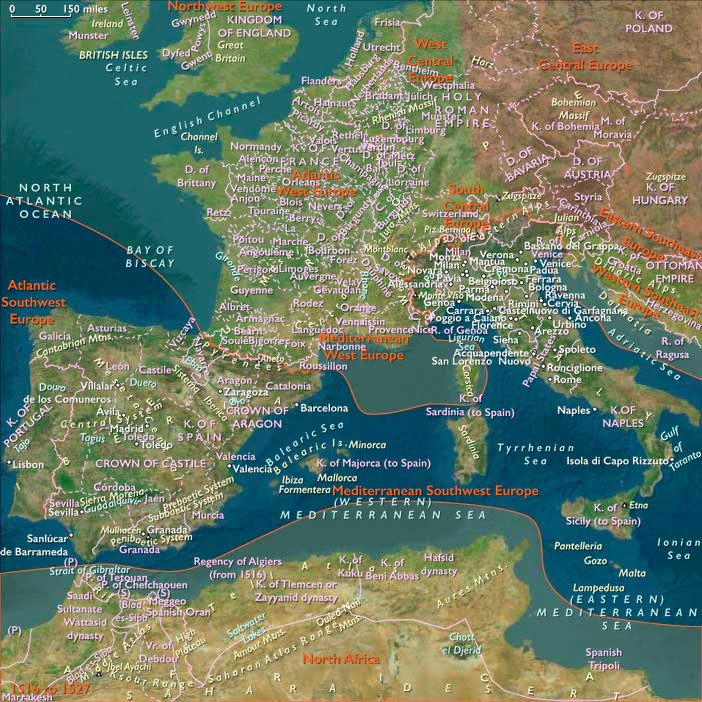
Years: 1516 - 1527
Young artists are beginning to experience a crisis by the end of the High Renaissance, as it seems that everything that can be achieved has already been achieved. and that no more difficulties, technical or otherwise, remain to be solved.
The detailed knowledge of anatomy, light, physiognomy and the way in which humans register emotion in expression and gesture, the innovative use of the human form in figurative composition, the use of the subtle gradation of tone, all have reached near perfection.
Mannerism starts to emerge at this point.
The new style develops between 1510 and 1520 either in Florence, or in Rome, or in both cities simultaneously.
This period has been described as a 'natural extension' of the art of Andrea del Sarto, Michelangelo, and Raphael.
Anticlassical tendencies begin to manifest themselves in Roman art before the death of Raphael in 1520, which marks the close of the so-called High Renaissance painting style.
In paintings executed in the late Renaissance style sometimes called Mannerism, which emerges around this time, the classical proportions of the figures become exaggerated, the colors harsh, and the composition agitated and asymmetrical.
The word mannerism derives from the Italian maniera, meaning "style" or "manner".
Like the English word "style", maniera can either indicate a specific type of style (a beautiful style, an abrasive style) or indicate an absolute that needs no qualification (someone "has style").
In the second edition of his Lives of the Most Excellent Painters, Sculptors, and Architects (1568), Giorgio Vasari will use maniera in three different contexts: to discuss an artist's manner or method of working; to describe a personal or group style, such as the term maniera greca to refer to the Byzantine style or simply to the maniera of Michelangelo; and to affirm a positive judgment of artistic quality.
Vasari, who will also become a Mannerist artist, will describe the period in which he works as "la maniera moderna", or the "modern style".
People
Groups
Topics
Subjects
Regions
Subregions

Years: 1516 - 1527
People
Groups
Topics
Subjects
Regions
Subregions