
Cleveland, by the war's end, had become …
Years: 1866 - 1866
Cleveland, by the war's end, had become one of the five main refining centers in the U.S. (besides Pittsburgh, Philadelphia, New York, and the region in northwestern Pennsylvania where most of the oil originated).
Cleveland had obtained its name on July 22, 1796, when surveyors of the Connecticut Land Company laid out Connecticut's Western Reserve into townships and a capital city they named "Cleaveland" after their leader, General Moses Cleaveland.
Cleaveland had overseen the plan for what would become the modern downtown area, centered on Public Square, before returning home, never again to visit Ohio.
The first settler in Cleaveland had been Lorenzo Carter, who had built a cabin on the banks of the Cuyahoga River.
The Village of Cleaveland was incorporated on December 23, 1814.
In spite of the nearby swampy lowlands and harsh winters, its waterfront location had proven to be an advantage.
The area had begun rapid growth after the 1832 completion of the Ohio and Erie Canal.
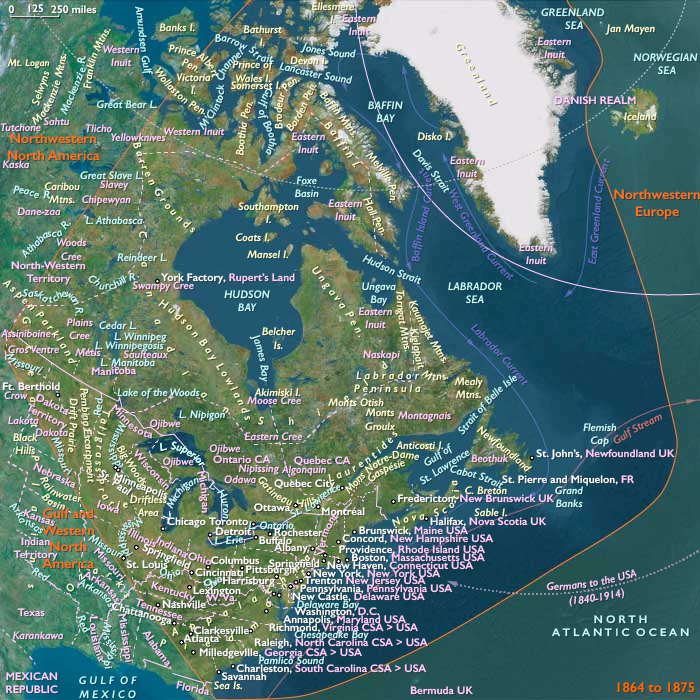
This key link between the Ohio River and the Great Lakes connects the city to the Atlantic Ocean via the Erie Canal and later via the St. Lawrence Seaway; and the Gulf of Mexico via the Mississippi River.
Growth had continued with added railroad links.
Cleveland had incorporated as a city in 1836.
In 1836, the city, then located only on the eastern banks of the Cuyahoga River, had nearly erupted into open warfare with neighboring Ohio City over a bridge connecting the two.
Ohio City had remained an independent municipality until its annexation by Cleveland in 1854.
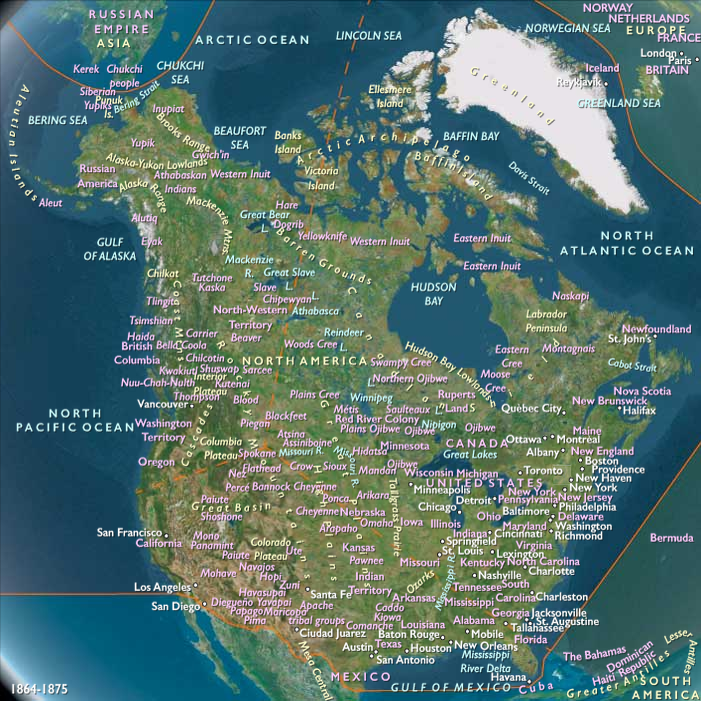
The city's prime geographic location as transportation hub on the Great Lakes has played an important role in its development as a commercial center.
Cleveland serves as a destination point for iron ore shipped from Minnesota, as well as coal transported by rail.
Locations
People
Groups
Topics
Commodoties
Subjects
Regions
Subregions
Related Events
Showing 10 events out of 13367 total
Years: 1866 - 1866
Locations
People
Groups
Topics
Commodoties
Subjects
Regions
Subregions