
The Jesuits had By 1768 been expelled …
Years: 1769 - 1769
The Jesuits had By 1768 been expelled from Portugal and from all the Bourbon courts: France, Spain, Naples, and Parma.
Pope Clement XIII had issued a strong protest (monitorium) against the anti-Jesuit policy of the Parmese government; the question of the investiture of Parma has aggravated his troubles.
The Bourbon kings espouse their relative's quarrel, seize Avignon, Benevento and Pontecorvo, and in January 1769 unite in a peremptory demand for the total suppression of the Jesuits.
The Pope, driven to extremes, consents to call a consistory to consider the step, but on February 2, the very eve of the day set for its meeting he dies, not without suspicion of poison, of which, however, there appears to be no conclusive evidence.
Giovanni Vincenzo Antonio Ganganelli, who had been appointed by this Pope to investigate the issue of the traditional blood libel regarding the Jews, which he found to be untrue, is at this time the only Franciscan friar in the College of Cardinals.
The faction called the "court cardinals", who are generally opposed to the encroaching secularism of the Enlightenment, are opposed by the diminished pro-Jesuit faction, the Zelanti ("zealous"), now urge the general suppression of the order.
Ganganelli is installed on June 4 as the 249th pope, largely due to support of the Bourbon courts, which expect that he will suppress the Society of Jesus, after a conclave that had been sitting since February 15, heavily influenced by the political maneuvers of the ambassadors of Catholic sovereigns who are opposed to the Jesuits.
He takes the name Clement XIV.
Locations
People
Groups
- Jews
- Papal States (Republic of St. Peter)
- Christians, Roman Catholic
- Franciscans, or Order of St. Francis
- Jesuits, or Order of the Society of Jesus
- Parma and Piacenza, Duchies of
- France, (Bourbon) Kingdom of
- Spain, Bourbon Kingdom of
- Naples and Sicily, Bourbon Kingdom of
Topics
Commodoties
Subjects
Regions
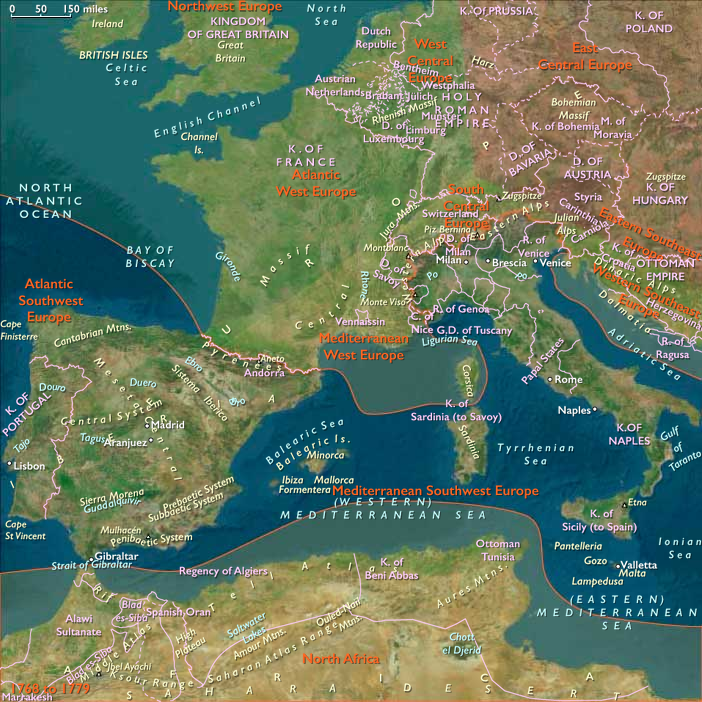
Subregions
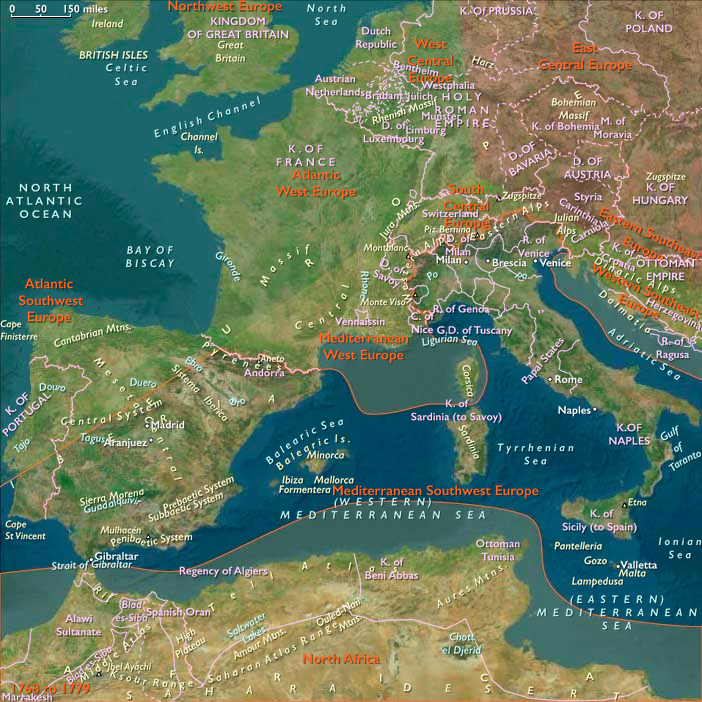
Related Events
Showing 10 events out of 26017 total
Years: 1769 - 1769
Locations
People
Groups
- Jews
- Papal States (Republic of St. Peter)
- Christians, Roman Catholic
- Franciscans, or Order of St. Francis
- Jesuits, or Order of the Society of Jesus
- Parma and Piacenza, Duchies of
- France, (Bourbon) Kingdom of
- Spain, Bourbon Kingdom of
- Naples and Sicily, Bourbon Kingdom of
Topics
Commodoties
Subjects
Regions
Subregions