
Filters:
The Hollanders' Raids and …
Years: 1047 - 1047
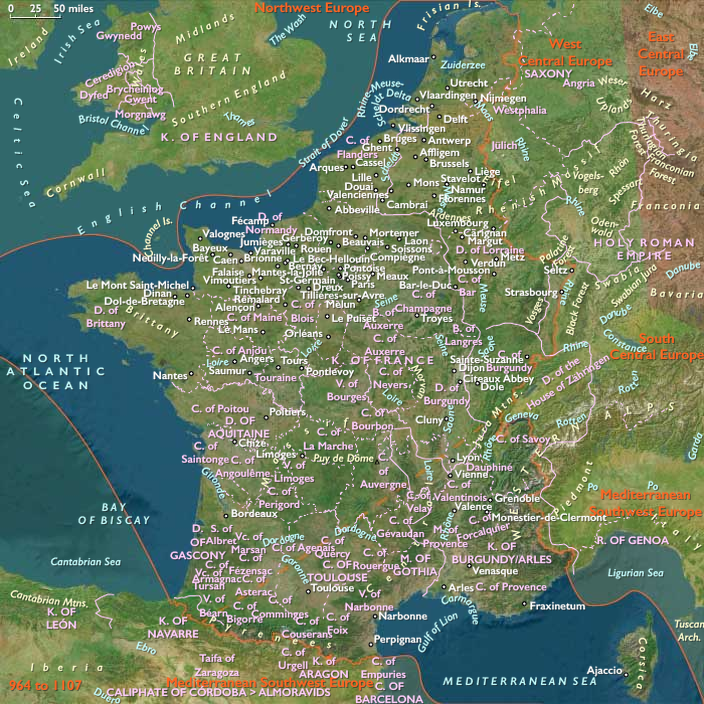
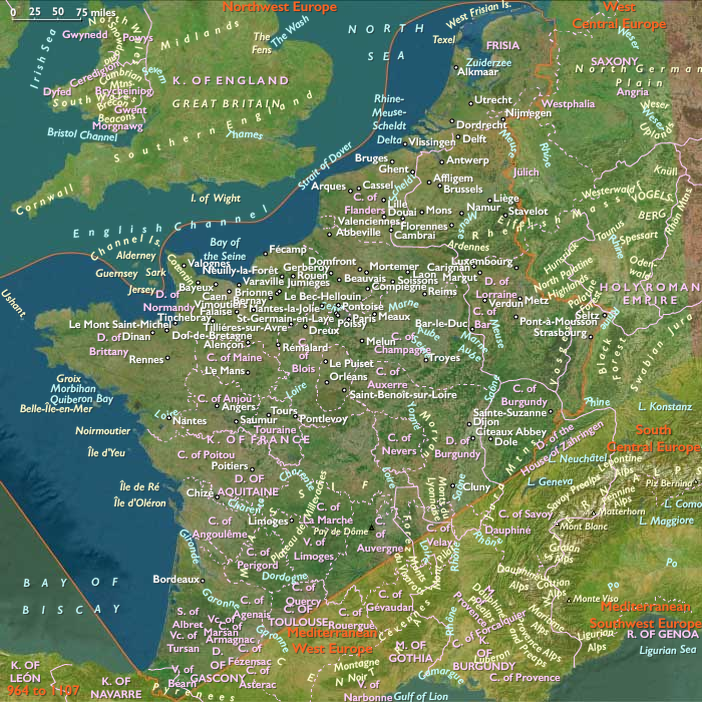
The Hollanders' Raids and the Sack of Nijmegen and Verdun
- Dirk IV of Holland, emboldened by his victory over Henry III, raided deep into imperial territory, targeting key cities.
- His forces sacked Charlemagne’s palace at Nijmegen, an act meant to humiliate the emperor and undermine his authority in Lower Lorraine.
- The city of Verdun, an important ecclesiastical and commercial center, was burned, further exacerbating imperial instability.
- These raids demonstrated that Henry III’s authority in the Low Countries was not secure, and that anti-imperial forces were gaining momentum.
Godfrey the Bearded’s Penance and Rebuilding Efforts
- Amidst this ongoing chaos, Godfrey the Bearded—formerly the leader of the Lotharingian rebellion against Henry III—now sought to repair his relationship with the emperor.
- In a gesture of public penance, Godfrey took an active role in the reconstruction of Verdun, assisting in restoring the city and rebuilding the damages caused by Dirk IV’s forces.
- His penance and assistance in reconstruction marked a turning point in his relationship with Henry III, positioning him as a potential ally rather than an enemy.
Consequences and Political Shifts
- The Hollanders’ attacks shocked the imperial court, further exposing Henry III’s challenges in maintaining control over rebellious vassals.
- The destruction of Verdun and the desecration of Nijmegen signaled the deepening unrest in Lower Lorraine, requiring Henry III to continue military campaigns to reassert dominance.
- Godfrey’s public reconciliation with the empire weakened the anti-imperial alliance, isolating Dirk IV of Holland and Baldwin of Flanders, who continued to oppose Henry.
Though the Lotharingian conflict was far from over, Godfrey’s shift toward imperial reconciliation and his role in restoring Verdun reflected a changing political landscape, setting the stage for new alliances and further confrontations in the years ahead.
Locations
People
Groups
- Germans
- Christianity, Chalcedonian
- Papal States (Republic of St. Peter)
- Salerno, Lombard Principality of
- Normans
- German, or Ottonian (Roman) Empire
- Carinthia, Duchy of
- Capua, Lombard Principality of
- Benevento, Lombard Duchy of
Topics
Commodoties
Subjects
Regions
Subregions
Years: 1047 - 1047
Locations
People
Groups
- Germans
- Christianity, Chalcedonian
- Papal States (Republic of St. Peter)
- Salerno, Lombard Principality of
- Normans
- German, or Ottonian (Roman) Empire
- Carinthia, Duchy of
- Capua, Lombard Principality of
- Benevento, Lombard Duchy of
Topics
Commodoties
Subjects
Regions
Subregions