
Burchard II, Bishop of Halberstadt, had in …
Years: 1068 - 1068
Burchard II, Bishop of Halberstadt, had in 1057 become provost of the church of SS Simon and Judas in Goslar.
In 1059, through the intervention of his uncle, Anno, he had succeeded Burchard I in the diocese of Halberstadt.
In 1062, it had been the decision of a German-Italian synod held at Augsburg to send Burchard, high in the favor of the regent of the young Henry IV, Empress Agnes, to Rome to mediate a disputed Papal election between the legitimate Pope Alexander II and the Antipope Honorius II.
Although the German crown stood by Honorius, Burchard had vowed to stand by Hildebrand, the great Papal reformer, and supported Alexander.
In gratitude, Alexander had bestowed on Burchard the coveted pallium.
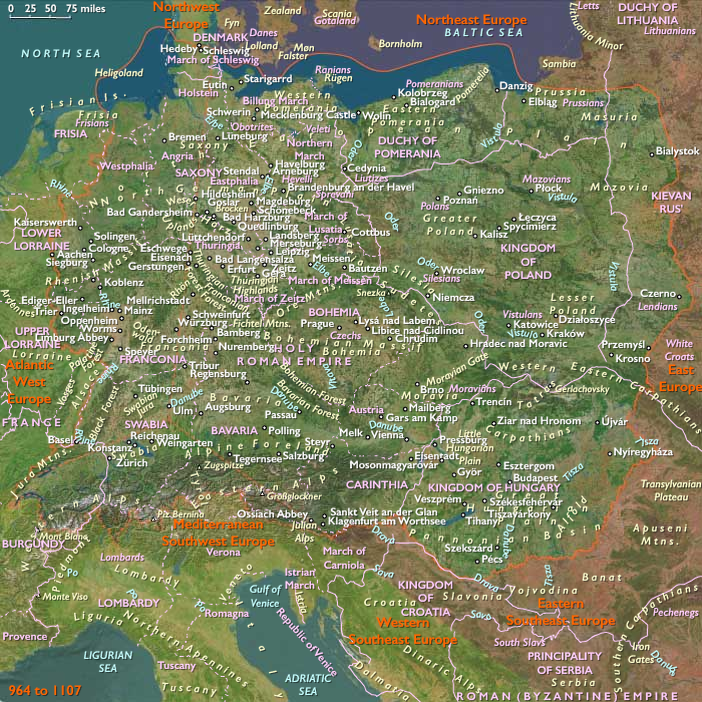
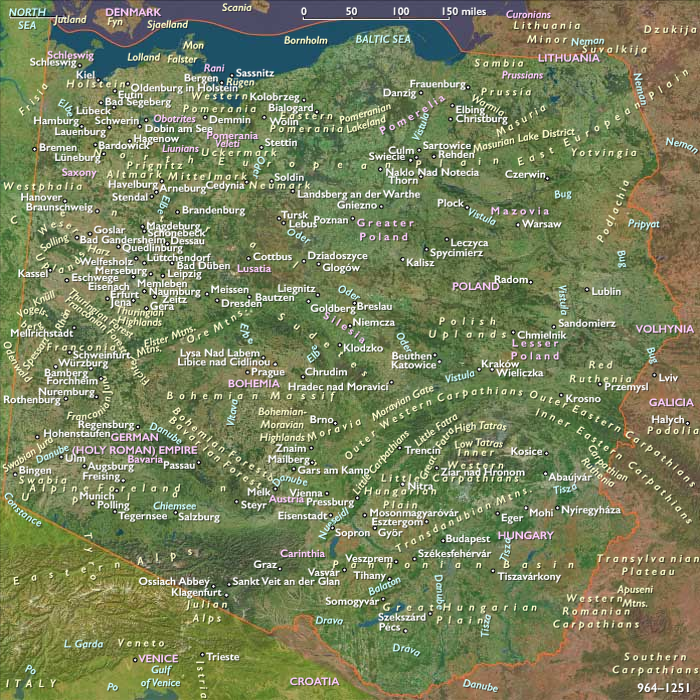
In the dead of winter 1067–1068, Burchard, crossing frozen marshland, invades the country of the Lutici, razes the pagan temple at Radgosc, and returns to Saxony riding the sacred black horse.
Locations
People
- Agnes of Poitou
- Anno II
- Burchard II
- Gottschalk
- Henry IV, Holy Roman Emperor
- Honorius II
- Pope Alexander II
- Pope Gregory VII
- Sweyn II of Denmark
Groups
- Polytheism (“paganism”)
- Germans
- Rani (Slavic tribe)
- Polabian Slavs (West Slavs)
- Wends, or Sorbs (West Slavs)
- Christianity, Chalcedonian
- Obotrites (Slavic tribal confederation)
- Denmark, Kingdom of
- Danes (Scandinavians)
- Saxony, Duchy of
- Cologne, Electorate of
- German, or Ottonian (Roman) Empire
- Lutici (West Slavic Polabian tribe)
- Meissen, March of
- Magdeburg, Archbishopric of
- Norway, independent Kingdom of
Topics
Commodoties
Subjects
Regions
Subregions
Years: 1068 - 1068
Locations
People
- Agnes of Poitou
- Anno II
- Burchard II
- Gottschalk
- Henry IV, Holy Roman Emperor
- Honorius II
- Pope Alexander II
- Pope Gregory VII
- Sweyn II of Denmark
Groups
- Polytheism (“paganism”)
- Germans
- Rani (Slavic tribe)
- Polabian Slavs (West Slavs)
- Wends, or Sorbs (West Slavs)
- Christianity, Chalcedonian
- Obotrites (Slavic tribal confederation)
- Denmark, Kingdom of
- Danes (Scandinavians)
- Saxony, Duchy of
- Cologne, Electorate of
- German, or Ottonian (Roman) Empire
- Lutici (West Slavic Polabian tribe)
- Meissen, March of
- Magdeburg, Archbishopric of
- Norway, independent Kingdom of
Topics
Commodoties
Subjects
Regions
Subregions