
Filters:
Kammu moves the capital to Heian (Kyoto), …
Years: 784 - 795
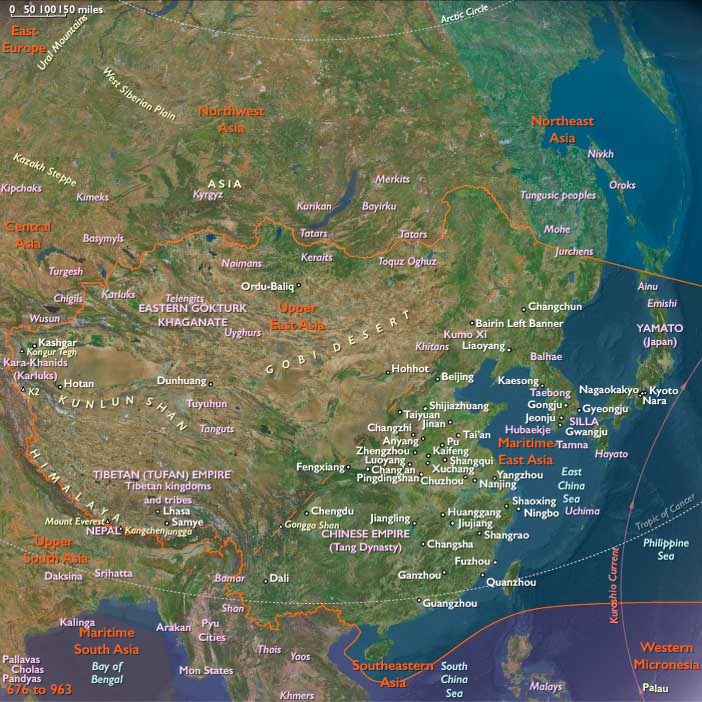
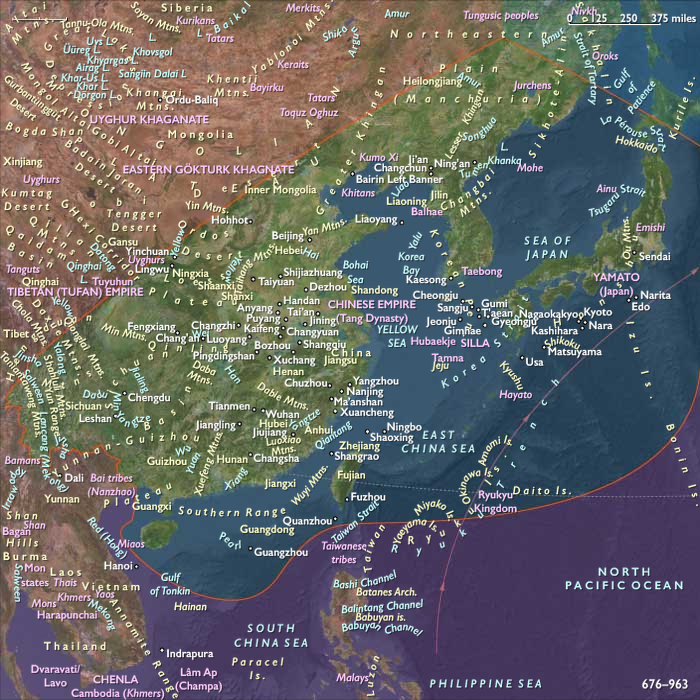
Kammu moves the capital to Heian (Kyoto), which will remain the imperial capital for the next thousand years, doing so not only to strengthen imperial authority but also to improve his seat of government geopolitically.
Kyoto has good river access to the sea and can be reached by land routes from the eastern provinces.
The early Heian period (794-967) continues Nara culture; the Heian capital is patterned on the Chinese capital at Chang' an, as is Nara, but on a larger scale.
Despite the decline of the Taika-Taiho reforms, imperial government is vigorous during the early Heian period.
Indeed, Kammu's avoidance of drastic reform decreases the intensity of political struggles, and he becomes recognized as one of Japan's most forceful emperors.
Locations
People
Groups
- Shinto
- Japanese people
- Buddhists, Zen or Chán
- Japan, Yamato Hakuho (Late Asuka) Period
- Japan, Nara Period
- Japan, Heian Period
Subjects
Regions
Subregions
Years: 784 - 795
Locations
People
Groups
- Shinto
- Japanese people
- Buddhists, Zen or Chán
- Japan, Yamato Hakuho (Late Asuka) Period
- Japan, Nara Period
- Japan, Heian Period
Subjects
Regions
Subregions