
Olivier de Clisson’s Rise to Power and …
Years: 1373 - 1373
Olivier de Clisson’s Rise to Power and the Siege of Derval (1373)
Following the French invasion of Brittany in early 1373 and the exile of Duke John IV to England, Olivier de Clisson emerged as one of the most powerful figures in the duchy. Though he could have claimed the title of Duke of Brittany, King Charles V instead chose his brother, Louis I, Duke of Anjou, to serve as the nominal ruler of the duchy under the title "Lieutenant of the King." However, this appointment was purely symbolic, as the Duke of Anjou never set foot in Brittany.
Instead, Olivier de Clisson was appointed co-regent of Brittany, alongside Viscount John I of Rohan, taking on real political and military authority in the region.
The Political Settlement of Brittany
- Charles V avoided placing Clisson as Duke, likely fearing:
- That Clisson’s personal ambitions could make Brittany too independent.
- That Brittany would need a ruler tied more closely to the Valois monarchy, hence his choice of the Duke of Anjou, who was married to a daughter of Charles de Blois-Penthièvre.
- Since the Duke of Anjou never entered Brittany, Clisson and Rohan became de facto rulers of the duchy, overseeing its defenses and governance in the name of the French Crown.
The Siege of Derval (Summer 1373)
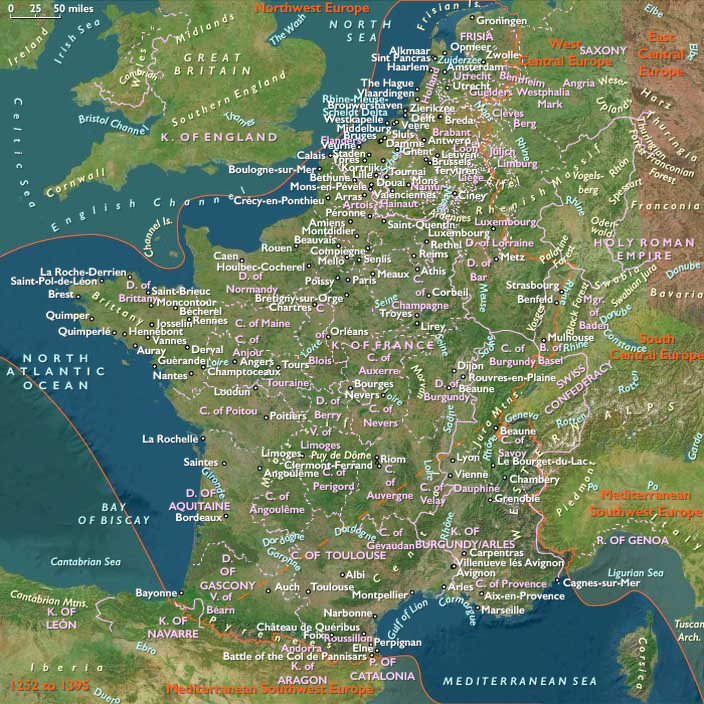
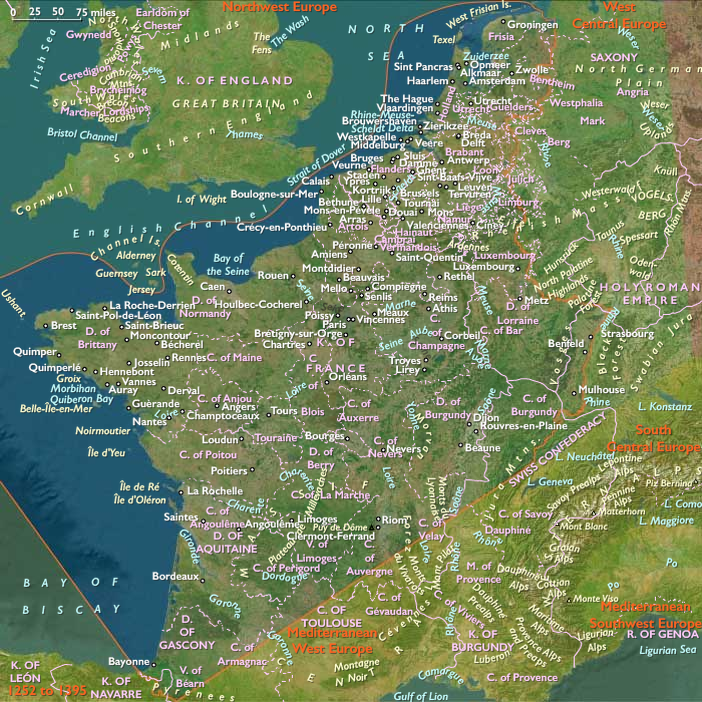
- As the French campaign in Brittany continued, Clisson led the siege of Derval, a strategically significant castle.
- Derval was symbolically important because it belonged to the English general Robert Knolles, a key figure in English military operations in Brittany.
- The siege marked the beginning of a broader French effort to expel English forces from the region.
Impact and Legacy
- Olivier de Clisson’s role as co-regent of Brittany cemented his authority, making him one of the most powerful figures in the duchy.
- The siege of Derval was part of the larger French strategy under Charles V and Bertrand du Guesclin to weaken English influence in Brittany and western France.
- Clisson’s involvement in the governance and military affairs of Brittany positioned him for his later appointment as Constable of France in 1380, where he would become one of the kingdom’s leading military commanders.
The political reorganization of Brittany in 1373, combined with Clisson’s growing power and the siege of Derval, marked a critical phase in the Hundred Years’ War, as France continued its successful campaign to drive out English forces.
Locations
People
- Bertrand du Guesclin
- Charles V of France
- Edward III of England
- John IV, Duke of Brittany
- Olivier de Clisson
- Robert Knolles
Groups
Topics
Subjects
Regions
Subregions
Related Events
Showing 10 events out of 43786 total
Years: 1373 - 1373
Locations
People
- Bertrand du Guesclin
- Charles V of France
- Edward III of England
- John IV, Duke of Brittany
- Olivier de Clisson
- Robert Knolles
Groups
Topics
Subjects
Regions
Subregions