
Britain, whose nineteenth-century treaties with the Gulf …
Years: 1835 - 1835
Britain, whose nineteenth-century treaties with the Gulf sheikhdoms, in general, will be concerned with preserving the peace at sea, had not interfered with the warlike Al-Qasimi's attempts to take Abu Dhabi (1825-31 and 1833-34).
Now that the British have halted piracy in the Persian Gulf, the Al-Qasimi tribe has lost power and influence in the region, and the Banu Yas tribal confederation of Abu Dhabi has become dominant.
The standard Arabic reference to a tribe is bani fulan, literally translated as "the sons of so-and-so".
The Banu Yas, whose origin can be traced back to Yas Bin Amer of the Nizar Bin Maid bin Adnan tribe, are centered on the Al-'Ayn and Al-Liwa' oases of Abu Dhabi, and their strength is land-based.
Under the leadership of the Al Nahyan (members of the Al Bu Falah tribe, related to the House of Al-Falasi, from which descends the ruling family of Dubai, Al Maktoum), the Banu Yas become the most powerful element in the region.
Abu Dhabi concludes arrangements with Britain similar to those of Dubai and Bahrain in 1835.
In the same year, the Al-Qasimi are induced to enter into a binding maritime truce to end hostilities with the British by sea.
Locations
Groups
- Bani Yas (Arab tribe)
- Abu Dhabi, Emirate of
- Al Qasimi (Adnani Arabian tribe)
- Ra's al-Khaymah, or Ras al-Khaimah, Emirate of
- Sharjah (ash-Shariqah), Emirate of
- Ajman, or 'Ujman, Emirate of
- Bahrain, Emirate of
- Dubai, Emirate of
- Britain (United Kingdom of Great Britain and Ireland)
Subjects
Regions
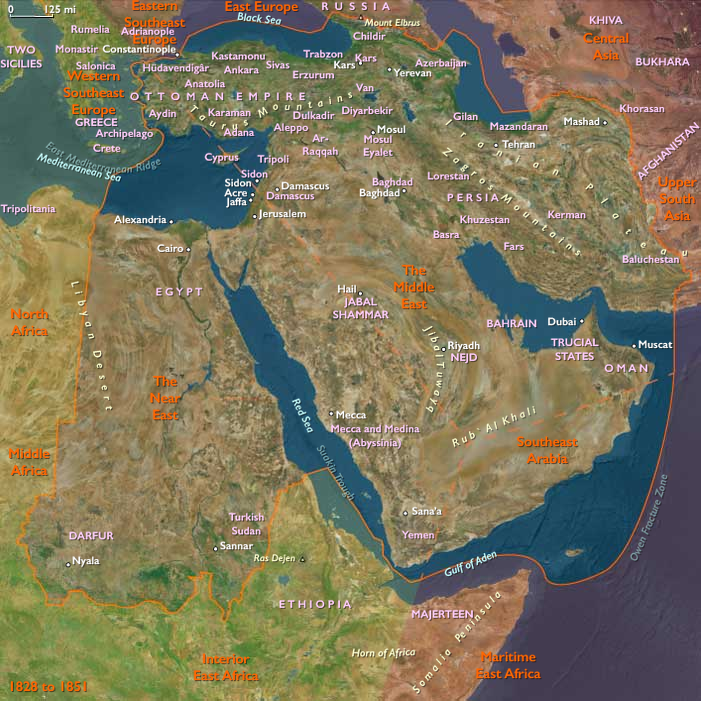
Subregions
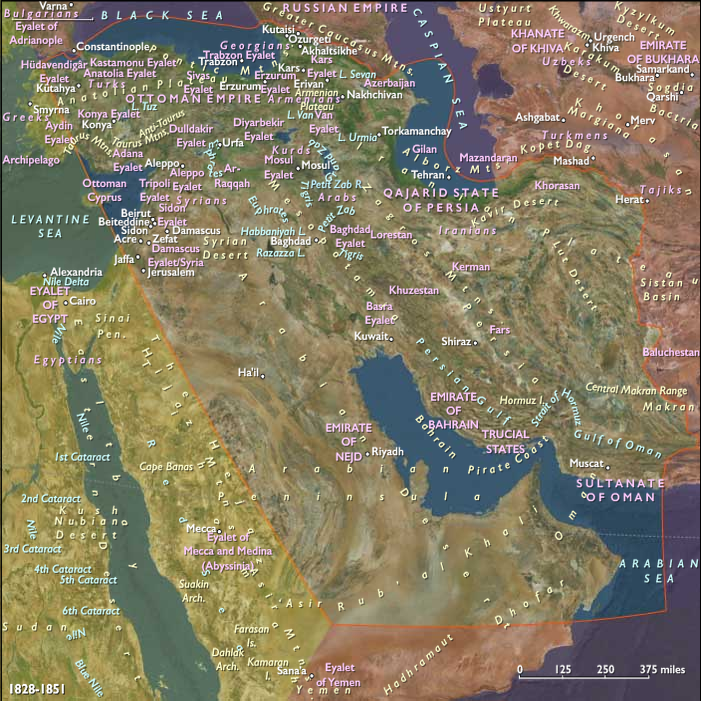
Related Events
Showing 10 events out of 18580 total
Years: 1835 - 1835
Locations
Groups
- Bani Yas (Arab tribe)
- Abu Dhabi, Emirate of
- Al Qasimi (Adnani Arabian tribe)
- Ra's al-Khaymah, or Ras al-Khaimah, Emirate of
- Sharjah (ash-Shariqah), Emirate of
- Ajman, or 'Ujman, Emirate of
- Bahrain, Emirate of
- Dubai, Emirate of
- Britain (United Kingdom of Great Britain and Ireland)
Subjects
Regions
Subregions