
Britain had previously regarded Qatar as a …
Years: 1868 - 1868
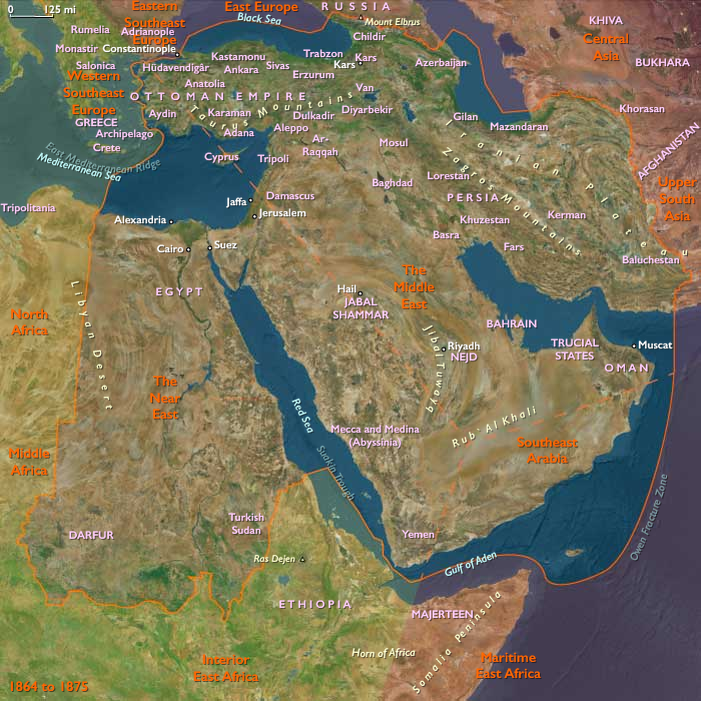
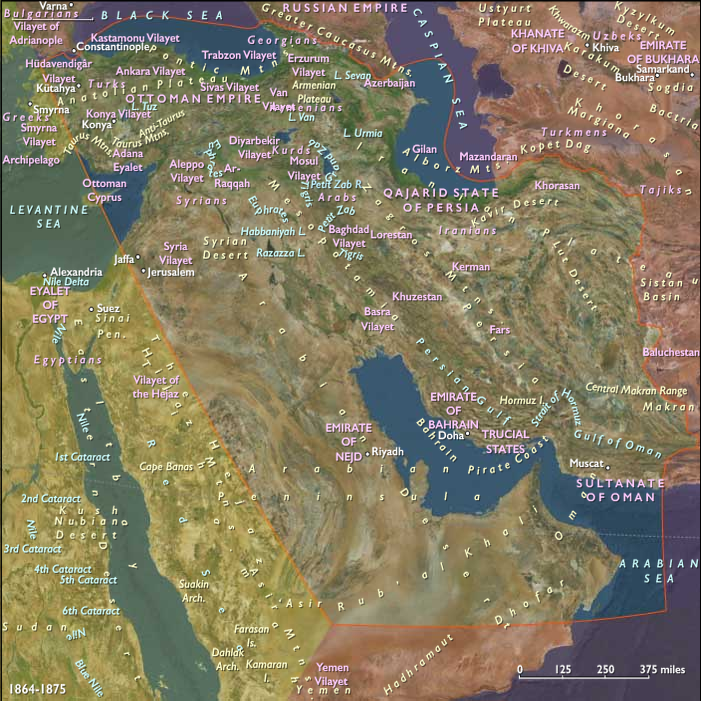
Britain had previously regarded Qatar as a Bahraini dependency, but the attack by Bahrain, and the Qatari counterattack, spurs the British political agent, Colonel Lewis Pelly, to impose a settlement in 1868.
His mission to Bahrain and Qatar and the resultant peace treaty implicitly recognize the distinctness of Qatar from Bahrain and explicitly acknowledge the position of Mohammad bin Thani, an important representative of the peninsula's tribes.
Until this point, the Al-Thani clan had been only one among several important families on the peninsula.
Locations
People
Groups
- Thani, House of
- Abu Dhabi, Emirate of
- Al Khalifa family
- Britain (United Kingdom of Great Britain and Ireland)
- Bahrain, British protectorate of
- Qatar, Emirate of
Topics
Subjects
Regions
Subregions
Related Events
Showing 10 events out of 13080 total
Years: 1868 - 1868
Locations
People
Groups
- Thani, House of
- Abu Dhabi, Emirate of
- Al Khalifa family
- Britain (United Kingdom of Great Britain and Ireland)
- Bahrain, British protectorate of
- Qatar, Emirate of
Topics
Subjects
Regions
Subregions