
Britain first becomes an island about three …
Years: 339597BCE - 318862BCE
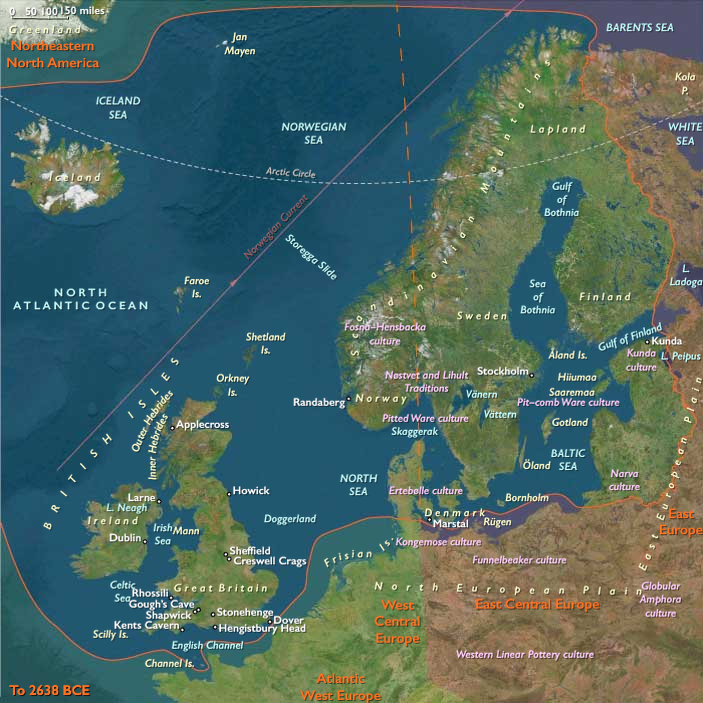
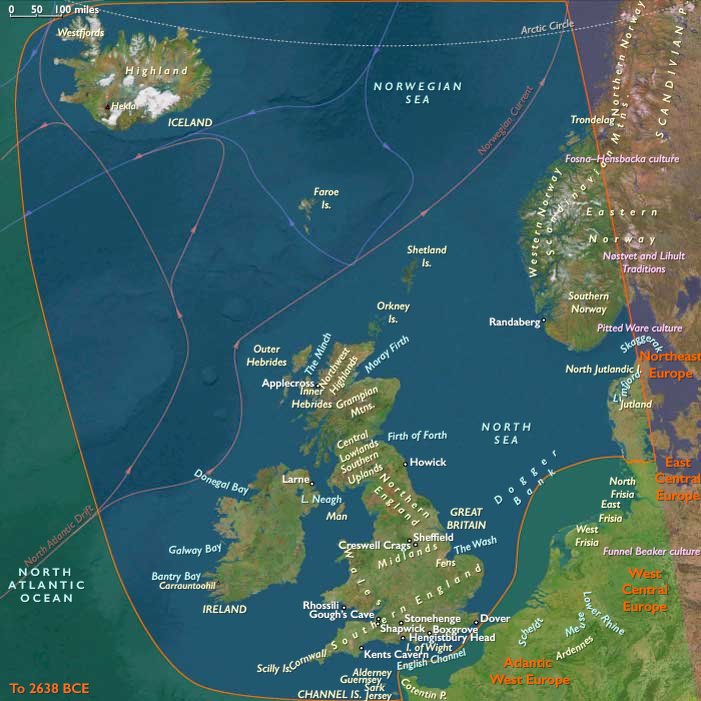
Britain first becomes an island about three hundred and fifty thousand years ago, near the beginning of the Wolstonian stage, named after the site of Wolston in the English county of Warwickshire where corresponding deposits were first identified.
This period sees the introduction of Levallois flint tools, possibly by humans arriving from Africa, although finds from Swanscombe and Botany Pit in Purfleet support Levallois technology as a European rather than African introduction.
This more advanced flint technology, which made hunting more efficient, therefore made Britain a more worthwhile place to remain until the increasingly cool climate of the Wolstonian Stage, which apparently includes three periods of glaciation, made continued habitation unattractive, if not impossible.
Acheulean flint tools, typically found with Homo erectus remains, have been found in Wolstonian deposits.
Locations
Groups
Topics
Subjects
Regions
Subregions
Related Events
Showing 10 events out of 69761 total
Years: 339597BCE - 318862BCE
Locations
Groups
Topics
Subjects
Regions
Subregions