
The Revolt of the Maillotins (Harelle) and …
Years: 1383 - 1383
The Revolt of the Maillotins (Harelle) and Charles VI’s Response (1382–1383)
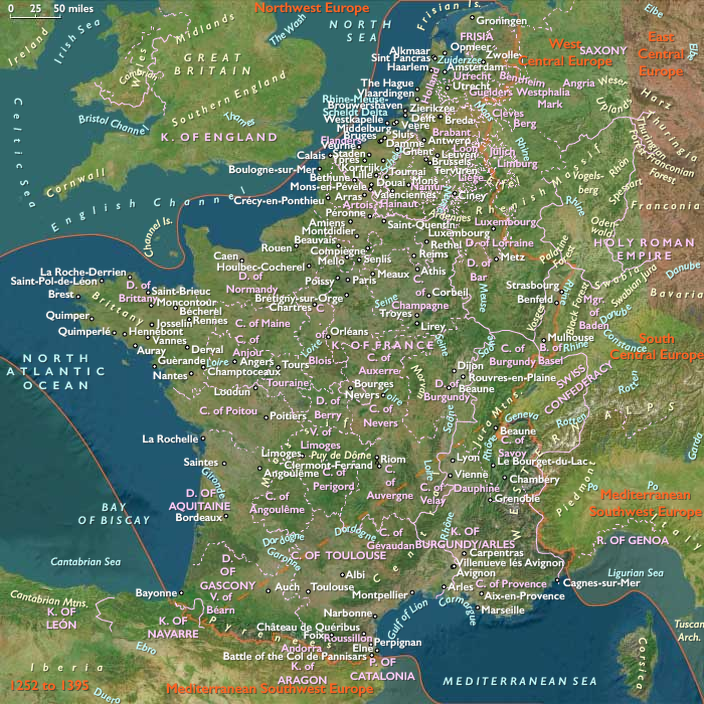
The Flemish uprising of 1382, which had culminated in the Battle of Roosebeke, ignited secondary revolts in Paris, where citizens, emboldened by the unrest, rose up against royal taxation. This revolt, known as the Revolt of the Maillotins (or Harelle), broke out in March 1382, during King Charles VI’s absence while campaigning in Flanders.
However, upon Charles VI’s victorious return to Paris, the rebellion collapsed without a fight, and the king imposed financial penalties on the city’s wealthier citizens instead of unleashing violent repression.
Causes of the Maillotin Revolt (March 1382)
- The reinstatement of a tax that had been abolished by the previous king sparked popular outrage among the working and merchant classes of Paris.
- The Flemish rebellion inspired similar aspirations for autonomy in Paris, where the bourgeoisie saw an opportunity to resist feudal authority.
- With King Charles VI absent, supporting his troops in Flanders, the rebels believed that royal power was weakened and that they could press for reforms.
The Collapse of the Revolt and Charles VI’s Return to Paris
- Following his victory in Flanders (Battle of Roosebeke, November 1382), Charles VI marched back to Paris.
- The Parisian rebels, seeing the King’s triumph, lost confidence and did not resist his return.
- By February 1383, Charles VI, along with Constable Olivier de Clisson, confronted the city’s leadership.
Olivier de Clisson’s Ultimatum to the Rebels
- Clisson, addressing the citizens, declared:
"Corps and property, you are in case of forfeiture. See what you choose: justice or mercy."
- Facing a stark choice between harsh justice (executions and confiscations) or financial penalties, the Parisian bourgeoisie chose mercy—agreeing to pay a heavy fine based on individual wealth.
Royal Mercy and the Partial Forgiveness of Fines
- Despite initial heavy financial penalties, Charles VI’s entourage eventually reduced the total sum demanded.
- This magnanimous gesture helped restore order while reinforcing the authority of the monarchy.
- The revolt’s failure marked a return to stronger royal control over Paris, ending municipal ambitions for greater autonomy.
Impact and Legacy
- The Maillotin Revolt (1382) was one of the last major urban uprisings in Paris before the 15th-century civil wars.
- The swift and calculated response from Charles VI and Olivier de Clisson demonstrated the effectiveness of royal authority, discouraging future revolts.
- The King’s decision to offer clemency in exchange for financial penalties reinforced the monarchy’s reliance on taxation rather than outright violence to maintain control.
The Parisian revolt of 1382, quelled in early 1383, reaffirmed Charles VI’s power, demonstrating that while urban unrest could challenge the monarchy, it could not yet overthrow it.
Locations
People
Groups
Topics
Commodoties
Subjects
Regions
Subregions
Related Events
Showing 10 events out of 43643 total
Years: 1383 - 1383
Locations
People
Groups
Topics
Commodoties
Subjects
Regions
Subregions