
Political Struggles in France: The Rise of …
Years: 1382 - 1382
Political Struggles in France: The Rise of Olivier de Clisson as Leader of the Anti-Burgundian Party (1382)
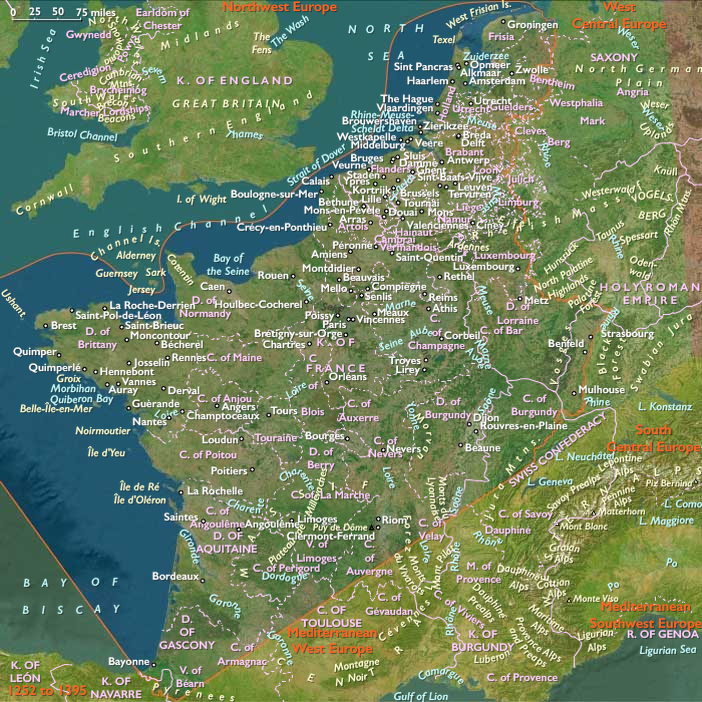
By 1382, the French court was dominated by factional struggles, as the boy-king Charles VI was still too young to govern independently. His uncles, notably Philip the Bold of Burgundy, sought to control royal policy, while opposition forces, led by Louis, Duke of Anjou, attempted to counterbalance Burgundian influence. When Louis died in 1382, Olivier de Clisson, the Constable of France, emerged as the new leader of the anti-Burgundian faction, supported by northwestern nobility and military commanders.
Power Struggles at the French Court
- Philip the Bold of Burgundy attempted to assert dominance over France’s policies, securing his influence over the young Charles VI.
- Louis, Duke of Anjou, led an anti-Burgundian party, made up of:
- Royal officials who opposed Burgundian control.
- Military commanders who favored a more independent, centralized monarchy.
- Nobles from northwestern France, traditionally wary of Burgundian power.
Olivier de Clisson’s Rise as Anti-Burgundian Leader (1382)
- Upon Louis of Anjou’s death in 1382, leadership of the anti-Burgundian party fell to Olivier de Clisson, Constable of France.
- Clisson, a seasoned military leader, had strong backing from:
- French royal commanders, who had fought alongside him in Brittany and against the English.
- Nobles from Brittany, Normandy, and Anjou, regions historically skeptical of Burgundian dominance.
- His leadership shifted the opposition from a purely political struggle to one with strong military implications.
Impact and Legacy
- The power struggle between Burgundy and its opponents would continue for decades, eventually escalating into the Armagnac-Burgundian Civil War (1407–1435).
- Clisson’s leadership in the anti-Burgundian faction placed him at odds with Philip the Bold, leading to further conflicts at the French court.
- His control over the military gave the anti-Burgundian party a significant advantage, influencing future French campaigns against English and Burgundian interests.
The rise of Olivier de Clisson as leader of the anti-Burgundian party in 1382 marked a new phase in the internal power struggles of France, as the country drifted toward further factional conflicts that would shape its history well into the 15th century.
Locations
People
Groups
Topics
Commodoties
Subjects
Regions

Subregions
Related Events
Showing 10 events out of 43662 total
Years: 1382 - 1382
Locations
People
Groups
Topics
Commodoties
Subjects
Regions
Subregions