
he Renewal of the Armagnac-Burgundian War and …
Years: 1411 - 1411
November
he Renewal of the Armagnac-Burgundian War and the Battle of Saint-Cloud (1411)
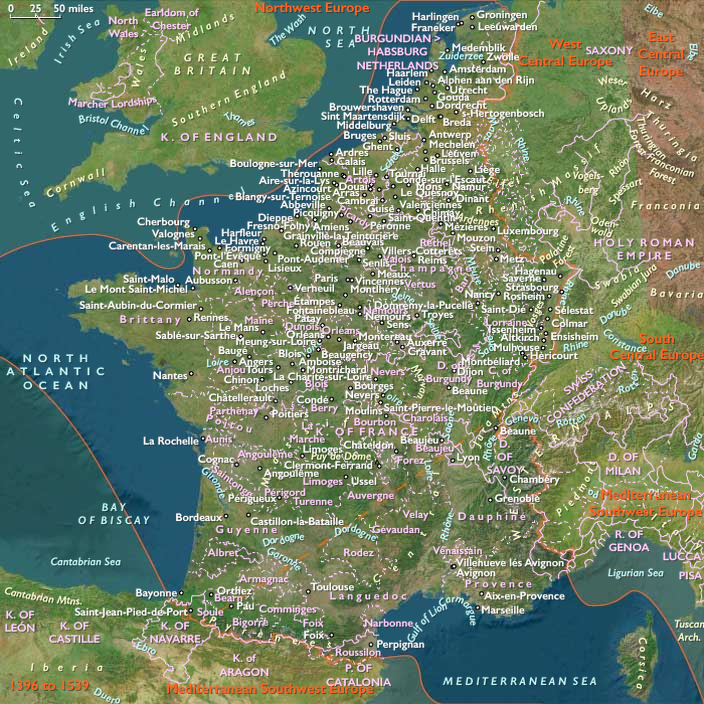
By spring 1411, the Armagnac-Burgundian conflict had reignited, with both factions resuming open warfare for control of France and its monarchy, still paralyzed by the mental instability of King Charles VI. The Duke of Burgundy, John the Fearless, launched a major military campaign in October 1411, leading a 60,000-strong army into Paris, where he engaged the Breton forces allied with the Armagnacs at La Chapelle.
Though initially repelled, John later outmaneuvered the Armagnac forces and on the night of November 8–9, 1411, left Paris via the Porte Saint-Jacques, marched through Saint-Cloud, and decisively crushed the feared Écorcheurs.
I. The Renewed Civil War (Spring–October 1411)
- After the failure of the Treaty of Bicêtre (1410), both sides mobilized for war once more.
- The Armagnacs, led by Bernard VII of Armagnac and Charles of Orléans, sought to strengthen their hold on the Dauphin Charles and the royal court.
- John the Fearless of Burgundy, determined to reclaim dominance, marched into Paris in October 1411 with a massive 60,000-man army, seeking to drive out the Armagnacs and their allies.
II. The Battle of La Chapelle (October–November 1411)
- The Breton allies of the Armagnacs, heavily fortified, retrenched at La Chapelle, a strategic position in northern Paris.
- John’s Burgundian forces launched an assault, but the Bretons held their position, forcing him to withdraw temporarily.
III. The Night Maneuver and Victory at Saint-Cloud (November 8–9, 1411)
- On the night of November 8–9, John the Fearless secretly withdrew via the Porte Saint-Jacques, marching his forces through Saint-Cloud.
- The maneuver allowed him to catch the Armagnac Écorcheurs off guard.
- In a decisive battle, the Burgundians crushed the mercenary bands, delivering a significant blow to the Armagnac forces.
IV. Consequences and Escalation of the War
- The Burgundian victory weakened the Armagnac faction, though the war was far from over.
- By 1413, the Burgundians had seized control of Paris, only to lose it again to the Armagnacs in 1414.
- The continued civil war left France vulnerable, paving the way for Henry V of England’s invasion in 1415, leading to the disastrous French defeat at Agincourt.
The Battle of Saint-Cloud (1411) was a turning point in the Armagnac-Burgundian Civil War, as John the Fearless regained military momentum, but the ongoing conflict would further fracture France, allowing England to take advantage of the chaos in the coming years.
Locations
People
Groups
Topics
- Hundred Years' War
- Armagnac-Burgundian Civil War
- Hundred Years' War: Resumption of the war under Henry V
Commodoties
Subjects
Regions
Subregions

Years: 1411 - 1411
November
Locations
People
Groups
Topics
- Hundred Years' War
- Armagnac-Burgundian Civil War
- Hundred Years' War: Resumption of the war under Henry V
Commodoties
Subjects
Regions
Subregions