
Both King James and his son Charles …
Years: 1629 - 1629
October
Both King James and his son Charles have attempted to suppress the Puritan movement.
The initial colony in what is to be called New England is made up of English Puritans, who had known that creating a new colony out of the wilderness would be difficult, but political and religious events in England have driven many Puritans to take their chances in North America.
They are angry because King Charles has promised his French queen, Henrietta Maria, that she could practice the Roman Catholic religion, and raise their children practicing Catholicism.
The Puritans hate this, because they have tried to purify the Church of England of all its Catholic remnants.
The Reverend John White of Dorchester, England had worked hard to obtain a patent in 1628 for lands between the parallel that ran three miles south of the Charles River to three miles north of the Merrimack River, and all the way from the Atlantic to the Pacific—though they had no idea of the size of the land mass.
Concerned about the legality of conflicting land claims given to several companies, including the New England Company to the still little-known territories of the New World, and because of the increasing number of Puritans that wanted to join the company, White seeks a Royal Charter for the colony.
Charles grants the new charter in March 1629, superseding the land grant and establishing a legal basis for the new English Colony of Jamestown.
It is not apparent that Charles knows the Company was meant to support the Puritan emigration, and he is likely left to assume it is purely for business purposes, as is the custom.
The charter omits a significant clause—the location for the annual stockholders' meeting and election of their leaders.
This allows formation of the Cambridge Agreement later this year, which is to set the locus of government in New England.
The Massachusetts Bay Colony becomes the only English chartered colony whose board of governors does not reside in England.
This independence helps the settlers to maintain their Puritan religious practices with very little oversight by the King, Archbishop Laud, and the Anglican Church.
The charter will remain in force for fifty-five years, until in 1684, as a result of colonial insubordination with trade, tariff and navigation laws, Charles II revokes it.
The first four hundred settlers under this new charter had departed in April 1629.
Most, but not all of the members of the Company are Puritans, and events during the spring and summer of 1629 have persuaded them that many others would be attracted to such a colony.
Locations
People
Groups
- Puritans
- England, (Stuart) Kingdom of
- Plymouth Council for New England
- Massachusetts Bay Colony (sometimes called the Massachusetts Bay Company, for its founding institution)
Topics
- Protestant Reformation
- Counter-Reformation (also Catholic Reformation or Catholic Revival)
- Colonization of the Americas, English
Commodoties
Subjects
Regions
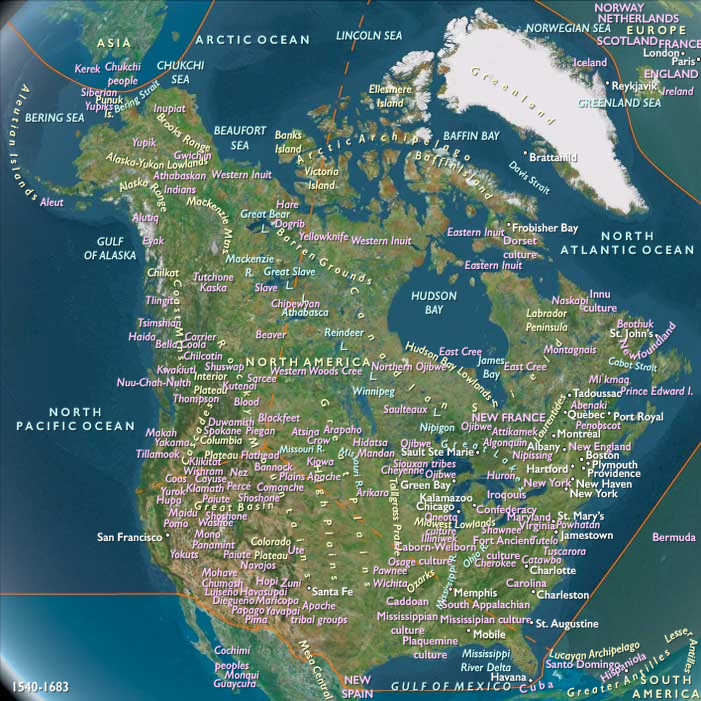
Subregions
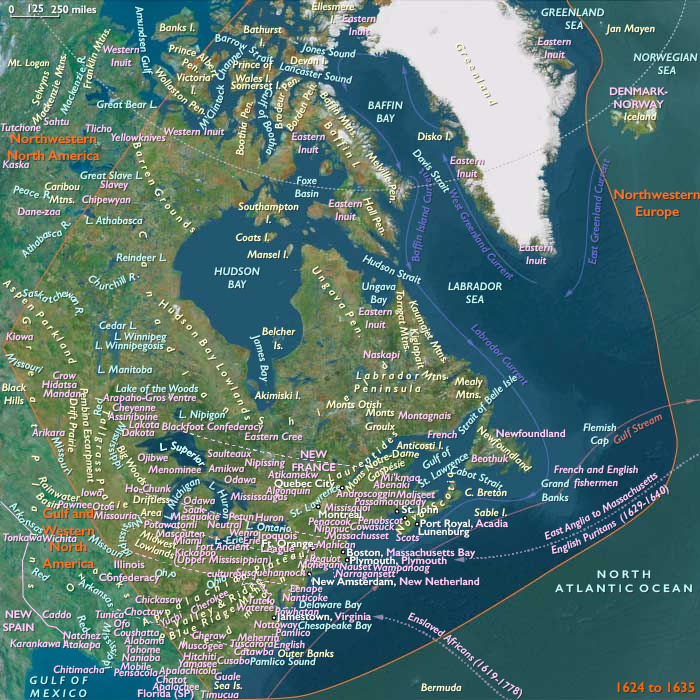
Years: 1629 - 1629
October
Locations
People
Groups
- Puritans
- England, (Stuart) Kingdom of
- Plymouth Council for New England
- Massachusetts Bay Colony (sometimes called the Massachusetts Bay Company, for its founding institution)
Topics
- Protestant Reformation
- Counter-Reformation (also Catholic Reformation or Catholic Revival)
- Colonization of the Americas, English
Commodoties
Subjects
Regions
Subregions