
Both free and enslaved populations in Louisiana …
Years: 1792 - 1803
Both free and enslaved populations in Louisiana have increased rapidly during the years of Spanish rule, as new settlers and Creoles have imported large numbers of slaves to work on plantations.
Some American settlers have brought slaves with them who were native to Virginia or North Carolina, but the Pointe Coupee inventories show that most slaves brought by traders have come directly from Africa.
There are 19,852 free persons and 24,264 enslaved persons in Lower Louisiana, which includes West Florida, by the 1800 census.
Although the censuses do not always cover the same territory, they show a majority of slaves in the population throughout these years.
Records during Spanish rule are not as well documented as with the French slave trade, so it is difficult to trace more specific origins of enslaved Africans.
Spain agrees in 1799 to return Louisiana to France in exchange for the promise of a throne in central Italy.
The secret agreement, signed on October 1, 1800 as part of the Treaty of San Ildefonso, does not go into effect until 1802.
Napoleon Bonaparte sells Louisiana to the United States the following year.
Documents have revealed that Napoleon harbored secret ambitions to reconstruct a large colonial empire in the Americas.
This notion falters, however, when the French attempt to reconquer Haiti after its revolution ends in failure.
Locations
People
Groups
- New Spain, Viceroyalty of
- Saint Domingue, French Colony of
- Spain, Bourbon Kingdom of
- Britain, Kingdom of Great
- West Florida
- Louisiana (Spanish colony)
- French First Republic
- Louisiana (French colony)
- Louisiana, District of (U.S.A.)
Topics
- Colonization of the Americas, Spanish
- Haitian Revolution
- Haitian French War of 1801-03
- Haitian Independence, Second War of
- Napoleonic Wars
Commodoties
Subjects
Regions
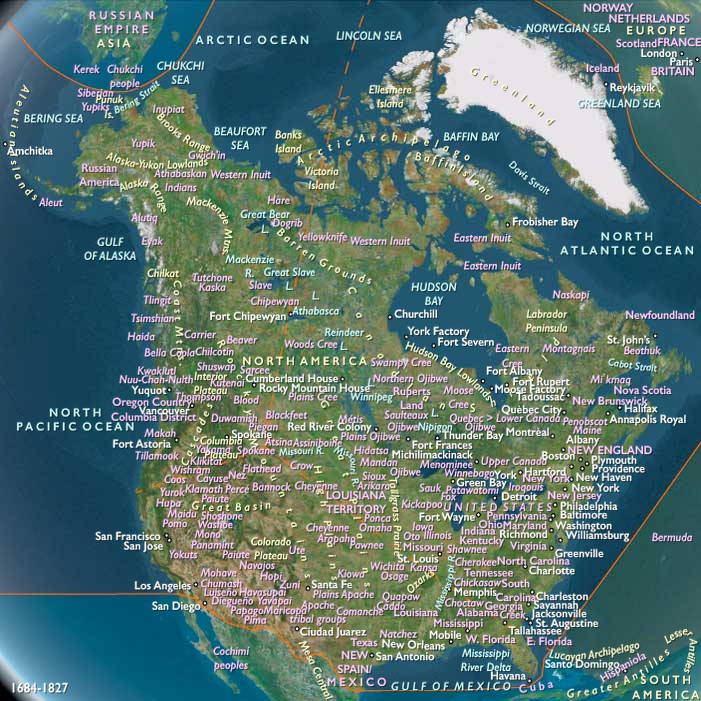
Subregions
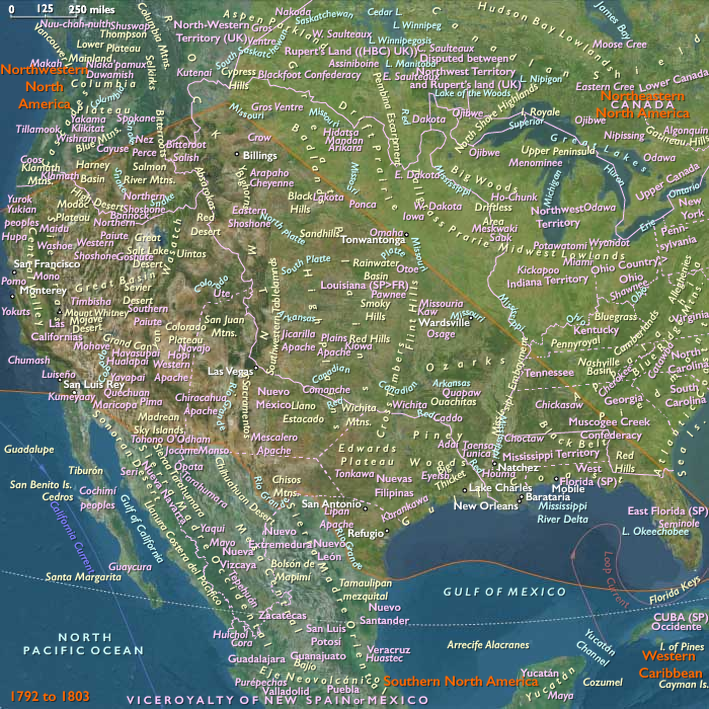
Years: 1792 - 1803
Locations
People
Groups
- New Spain, Viceroyalty of
- Saint Domingue, French Colony of
- Spain, Bourbon Kingdom of
- Britain, Kingdom of Great
- West Florida
- Louisiana (Spanish colony)
- French First Republic
- Louisiana (French colony)
- Louisiana, District of (U.S.A.)
Topics
- Colonization of the Americas, Spanish
- Haitian Revolution
- Haitian French War of 1801-03
- Haitian Independence, Second War of
- Napoleonic Wars
Commodoties
Subjects
Regions
Subregions