
Boniface of Montferrat had been chosen in …
Years: 1202 - 1202
November
Boniface of Montferrat had been chosen in 1201 as the new leader of the Fourth Crusade at the death of the original leader, Count Theobald III of Champagne.
Boniface is an experienced soldier, and the position is an opportunity to reassert his dynasty's reputation after defeat at home.
Boniface's family is well known in the east: his nephew Baldwin and brother Conrad had been Kings of Jerusalem, and his niece Maria is heiress of the kingdom.
Boniface's cousin Philip of Swabia is married to Irene Angelina, a daughter of the deposed emperor Isaac II Angelos and niece of Conrad's second wife Theodora.
Boniface in the winter of 1201, had spent Christmas with Phillip in Hagenau, and while there also met with Alexios Angelos, Isaac II's son, who had escaped from the custody of his uncle Alexios III Angelos.
The three had discussed the possibility of using the crusading army to restore Alexios' right to the throne.
Alexios entreats the crusaders to help him in exchange for promises of funds, supplies, and troops to conquer Egypt, the maintenance of five hundred Western knights in the Holy Land, and submission of the Constantinopolitan church to Rome.
Both Boniface and Alexios had traveled separately to Rome to ask for Pope Innocent III's blessing for the endeavor; however, Boniface had been specifically told by Innocent not to attack any Christians, including the Imperial Greeks.
The Crusader army is in debt to the Venetian Doge Enrico Dandolo, who had provided their fleet.
He has instructed them to attack the rebellious cities of Trieste, Moglia, and Zara and beat them into submission before sailing for Cairo.
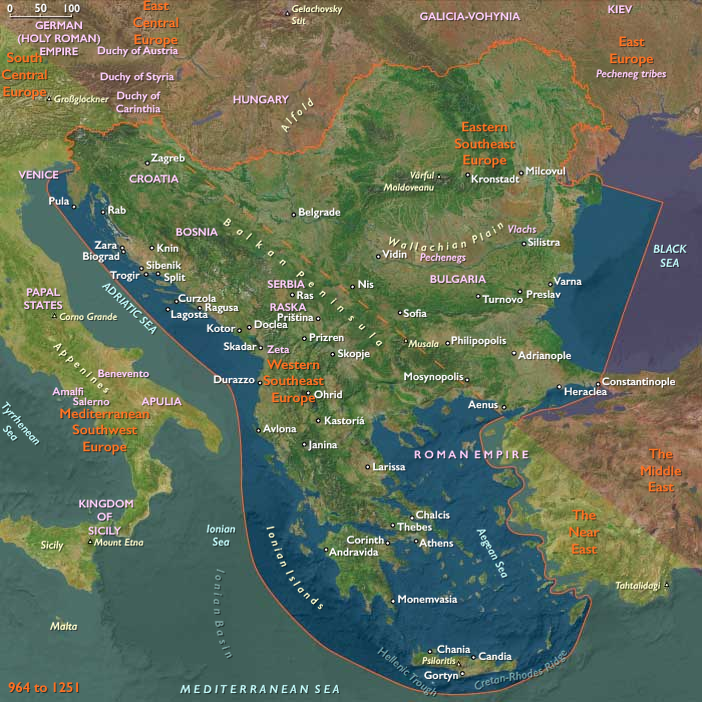
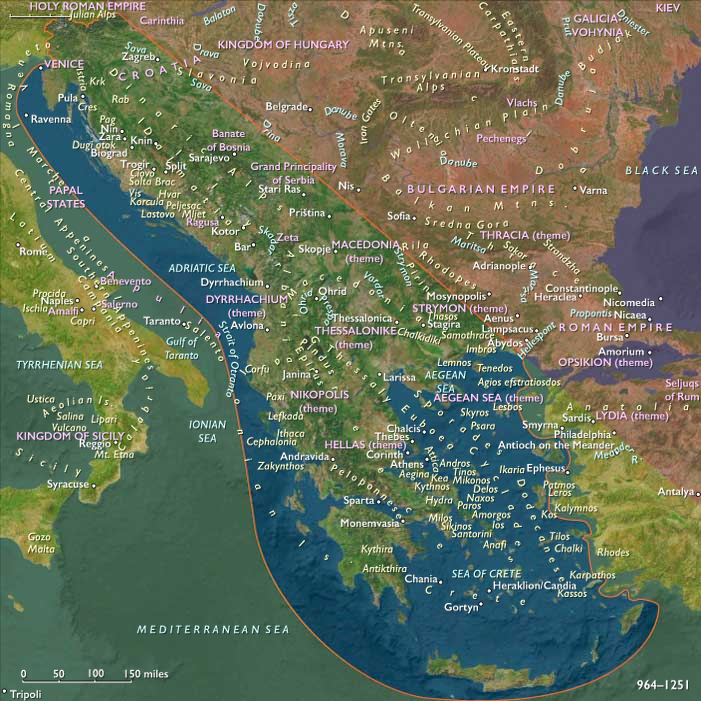
The strategic Dalmatian city of Zara had been repeatedly invaded by Venice between 1111 and 1154, then once more between 1160 and 1183, when it finally rebelled, appealing to the Pope and to the Croato-Hungarian throne for protection.
Emeric, king of Croatia and Hungary, has condemned the crusade, because of an argument about the possible heresy committed by God's army in attacking a Christian city.
Zadar is devastated and captured, nonetheless, with the population—who, like the crusaders, are Roman Catholic Christians—escaping into the surrounding countryside.
Locations
People
- Alexios III Angelos
- Alexios IV Angelos
- Boniface of Montferrat
- Emeric I
- Enrico Dandolo
- Isaac II Angelos
- Philip of Swabia
- Pope Innocent III
Groups
- Slavs, South
- Greeks, Medieval (Byzantines)
- Papal States (Republic of St. Peter)
- Flanders, County of
- Holy Roman Empire
- France, (Capetian) Kingdom of
- Hungary, Kingdom of
- Christians, Eastern Orthodox
- Christians, Roman Catholic
- Jerusalem, Latin Kingdom of
- Croatia, Kingdom of
- Venice, (Most Serene) Republic of
- Egypt, Ayyubid Sultanate of
- Roman Empire, Eastern: Angelid dynasty
- Cyprus, Kingdom of
Topics
Commodoties
Subjects
Regions
Subregions
Related Events
Showing 10 events out of 47671 total
Years: 1202 - 1202
November
Locations
People
- Alexios III Angelos
- Alexios IV Angelos
- Boniface of Montferrat
- Emeric I
- Enrico Dandolo
- Isaac II Angelos
- Philip of Swabia
- Pope Innocent III
Groups
- Slavs, South
- Greeks, Medieval (Byzantines)
- Papal States (Republic of St. Peter)
- Flanders, County of
- Holy Roman Empire
- France, (Capetian) Kingdom of
- Hungary, Kingdom of
- Christians, Eastern Orthodox
- Christians, Roman Catholic
- Jerusalem, Latin Kingdom of
- Croatia, Kingdom of
- Venice, (Most Serene) Republic of
- Egypt, Ayyubid Sultanate of
- Roman Empire, Eastern: Angelid dynasty
- Cyprus, Kingdom of
Topics
Commodoties
Subjects
Regions
Subregions