
Boleslaus's kinsman Vladivoj, probably a Přemyslid, or …
Years: 1003 - 1003
February
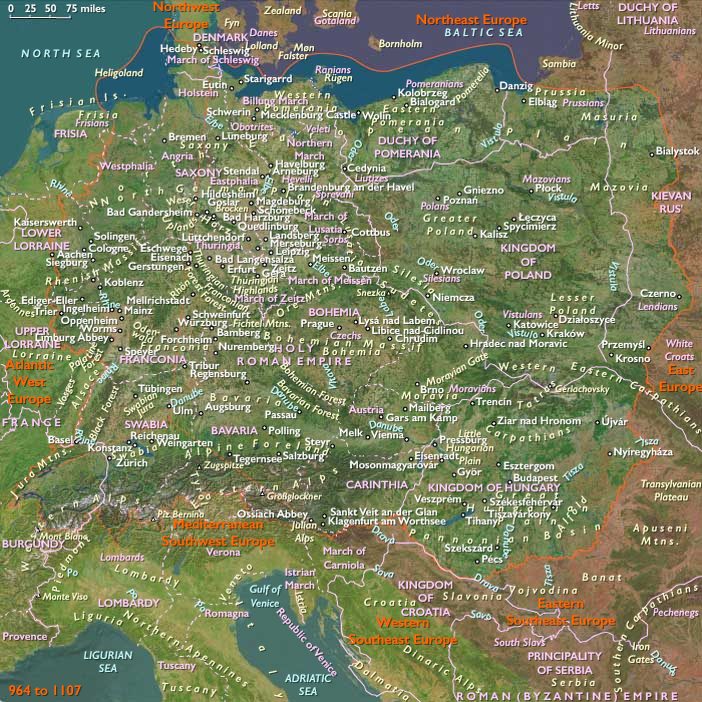
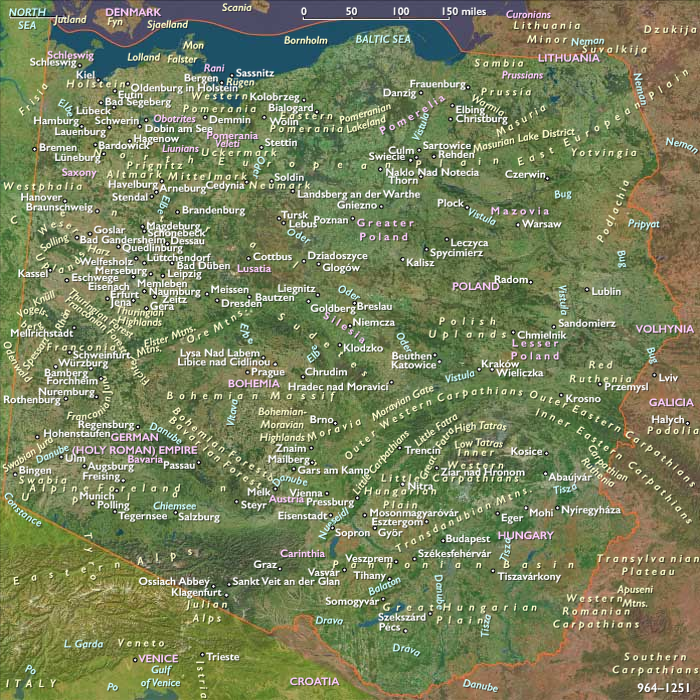
Boleslaus's kinsman Vladivoj, probably a Přemyslid, or their distant relative, had taken the Bohemian throne, but he is a drunk and dies within a year.
After Vladivoj's death, the nobles invite Boleslaus’s brothers Jaromir and Oldrich from exile, but Jaromir is unable to secure the throne.
Boleslaus the Red, with armed support from Boleslaw the Brave of Poland, is restored to authority on February 9, 1003.
Jaromír and Oldřich flee to Germany and place themselves under the protection of Henry II.
Locations
People
Groups
- Bohemia, Duchy of
- German, or Ottonian (Roman) Empire
- Poland, Principality of
- Austria, Margravate of
- Czechs [formerly Bohemians] (West Slavs)
Topics
Commodoties
Subjects
Regions
Subregions
Related Events
Showing 10 events out of 51945 total
Years: 1003 - 1003
February
Locations
People
Groups
- Bohemia, Duchy of
- German, or Ottonian (Roman) Empire
- Poland, Principality of
- Austria, Margravate of
- Czechs [formerly Bohemians] (West Slavs)
Topics
Commodoties
Subjects
Regions
Subregions