
The Snake War, which is not defined …
Years: 1864 - 1864
November
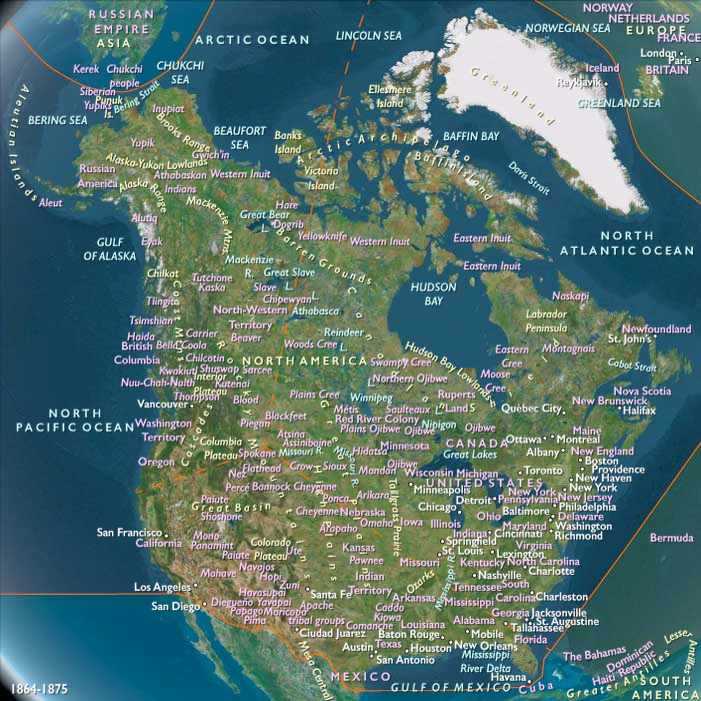
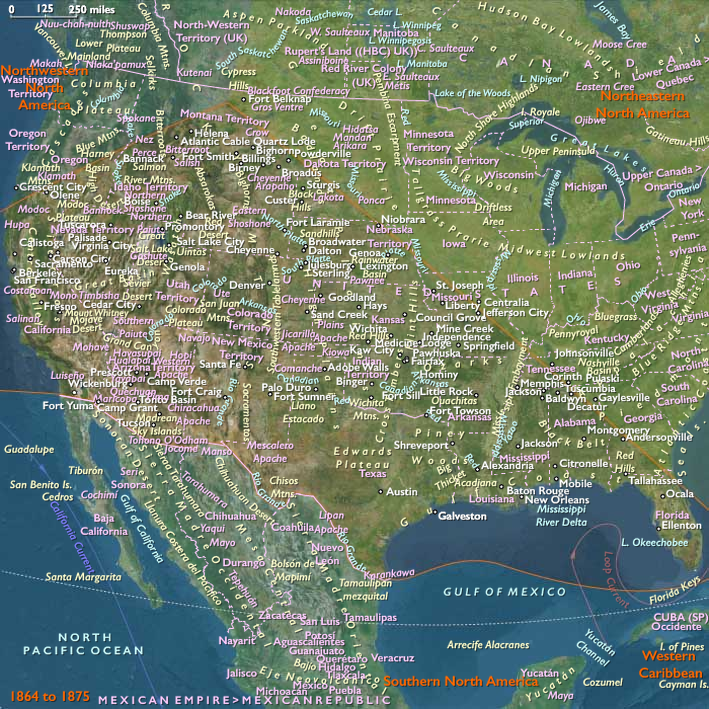
The Snake War, which is not defined by one large battle, is a series of guerrilla skirmishes by natives nd American patrols from many small camps, that take place across California, Utah, Nevada, Oregon, and Idaho.
The conflict is a result of increasing tension over several years between the native tribes and the white settlers who are encroaching on their lands, and competing for game and water.
Explorers' passing through had had minimal effect.
In October 1851, Shoshone Indians had killed eight men in Fort Hall Idaho.
From the time of the Clark Massacre, in 1851, the region's natives, commonly called the "Snakes" by the white settlers, have harassed and sometimes attacked emigrant parties crossing the Snake River Valley.
Settlers had retaliated by attacking native villages.
In September 1852, Ben Wright and a group of miners had responded to a native raid by attacking the Modoc village near Black Bluff in Oregon, killing about forty-one Modoc.
Similar attacks and retaliations had taken place in the years leading up to the Snake War.
In August 1854, native attacks on several pioneer trains along the Snake River had culminated in the Ward Massacre on August 20, 1854, in which twenty-one emigrants were killed.
The following year, the U.S. Army mounted the punitive Winnas Expedition.
From 1858, at the end of the Spokane-Coeur d'Alene-Paloos War, the US Army had protected the migration to Oregon by sending out escorts each spring.
Natives had continued to attack migrant trains, especially stragglers such as the Myers party, killed in the Salmon Falls Massacre of September 13, 1860.
As Federal troops had withdrawn in 1861 to return east for engagements of the American Civil War, California Volunteers had provided protection to the emigrants.
Later, the Volunteer Regiment of Washington and the 1st Oregon Cavalry had replaced Army escorts on the emigrant trails.
As settlers searching for gold start to move west, they compete more for resources with the Native Americans, living on the land longer and consuming more game and water.
Many isolated occurrences have resulted in violence, with the result that both sides are taking to arms.
The influx of miners into the Nez Perce reservation during the Clearwater Gold Rush had raised tensions among all the tribes.
The Nez Perce had been divided when some chiefs agreed to a new treaty that permitted the intrusion.
As miners had developed new locations near Boise in 1862 and in the Owyhee Canyonlands in 1863, an influx of white settlers had descended on the area.
Western Shoshone, Paiute and other local Indians had resisted the encroachment, fighting what will be called the Snake War from 1864 to 1868.
People
Groups
- Shoshone, Shoshoni, or Snakes (Amerind tribe)
- Modoc people (in California)
- Nez Perce (Amerind tribe)
- Paiute, Northern (Amerind tribe)
- Bannock people (Amerind tribe)
- United States of America (US, USA) (Washington DC)
- California, State of (U.S.A.)
- Utah, Territory of (U.S.A.)
- Oregon, State of (U.S.A.)
- Idaho, Territory of (U.S.A.)
- Nevada, State of (U.S.A.)
Topics
Subjects
Regions
Subregions
Related Events
Showing 10 events out of 22 total
Years: 1864 - 1864
November
People
Groups
- Shoshone, Shoshoni, or Snakes (Amerind tribe)
- Modoc people (in California)
- Nez Perce (Amerind tribe)
- Paiute, Northern (Amerind tribe)
- Bannock people (Amerind tribe)
- United States of America (US, USA) (Washington DC)
- California, State of (U.S.A.)
- Utah, Territory of (U.S.A.)
- Oregon, State of (U.S.A.)
- Idaho, Territory of (U.S.A.)
- Nevada, State of (U.S.A.)
Topics
Subjects
Regions
Subregions