
Bithynia, a region of northwest Anatolia ruled …
Years: 278BCE - 278BCE
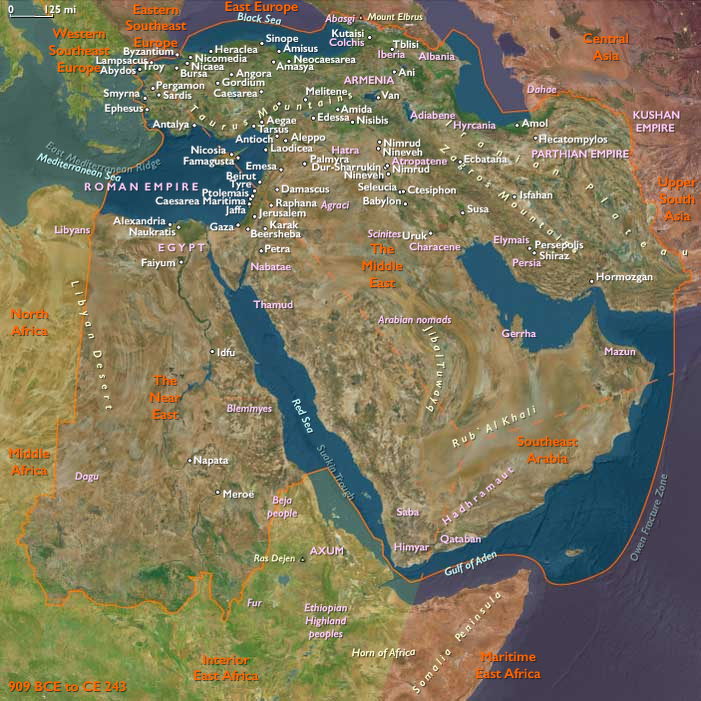
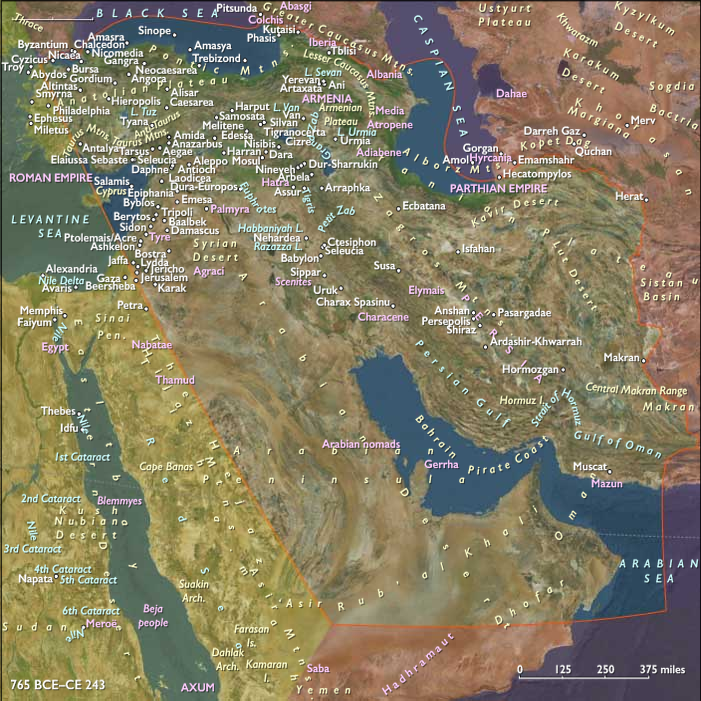
Bithynia, a region of northwest Anatolia ruled by a local dynasty and never much affected by Phrygian or Persian rule, adjoins the Sea of Marmara, the Bosporus, and the Black Sea, thus occupying an important and precarious position between East and West.
The district had been occupied late in the second millennium BCE by warlike tribes of Thracian origin who harried Greek settlers and Persian envoys alike.
Their remarkable pugnacity had kept them from complete Persian domination after the sixth century; in addition, they never submitted to Alexander the Great or his Seleucid successors.
The small but powerful state has evolved from tribal government to Hellenistic kingship.
Nicomedes, becoming king of Bithynia, in 278, commences his reign by putting to death two of his brothers but the third, subsequently called Zipoetes II, raises an insurrection against him and succeeds in maintaining himself, for some time, in the independent sovereignty of a considerable part of Bithynia.
Meanwhile, Nicomedes is threatened with an invasion from Antiochus, who had already made war upon his father, Zipoetes I, and, to strengthen himself against this danger, he concludes an alliance with Heraclea Pontica and shortly afterwards with Antigonus II Gonatas.
The threatened attack, however, passes over with little injury.
Antiochus actually invades Bithynia but withdraws again without risking a battle.
Locations
People
Groups
Topics
Commodoties
Subjects
Regions
Subregions
Related Events
Showing 10 events out of 63999 total
Years: 278BCE - 278BCE
Locations
People
Groups
Topics
Commodoties
Subjects
Regions
Subregions