
Birgittais, today the most celebrated saint of …
Years: 1336 - 1347
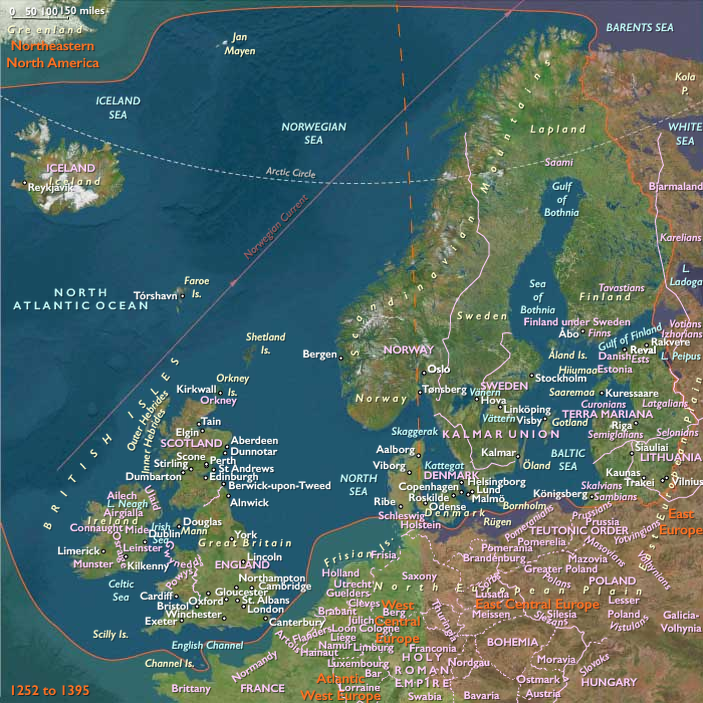
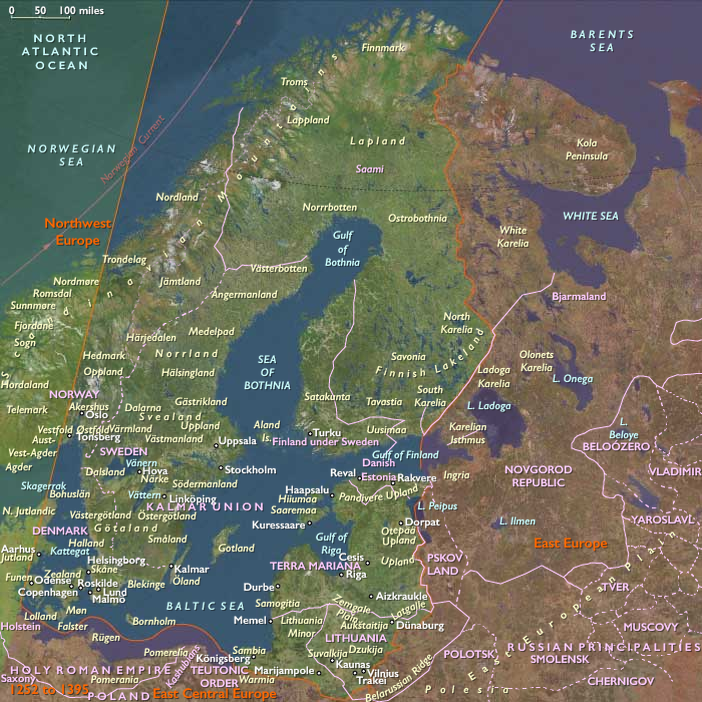
Birgittais, today the most celebrated saint of Sweden, is the daughter of the knight Birger Persson of the family of Finsta, governor and lawspeaker of Uppland, and one of the richest landowners of the country, and his wife, a member of the so-called Lawspeaker branch of the Folkunga family.
Through her mother, Ingeborg, Birgittais is related to the era's Swedish kings.
She was born in June 1303; there is no record of the precise date.
She had married, at the age of fourteen in 1316, Ulf Gudmarsson of the family of Ulvåsa, Lord of Närke, to whom she bore eight children, four daughters and four sons.
Six survived infancy, which is rare at this time.
One daughter is now honored as St. Catherine of Sweden.
Bridget becomes known for her works of charity, particularly toward Östergötland's unwed mothers and their children.
When she is in her early thirties, she is summoned to be lady-in-waiting to the new Queen of Sweden, Blanche of Namur.
She and her husband go on pilgrimage in 1341 to Santiago de Compostela.
Ulf dies shortly after their return in 1344 at the Cistercian Alvastra Abbey in Östergötland
After this loss, Birgitta becomes a member of the Third Order of St. Francis and devotes herself wholly to a life of prayer and caring for the poor and the sick.
It is about this time that she develops the idea of establishing the religious community which is to become the Order of the Most Holy Savior, or the Brigittines, whose principal house at Vadstena will later be richly endowed by King Magnus IV of Sweden and his queen.
One distinctive feature of the pre-Reformation houses of the Order is that they are double monasteries, with both men and women forming a joint community, though with separate cloisters.
They are to live in poor convents and to give all surplus income to the poor.
However, they are allowed to have as many books as they please.
Locations
People
Groups
Subjects
Regions
Subregions
Related Events
Showing 10 events out of 44539 total
Years: 1336 - 1347
Locations
People
Groups
Subjects
Regions
Subregions