
Bindusara's death in 273 BCE leads to …
Years: 273BCE - 262BCE
Bindusara's death in 273 BCE leads to a war over succession to the Maurya throne.
According to Divyavandana, Bindusara wanted his son Sushim to succeed him but Ashoka, viceroy of Taxila and Ujjain, despite having several elder half-brothers from other wives of Bindusāra, is supported by his father's ministers.
A minister named Radhagupta seems to have played an important role.
Ashoka manages to become the king by getting rid of the legitimate heir to the throne through tricking him into entering a pit filled with live coals.
The Dipavansa and Mahavansa refer to Ashoka killing ninety-nine of his brothers, sparing only one, named Tissa, although there is no clear proof about this incident.
The coronation occurs in 269 BCE, four years after his succession to the throne.
Said to have had a wicked nature and bad temper, Ashoka submits his ministers to a test of loyalty and has five hundred of them killed.
He also keeps a harem of around five hundred women.
When a few of these women insult him, he has all of them burnt to death.
He also builds an elaborate and horrific torture chamber that earns him the name of Chand Ashoka (Sanskrit), meaning Ashoka the Fierce.
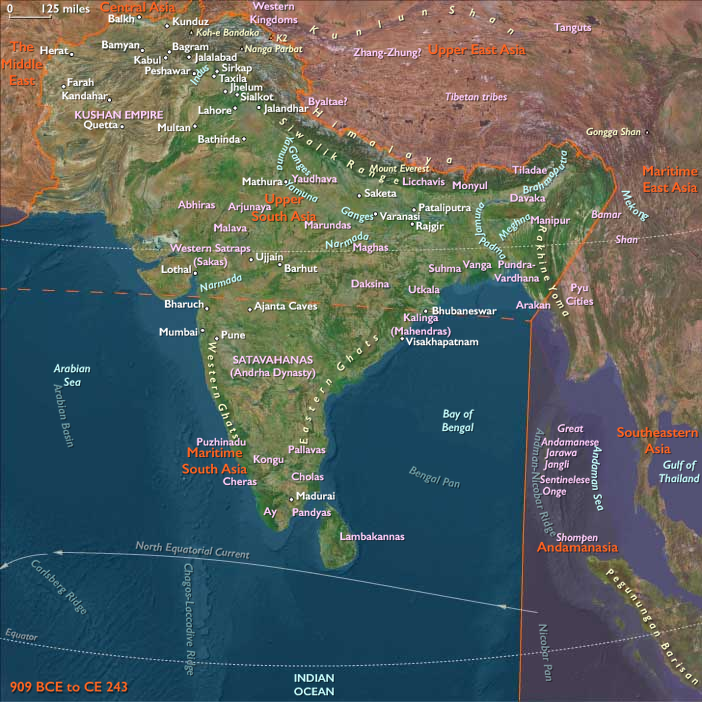
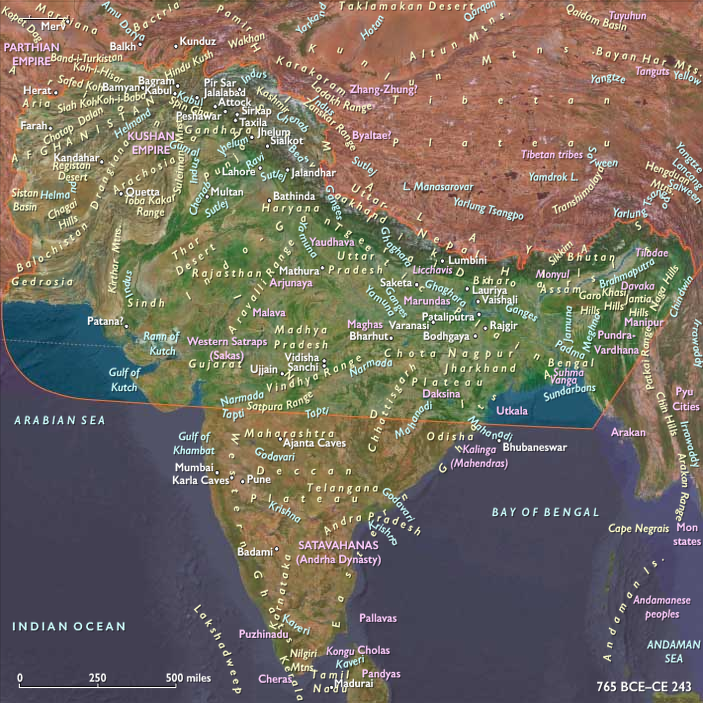
After ascending the throne, Ashoka spends the next eight years expanding his empire, from the present-day boundaries and regions of Burma–Bangladesh and the state of Assam in India in the east to the territory of present-day Iran and Afghanistan in the west; from the Pamir Knots in the north almost to the peninsular of southern India (i.e.
Tamil Nadu/Andhra Pradesh).
Locations
People
Groups
Topics
Commodoties
Subjects
Regions
Subregions
Related Events
Showing 10 events out of 63980 total
Years: 273BCE - 262BCE
Locations
People
Groups
Topics
Commodoties
Subjects
Regions
Subregions