
Bhutan's administration during Ngawang Namgyal's rule comprises …
Years: 1540 - 1683
Bhutan's administration during Ngawang Namgyal's rule comprises a state monastic body with an elected head, the Je Khenpo (lord abbot), and a theocratic civil government headed by the druk desi (regent of Bhutan, also known as deb raja in Western sources).
The druk desi is either a monk or a member of the laity—by the nineteenth century, usually the latter; he is elected for a three-year term, initially by a monastic council and later by the State Council (Lhengye Tshokdu).
The State Council is a central administrative organ that includes regional rulers, the shabdrung's chamberlains, and the druk desi.
In time, the druk desi comes under the political control of the State Council's most powerful faction of regional administrators.
The shabdrung is the head of state and the ultimate authority in religious and civil matters.
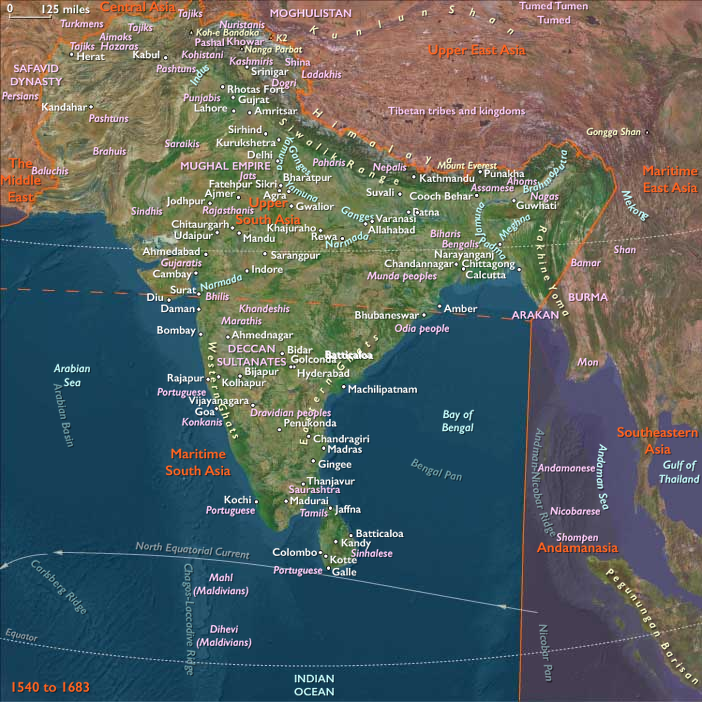
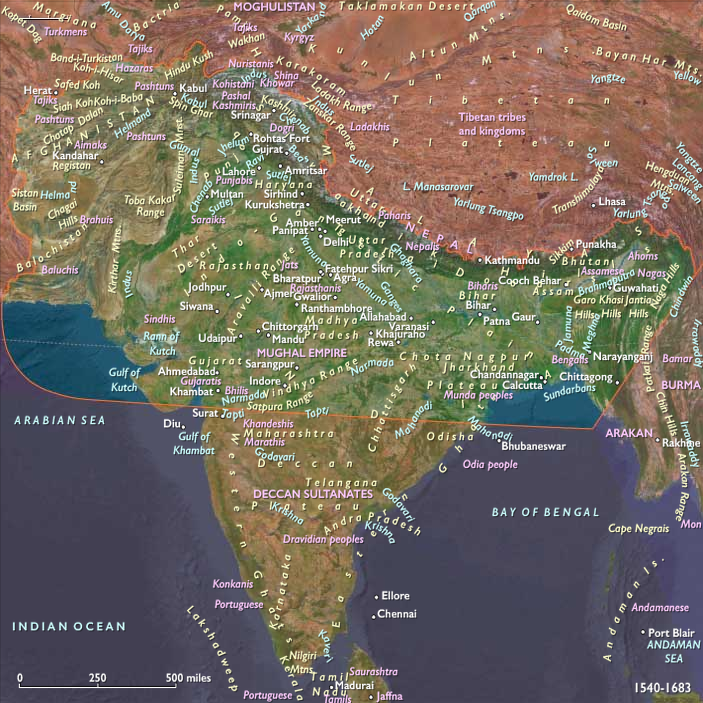
The seat of government is at Thimphu, the site of a thirteenth-century dzong, in the spring, summer, and fall.
The winter capital is at Punakha, a dzong established northeast of Thimphu in 1527.
The kingdom is divided into three regions (east, central, and west), each with an appointed ponlop, or governor, holding a seat in a major dzong.
Districts are headed by dzongpon, or district officers, who have their headquarters in lesser dzong.
The ponlop are combination tax collectors, judges, military commanders, and procurement agents for the central government.
Their major revenues come from the trade between Tibet and India and from land taxes.
Locations
People
Groups
Topics
Commodoties
Subjects
Regions
Subregions
Years: 1540 - 1683
Locations
People
Groups
Topics
Commodoties
Subjects
Regions
Subregions