
East Central Europe (868–879 CE): Moravian Cultural …
Years: 868 - 879
East Central Europe (868–879 CE): Moravian Cultural Flourishing, Carolingian-Slavic Conflict, and Saxon Dynastic Consolidation
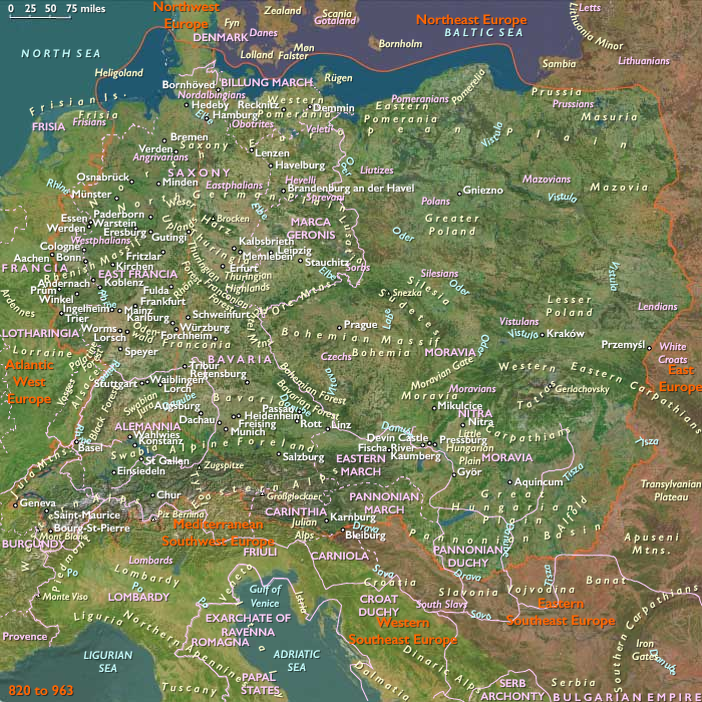
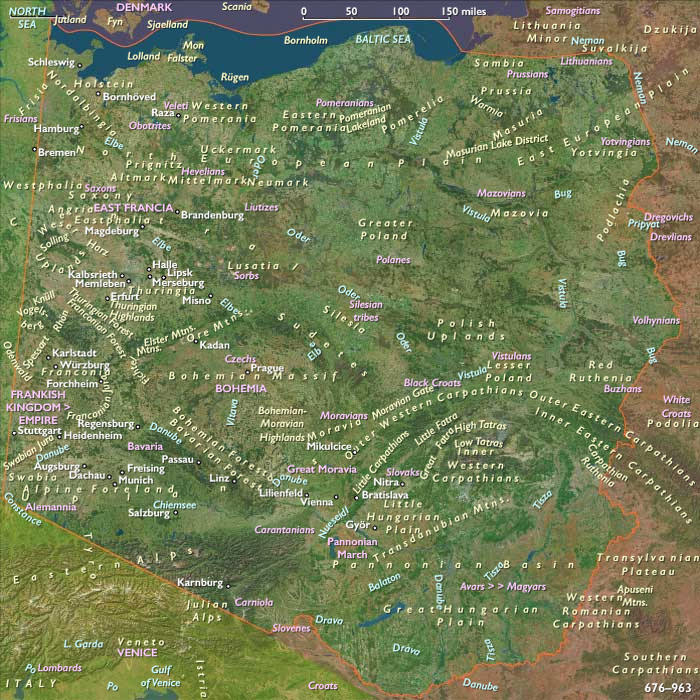
Between 868 and 879 CE, East Central Europe—comprising modern-day Poland, Czechia, Slovakia, Hungary, and eastern portions of Germany and Austria east of 10°E and north of a line from approximately 48.2°N at 10°E to the Austro-Slovenian border near 46.7°N, 15.4°E—witnessed a dynamic interplay of cultural innovation, political realignment, and military tensions. Great Moravia under Rastislav and later his nephew Svatopluk I reached new cultural and political heights. Concurrently, tensions between Carolingian East Francia and Slavic principalities intensified, while Saxon noble families, notably the Liudolfing dynasty, continued to solidify their power, setting the stage for future imperial ascendancy.
Political and Military Developments
Great Moravia: From Rastislav to Svatopluk
-
After the deposition of Rastislav by his nephew Svatopluk I in 870 CE, Great Moravia reached its political apex, effectively resisting Carolingian influence and expanding its territories through strategic military campaigns and diplomatic alliances.
Conflict and Accommodation with Carolingian East Francia
-
Conflicts between Moravian and East Frankish forces intensified, highlighted by significant military engagements and shifting alliances. The complex diplomatic interplay resulted in temporary truces and territorial adjustments, reshaping the regional balance of power.
Consolidation of Liudolfing Saxony
-
In Saxony, the Liudolfing dynasty, led by Otto the Illustrious (d. 912), continued consolidating power, enhancing territorial governance, establishing dynastic prestige, and laying the groundwork for their later imperial significance.
Economic and Technological Developments
Flourishing Trade and Regional Prosperity
-
Trade networks connecting Moravia, Saxony, Bavaria, and Thuringia remained vibrant, facilitating extensive commerce in metals, textiles, livestock, and luxury goods, further promoting regional economic stability and growth.
Advances in Fortification and Infrastructure
-
Increased regional tensions led to enhanced investment in fortifications, roads, and administrative infrastructure, significantly improving defensive capabilities and economic integration across Moravian, Saxon, and Carolingian territories.
Cultural and Artistic Developments
Moravian Cultural Renaissance
-
Great Moravia flourished culturally, notably through the missionary activities of Cyril and Methodius, who further promoted the Glagolitic script and Slavic liturgy, deeply embedding Moravia’s distinct Slavic cultural and religious identity.
Saxon Cultural Integration and Carolingian Influence
-
The Liudolfing dynasty reinforced Saxon cultural integration into the Carolingian sphere through ecclesiastical foundations, artistic patronage, and adoption of Frankish administrative customs, solidifying Saxony’s prominence within East Francia.
Settlement and Urban Development
Expansion of Moravian Political and Ecclesiastical Centers
-
Major Moravian urban centers, such as Mikulčice and Nitra, expanded significantly, serving as key political, administrative, cultural, and religious hubs for Great Moravia’s growing influence.
Stable Growth in Saxon and Bavarian Towns
-
Urban settlements in Saxony and Bavaria remained stable, experiencing growth driven by strong economic networks, effective administration, and continued integration into East Francia’s political framework.
Social and Religious Developments
Strengthened Christian Identity in Moravia
-
Cyril and Methodius’s missions deepened Christianity’s roots across Moravia, fostering a distinctly Slavic Christian tradition and strengthening ecclesiastical institutions, profoundly shaping Moravia’s social and religious fabric.
Dynastic Power and Social Structure Consolidation
-
The continued ascendancy of the Liudolfing dynasty in Saxony and the Mojmirid rulers in Moravia reinforced hierarchical social structures, forming clear patterns of medieval governance and aristocratic power that endured for centuries.
Long-Term Consequences and Historical Significance
The period 868–879 CE proved transformative for East Central Europe, marked by the cultural and political ascendancy of Great Moravia under Rastislav and Svatopluk, escalating tensions with Carolingian East Francia, and the solidification of Saxon Liudolfing dynastic power. These developments significantly shaped regional identities, political structures, and cultural traditions, profoundly influencing the historical trajectory of East Central Europe through the ensuing medieval era.
People
Groups
- Polytheism (“paganism”)
- Franks
- Germans
- Saxons
- Wends, or Sorbs (West Slavs)
- Christianity, Chalcedonian
- Bavarians (West Germanic tribe)
- Thuringia, Duchy of
- Thuringia, (Frankish) Duchy of
- Carantania
- Carantanians
- Bavaria, Carolingian Duchy of
- Frankish, or Carolingian (Roman) Empire
- Saxony, Duchy of
- Moravia, Great, Kingdom of
- Francia Orientalis (East Francia), Kingdom of
- Roman Empire, Eastern: Macedonian dynasty
Topics
Commodoties
Subjects
Regions
Subregions
Years: 868 - 879
People
Groups
- Polytheism (“paganism”)
- Franks
- Germans
- Saxons
- Wends, or Sorbs (West Slavs)
- Christianity, Chalcedonian
- Bavarians (West Germanic tribe)
- Thuringia, Duchy of
- Thuringia, (Frankish) Duchy of
- Carantania
- Carantanians
- Bavaria, Carolingian Duchy of
- Frankish, or Carolingian (Roman) Empire
- Saxony, Duchy of
- Moravia, Great, Kingdom of
- Francia Orientalis (East Francia), Kingdom of
- Roman Empire, Eastern: Macedonian dynasty
Topics
Commodoties
Subjects
Regions
Subregions