
Quintus Lollius Urbicus, governor of Roman Britain …
Years: 143 - 143
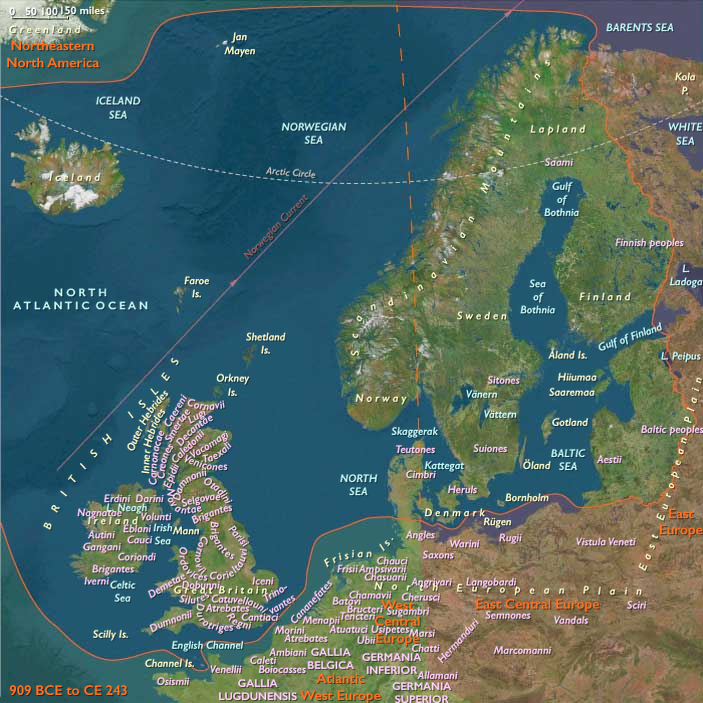
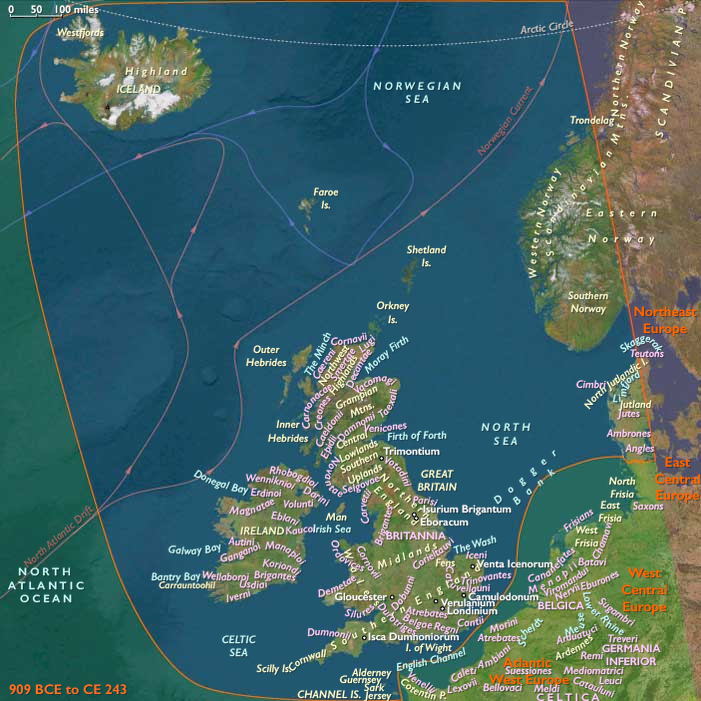
Quintus Lollius Urbicus, governor of Roman Britain between 139 and 142, has ordered garrisons from the three legions stationed in Britain to move one hundred miles (one hundred and sixty kilometers) north of Hadrian’s Wall to strategic positions partially fortified in 80 by governor Agricola.
Along this new frontier the Romans build a thirty-seven-mile- long (fifty-nine kilometer) turf wall—called the Antonine Wall for the emperor Antoninus Pius—on a low, rubble platform about fourteen feet high (four point two meters) and about thirty-five feet thick (three point six meters), protected by a ditch about thirty-five feet wide (twelve meters) and twelve feet deep (three point six meters).
Crossing the isthmus from the Firth of Forth to the Firth of Clyde, the Antonine Wall, meant to protect the peaceful lowland tribes and provide a reservoir of manpower for conscription, supersedes Hadrian’s Wall.
A military road connects the garrison posts and signal-beacon platforms behind the wall, and forts on either coast protect the flanks.
The Roman poet Juvenal, writing in the early second century, depicts a Roman father urging his son to win glory by destroying the forts of the Brigantes, a British Celtic tribe who live between the rivers Tyne and Humber, and it is possible that one of the purposes of Hadrian's Wall (begun in 122) had been to keep the Brigantes from making discourse with the “Scottish” tribes on the other side.
Antoninus is said by Pausanias to have defeated them after they began an unprovoked war against Roman allies, perhaps as part of the campaign that led to the building of the Antonine Wall.
Locations
People
Groups
Topics
Commodoties
Subjects
Regions
Subregions
Related Events
Showing 2 events out of 2 total
Years: 143 - 143
Locations
People
Groups
Topics
Commodoties
Subjects
Regions
Subregions