
Bernard VII of Armagnac and the Ravages …
Years: 1410 - 1410
November
Bernard VII of Armagnac and the Ravages of the Écorcheurs (1410)
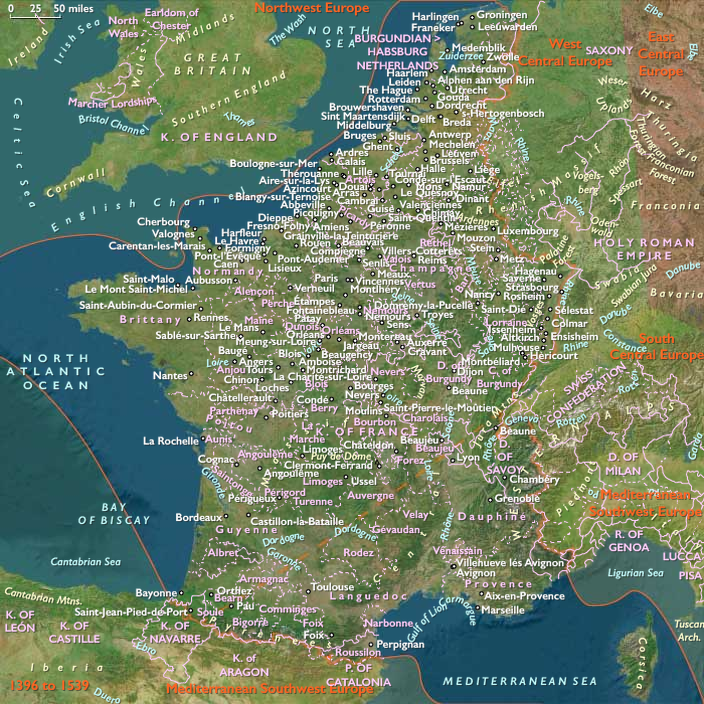
By 1410, Bernard VII, Count of Armagnac, had emerged as the leader of the Armagnac faction, opposing John the Fearless, Duke of Burgundy, in the escalating civil war between the Armagnacs and Burgundians. Known for his brutality and military prowess, Bernard commanded troops from the Ardour and Garonne regions, reinforcing his forces with mercenary war bands from the Midi—the infamous Écorcheurs (literally, "flayers of dead bodies").
These ruthless soldiers pillaged and devastated the countryside, stripping their victims of everything, often down to their very clothes, leaving entire villages in ruin. Under Bernard’s leadership, the Armagnac forces advanced toward Paris, reaching the Saint-Marcel suburb, threatening Burgundian-controlled territory.
I. The Écorcheurs: Terrorizing France
- The Écorcheurs were unruly mercenaries, notorious for their brutality and looting, often attacking both civilians and opposing forces.
- Originally formed from free companies during the Hundred Years’ War, these bands of plunderers became a defining feature of the Armagnac campaigns.
- Bernard VII unleashed them on the outskirts of Paris, where they sacked towns and villages, causing widespread terror.
II. The Armagnac Advance on Paris
- Bernard’s forces, led by the Écorcheurs, ravaged the countryside surrounding Paris, using scorched-earth tactics to weaken the Burgundian faction.
- His troops pushed into the Saint-Marcel suburb, a direct threat to the capital, then under Burgundian influence.
- The violence and destruction forced a temporary halt in the conflict, as both sides sought to regroup.
III. The Treaty of Bicêtre (November 2, 1410)
- As the civil war intensified, both factions recognized the need for a temporary ceasefire.
- On November 2, 1410, the Treaty of Bicêtre was signed, suspending hostilities—though the peace was short-lived.
- This truce failed to resolve the deeper power struggle, and fighting soon resumed, further destabilizing France during the ongoing Hundred Years' War.
IV. Legacy and Consequences
- Bernard VII’s use of the Écorcheurs set a precedent for unchecked mercenary violence, which would continue to plague France for decades.
- The Armagnac-Burgundian conflict only deepened, ultimately leading to the massacre of the Armagnacs in Paris (1418) and the Treaty of Troyes (1420), which disinherited the Dauphin in favor of Henry V of England.
- The Écorcheurs remained a scourge throughout France, persisting well into the 15th century, destabilizing both civilian life and royal authority.
The Armagnac assault on Paris in 1410, led by Bernard VII and his ruthless Écorcheurs, brought terror to the capital and forced a temporary truce at Bicêtre—but the civil war between Armagnacs and Burgundians was far from over.
Locations
People
Groups
Topics
- Hundred Years' War
- Armagnac-Burgundian Civil War
- Hundred Years' War: Resumption of the war under Henry V
Commodoties
Subjects
Regions
Subregions
Years: 1410 - 1410
November
Locations
People
Groups
Topics
- Hundred Years' War
- Armagnac-Burgundian Civil War
- Hundred Years' War: Resumption of the war under Henry V
Commodoties
Subjects
Regions
Subregions