
The Tragic Fate of Bernard of Italy …
Years: 822 - 822
The Tragic Fate of Bernard of Italy and Emperor Louis the Pious’ Penance (810–822)
In 810, Bernard, the illegitimate son of King Pepin, Charlemagne’s third son, is appointed King of Italy, ruling as a vassal to the Carolingian Emperor. However, after Charlemagne’s death in 814, his successor, Louis the Pious, restructures the empire, prioritizing his own legitimate sons.
Bernard’s Rebellion and the Aftermath (817–818)
- In 817, Louis issues the Ordinatio Imperii, a succession plan that grants Italy to his eldest son, Lothair I, effectively disinheriting Bernard.
- Feeling his position endangered, Bernard rebels with the support of Bishop Theodulf of Orléans, fearing loss of autonomy under Lothair’s rule.
- Louis, acting swiftly, marches into Italy, forcing Bernard to submit.
- Bernard, trusting a safe-conduct guarantee, meets with the emperor but finds himself convicted without realizing he was on trial.
The Blinding and Death of Bernard (818)
- Louis orders Bernard blinded, a common Byzantine-inspired punishment meant to disable political rivals without executing them outright.
- The blinding procedure proves fatal, and Bernard dies in Milan soon after.
- This event deeply grieves Louis, who, as a devout Christian, recognizes the cruelty of his actions.
Louis the Pious’ Penance at Attigny (822)
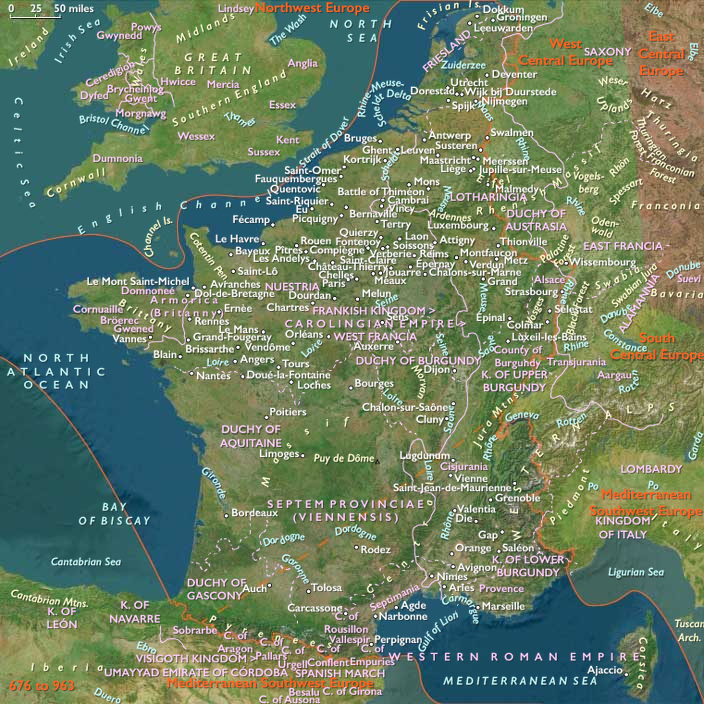
Tormented by guilt, Louis performs public penance at his palace in Attigny, near Vouziers in the Ardennes, before:
- Pope Paschal I,
- A council of ecclesiastics, and
- The Frankish nobility.
As part of his atonement, he reconciles with Bernard’s three younger half-brothers:
- Hugo, later Abbot of St-Quentin,
- Drogo, soon made Bishop of Metz,
- Theodoric, whose career remains less well-documented.
The Political Consequences of Penance
Louis’ act of contrition, modeled after Theodosius the Great’s penance after the Massacre of Thessalonica (390), severely undermines his prestige as emperor:
- Frankish rulers were expected to be strong and decisive, not to confess their failures publicly.
- His humility is perceived as weakness, emboldening his sons and noble factions to challenge his authority.
- His public admission of minor offenses, unnecessary for a secular ruler, further damages his reputation among the aristocracy.
The Long-Term Impact
Louis’ penance at Attigny contributes to the later revolts against his rule, as dynastic strife and noble resistance weaken his hold on the empire. The event symbolizes the increasing power of the Church over secular rulers, foreshadowing future conflicts between emperors and religious authorities in medieval Europe.
Locations
People
Groups
- Christianity, Chalcedonian
- Francia (Carolingians)
- Papal States (Republic of St. Peter)
- Italy, Carolingian Kingdom of
- Frankish, or Carolingian (Roman) Empire
Topics
Subjects
Regions
Subregions

Related Events
Showing 10 events out of 54430 total
Years: 822 - 822
Locations
People
Groups
- Christianity, Chalcedonian
- Francia (Carolingians)
- Papal States (Republic of St. Peter)
- Italy, Carolingian Kingdom of
- Frankish, or Carolingian (Roman) Empire
Topics
Subjects
Regions
Subregions