
Thomas Paine, knowing that he would probably …
Years: 1793 - 1793
December
Thomas Paine, knowing that he would probably be arrested and executed, and following in the tradition of early eighteenth-century British deism, had written the first part of The Age of Reason before his arrest and imprisonment in France.
Assaulting organized "revealed" religion by combining a compilation of the many inconsistencies he found in the Bible with his own advocacy of deism, Paine calls for "free rational inquiry" into all subjects, especially religion.
The Age of Reason critique on institutionalized religion results in only a brief upsurge in deistic thought in America, but Paine is derided by the public and abandoned by his friends.
Regarded as an ally of the Girondins, he is seen with increasing disfavor by the Montagnards who were now in power, and in particular by Robespierre.
A decree is passed at the end of 1793 excluding foreigners from their places in the Convention (Anacharsis Cloots is also deprived of his place).
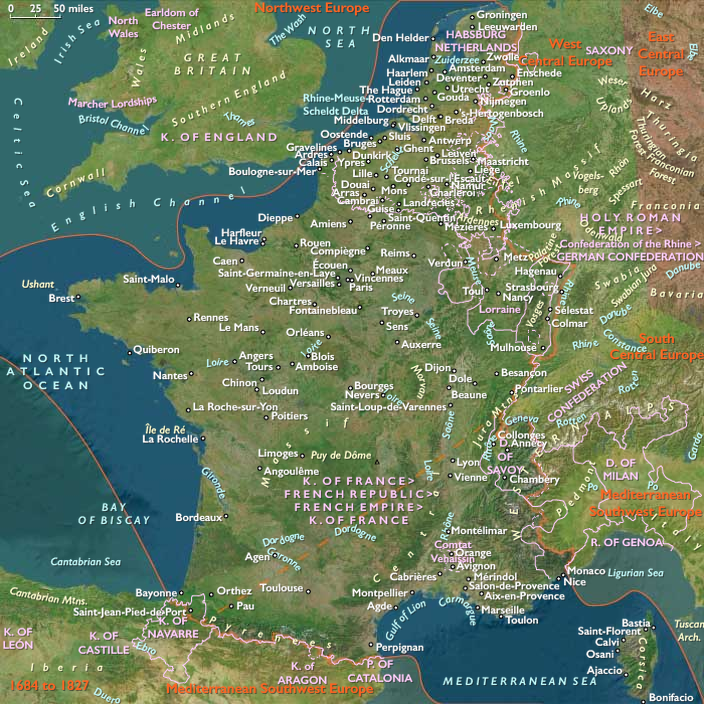
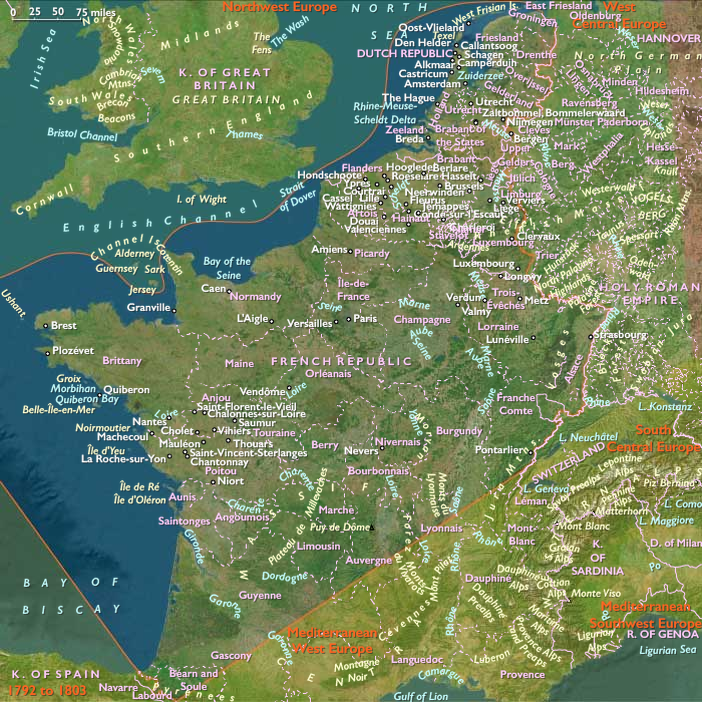
Paine is arrested and imprisoned in December 1793.
He protests and claims that he is a citizen of America, which is an ally of Revolutionary France, rather than of Great Britain, which is by this time at war with France.
However, Gouverneur Morris, the American ambassador to France, does not press his claim, and Paine will later write that Morris had connived at his imprisonment.
Paine thinks that George Washington has abandoned him, and he will quarrel with Washington for the rest of his life.
Years later, he will write a scathing open letter to Washington, accusing him of private betrayal of their friendship and public hypocrisy as general and president, and concluding the letter by saying "the world will be puzzled to decide whether you are an apostate or an impostor; whether you have abandoned good principles or whether you ever had any." (Paine, Thomas. "Letter to George Washington, July 30, 1796: "On Paine's Service to America"". Retrieved July 3, 2012.)
Locations
People
- George Washington
- Gouverneur Morris
- Jean-Baptiste du Val-de-Grâce, baron de Cloots
- Maximilien Robespierre
- Thomas Paine
Groups
- Britain, Kingdom of Great
- United States of America (US, USA) (Philadelphia PA)
- French First Republic
Topics
- French Revolution
- First Coalition, War of the
- French Revolutionary Wars, or “Great French War”
- Vendée, War in the
- French Revolutionary Wars: Campaigns of 1793
- Reign of Terror
Subjects
Regions
Subregions
Related Events
Showing 10 events out of 23676 total
Years: 1793 - 1793
December
Locations
People
- George Washington
- Gouverneur Morris
- Jean-Baptiste du Val-de-Grâce, baron de Cloots
- Maximilien Robespierre
- Thomas Paine
Groups
- Britain, Kingdom of Great
- United States of America (US, USA) (Philadelphia PA)
- French First Republic
Topics
- French Revolution
- First Coalition, War of the
- French Revolutionary Wars, or “Great French War”
- Vendée, War in the
- French Revolutionary Wars: Campaigns of 1793
- Reign of Terror
Subjects
Regions
Subregions