
Beatus of Liébana: Scholar, Theologian, and Symbol …
Years: 786 - 786
Beatus of Liébana: Scholar, Theologian, and Symbol of Christian Resistance
Beatus of Liébana is best remembered for his Commentary on the Apocalypse, originally written in 776 CE and later revised in 784 and again in 786. Though not highly original, the work serves as a Christian cultural and religious focal point, compiling long extracts from the Fathers and Doctors of the Church, particularly:
- Augustine of Hippo,
- Ambrose of Milan,
- Tyconius,
- Irenaeus of Lyon, and
- Isidore of Seville.
Additionally, Beatus incorporates Jerome of Stridon’s commentary on the Book of Daniel, further enriching his theological synthesis.
Theological Influence and the Adoptionist Controversy
Beatus corresponds with Alcuin of York and plays a prominent role in the Adoptionist controversy, opposing the views of Felix of Urgel and Elipandus of Toledo, who argue that Christ was the adoptive son of God in his human nature. His staunch Nicene orthodoxy reinforces Asturian resistance to theological influences from Muslim-controlled Toledo.
As confessor to Queen Adosinda, wife of King Silo of Asturias, and as the teacher of Alcuin and Etherius of Osma, Beatus holds considerable influence in the Christian intellectual world.
Beatus’s Legacy and Symbolism
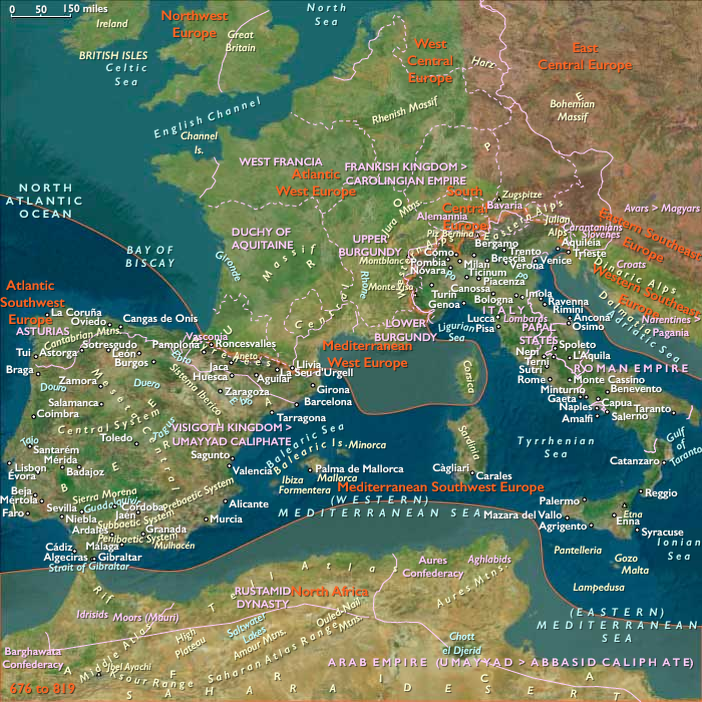
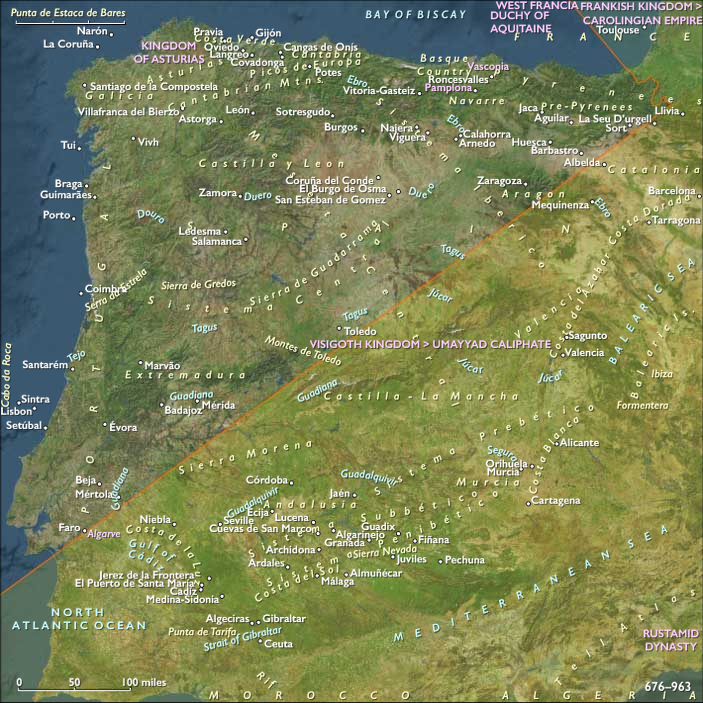
Over time, his Commentary on the Apocalypse becomes a symbol of Christian resistance against the Muslim Arabs who dominate much of Iberia during the early Middle Ages. The Beatus manuscripts, with their illuminated illustrations, will later be reproduced across medieval Europe, preserving and spreading the apocalyptic vision of Christian triumph over Islam and heresy.
Locations
People
Groups
- Arab people
- Christianity, Chalcedonian
- Islam
- Muslims, Sunni
- Córdoba, Umayyad Emirate of
- Asturias, Kingdom of
Topics
Commodoties
Subjects
Regions
Subregions
Related Events
Showing 10 events out of 55002 total
Years: 786 - 786
Locations
People
Groups
- Arab people
- Christianity, Chalcedonian
- Islam
- Muslims, Sunni
- Córdoba, Umayyad Emirate of
- Asturias, Kingdom of
Topics
Commodoties
Subjects
Regions
Subregions