
Filters:
Umar also organizes the administration of the …
Years: 532 - 675
Umar also organizes the administration of the conquered Iranian lands.
Acting on the advice of an Iranian, Umar continues the Sassanid office of the divan (Arabic form diwan).
Essentially an institution to control income and expenditure through record keeping and the centralization of administration, the divan will be used henceforth throughout the lands of the Islamic conquest.
Dihqans, minor revenue collection officials under the Sassanids, retained their function of assessing and collecting taxes.
Tax collectors in Iraq have never enjoyed universal popularity, but the Arabs find them particularly noxious.
Arabic replaces Persian as the official language, and it slowly filters into common usage.
Iraqis intermarry with Arabs and convert to Islam.
Acting on the advice of an Iranian, Umar continues the Sassanid office of the divan (Arabic form diwan).
Essentially an institution to control income and expenditure through record keeping and the centralization of administration, the divan will be used henceforth throughout the lands of the Islamic conquest.
Dihqans, minor revenue collection officials under the Sassanids, retained their function of assessing and collecting taxes.
Tax collectors in Iraq have never enjoyed universal popularity, but the Arabs find them particularly noxious.
Arabic replaces Persian as the official language, and it slowly filters into common usage.
Iraqis intermarry with Arabs and convert to Islam.
People
Groups
- Iranian peoples
- Arab people
- Persian people
- Zoroastrians
- Mesopotamia (Roman province)
- Persian Empire, Sassanid, or Sasanid
- Islam
- Rashidun Caliphate
Topics
Subjects
Regions
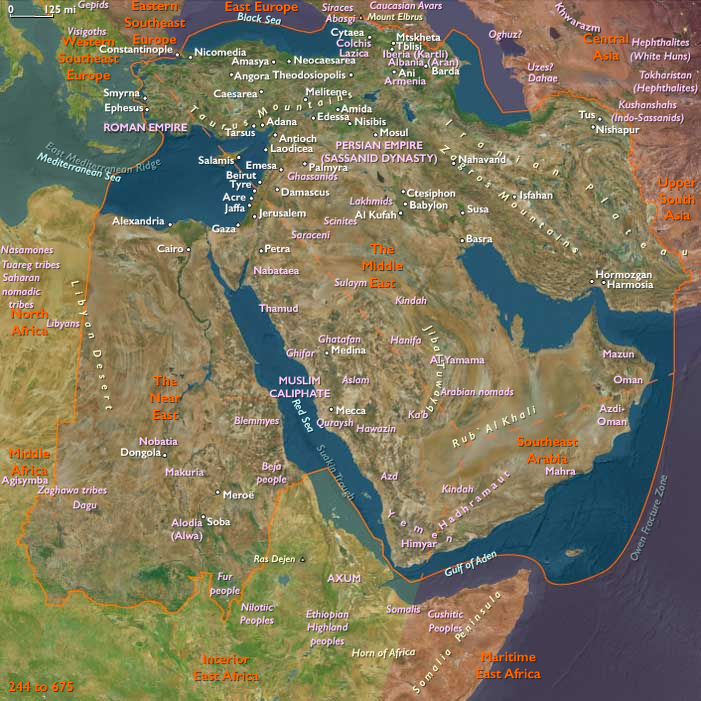
Subregions
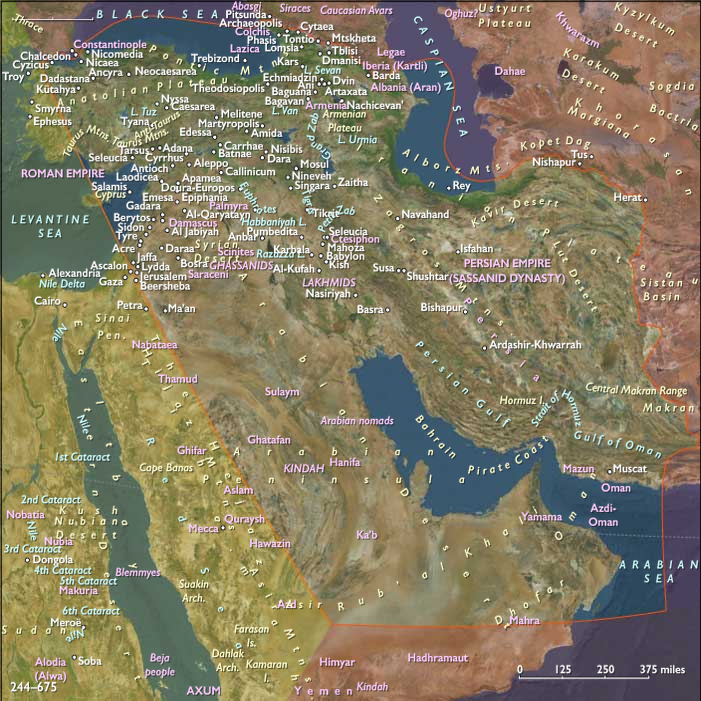
Years: 532 - 675
People
Groups
- Iranian peoples
- Arab people
- Persian people
- Zoroastrians
- Mesopotamia (Roman province)
- Persian Empire, Sassanid, or Sasanid
- Islam
- Rashidun Caliphate
Topics
Subjects
Regions
Subregions