
Basil is pictured both in near-contemporary history …
Years: 1023 - 1023
Basil is pictured both in near-contemporary history and in manuscript illustrations as a short, well-proportioned figure, with brilliant light-blue eyes, a round face, and full, bushy whiskers, which he twirls in his fingers when angry or while giving an audience.
He dresses plainly and even when wearing the purple chooses only a dark hue.
An abrupt speaker, he scorns rhetoric yet is capable of wit.
He has been described as mean, austere, and irascible, spending most of his time as though he were a soldier on guard.
He shows no obvious interest in learning, but he does apparently commission works of religious art, and has churches and monasteries rebuilt or completed in Boeotia and in Athens, though this may be accounted for by conventional piety.
The ruthlessness and tenacity that serve Basil in his military and diplomatic activities are displayed in his domestic policy as well.
Its keynote is the strengthening of imperial authority by striking at his overpowerful subjects, particularly the military families who rule like princes in Asia Minor.
The byproduct of this policy is the imperial protection of the small farmers, some of whom owe military service to the crown and pay taxes to the central exchequer.
Title to land is rigorously inspected, and vast estates are arbitrarily confiscated.
Thus, in spite of his costly wars, Basil can boast a full treasury, some of it stored in specially constructed underground chambers.
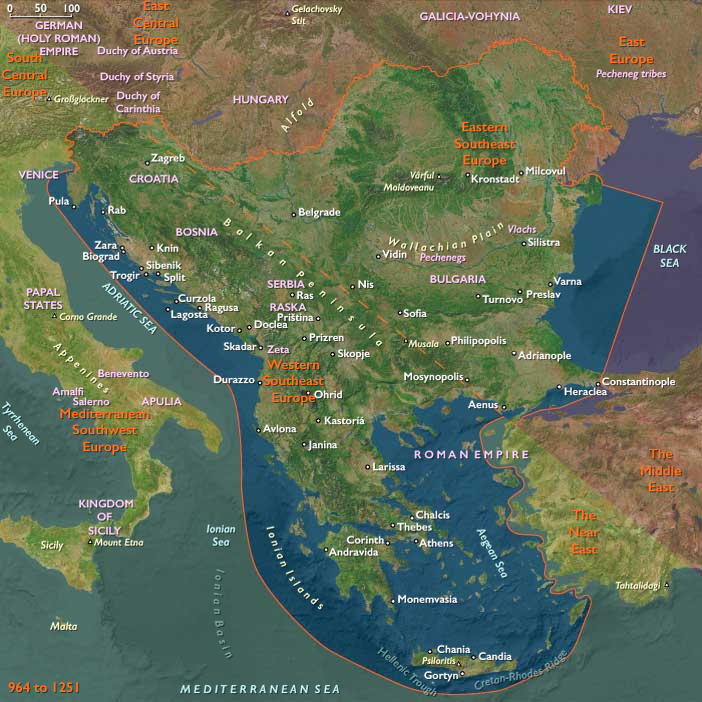
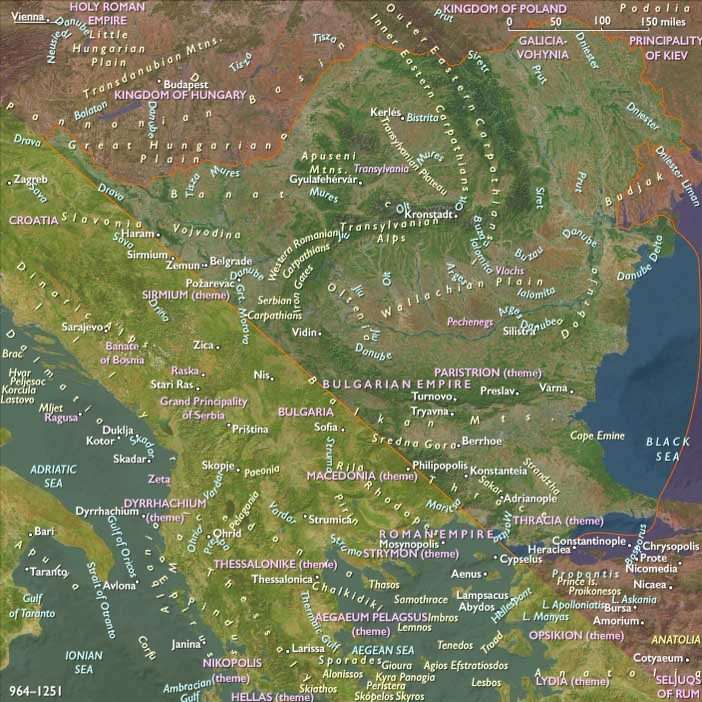
The emperor now looks further west and plans to strengthen imperial control in southern Italy and to regain Sicily from the Arabs.
Locations
People
Groups
- Arab people
- Greeks, Medieval (Byzantines)
- Sicily, Emirate of
- Roman Empire, Eastern: Macedonian dynasty
Topics
Commodoties
Subjects
Regions
Subregions
Years: 1023 - 1023
Locations
People
Groups
- Arab people
- Greeks, Medieval (Byzantines)
- Sicily, Emirate of
- Roman Empire, Eastern: Macedonian dynasty
Topics
Commodoties
Subjects
Regions
Subregions