
Bartolomeo Prignano, born in Itri, is a …
Years: 1378 - 1378
Bartolomeo Prignano, born in Itri, is a devout monk and learned casuist, trained at Avignon.
On March 21, 1364 he had been consecrated Archbishop of Acerenza in the Kingdom of Naples.
He had become Archbishop of Bari in 1377.
Prignano had developed a reputation for simplicity and frugality and a head for business when acting Vice-Chancellor for resolute Pope Gregory XI, who, having endeavored to pacify the papal states and to make possible the return to Rome after seventy years at Avignon, dies here on March 27, 1378.
A Roman mob surrounds the papal conclave to demand a Roman pope.
The cardinals being under some haste and great pressure to avoid the return of the Papal seat to Avignon, the able Prignano is unanimously chosen Pope on April 8, 1378 as acceptable to the disunited majority of French cardinals, taking the name Urban VI.
Not being a Cardinal, he is not well known.
Immediately following the conclave, most of the cardinals flee Rome before the mob can learn that not a Roman (though not a Frenchman either), but a subject of Queen Joan I of Naples, has been chosen.
Though the coronation has been carried out in scrupulous detail, leaving no doubt as to the legitimacy of the new pontiff, the French are not particularly happy with this move and begin immediately to conspire against this Pope.
Urban VI does himself no favors; whereas the cardinals had expected him pliant, he is considered arrogant and angry by many of his contemporaries.
Dietrich of Nieheim reports the opinion of the cardinals that his elevation had turned his head, and Froissart, Leonardo Aretino, Tommaso de Acerno nd St. Antoninus of Florence record similar conclusions.
Immediately following his election, the new pontiff—who had not been a cardinal, but had served in the Curia—begins preaching intemperately to the cardinals (some of whom think the delirium of power has made Urban mad and unfit for rule), insisting that the business of the Curia should be carried on without gratuities and gifts, forbidding the cardinals to accept annuities from rulers and other lay persons, condemning the luxury of their lives and retinues, and the multiplication of benefices and bishoprics in their hands.
Nor will he remove again to Avignon, thus alienating King Charles V of France.
He behaves in such a high-handed manner that he alienates the cardinals, and questions are raised about his sanity.
Urban disdains the advice of others, can be ruthless if opposed or questioned, and is committed to reform through an extreme reduction of the powers of the cardinals, who for decades have been almost corulers with the popes in Avignon.
The majority of cardinals, led by the powerful Frenchmen, gradually withdraw from the papal court.
Locations
People
- Antipope Clement VII
- Catherine of Siena
- Charles V of France
- Joanna I of Naples
- Pope Gregory XI
- Pope Urban VI
Groups
- Papal States (Republic of St. Peter)
- Christians, Roman Catholic
- Naples, Angevin Kingdom of
- Comtat Venaissin (Papal enclave)
- France, (Valois) Kingdom of
Topics
- Avignon Papacy
- Western Schism or Papal Schism (also known as the Great Schism of Western Christianity)
Subjects
Regions
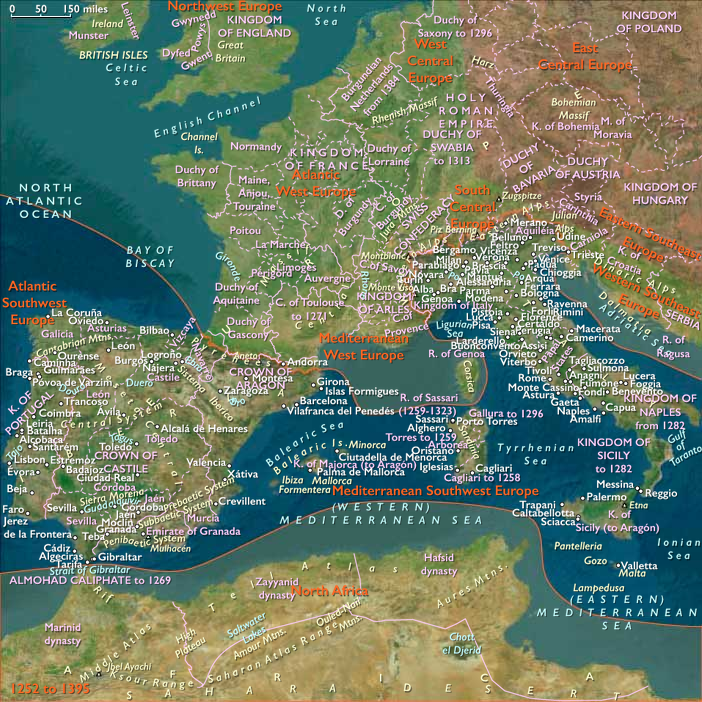
Subregions
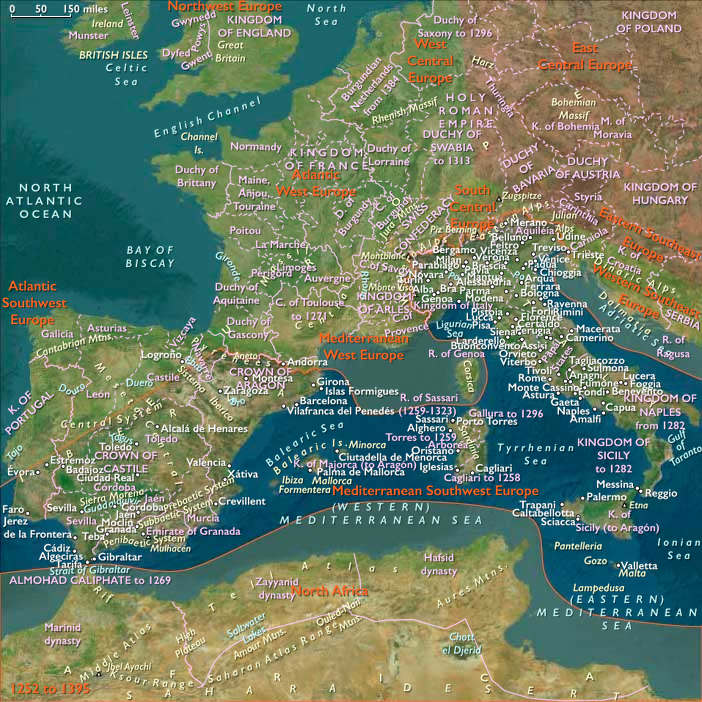
Years: 1378 - 1378
Locations
People
- Antipope Clement VII
- Catherine of Siena
- Charles V of France
- Joanna I of Naples
- Pope Gregory XI
- Pope Urban VI
Groups
- Papal States (Republic of St. Peter)
- Christians, Roman Catholic
- Naples, Angevin Kingdom of
- Comtat Venaissin (Papal enclave)
- France, (Valois) Kingdom of
Topics
- Avignon Papacy
- Western Schism or Papal Schism (also known as the Great Schism of Western Christianity)
Subjects
Regions
Subregions