
Filters:
Whydah, a major slave trading post, is …
Years: 1700 - 1700
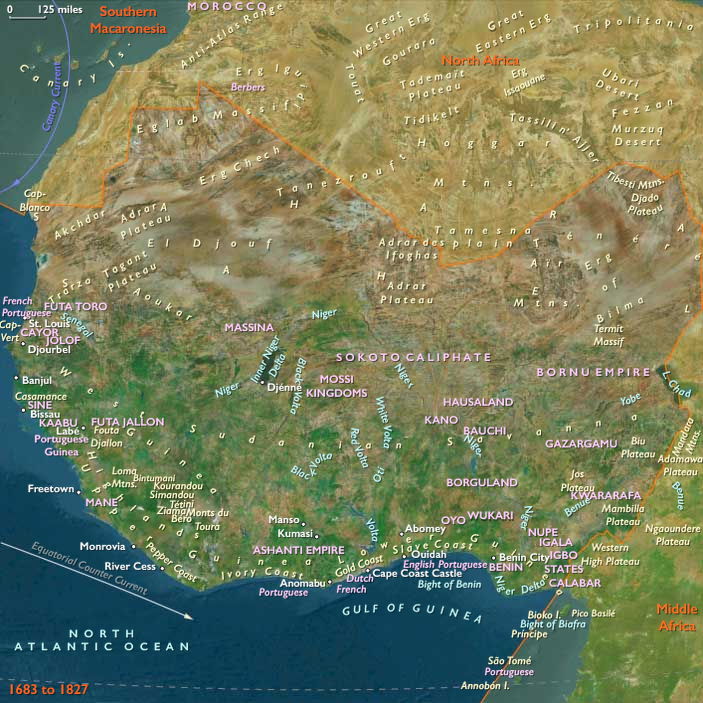
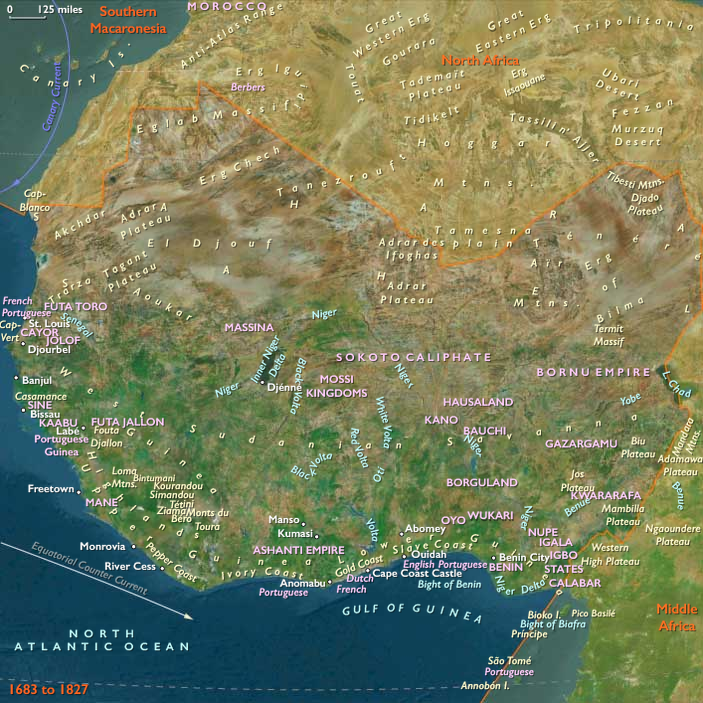
Whydah, a major slave trading post, is a kingdom on the coast of West Africa in the boundaries of the modern nation of Benin.
The name Whydah is an anglicized form of Xwéda (pronounced o-wi-dah), from the Yoruba language of Benin. (Today the port city of Ouidah, in the far west of the former Popo Kingdom where most of the European slave traders lived and worked, bears the kingdom's name.)
According to one European visitor between 1692 and 1700, Whydah exports some thousand slaves a month, mainly from the interior of Africa.
For this reason, it has been considered a "principal market" for human beings.
When the king cannot supply the European traders with sufficient slaves, he supplements them with his own wives.
Robbery is common.
Everyone in Whydah pays a toll to the king, but corruption among collectors is endemic.
Despite this, the king is wealthy, and clothed in gold and silver—goods of which little is known in Whydah.
He commands great respect, and, unusually, is never seen to eat.
The color red is reserved for the royal family.
The king is considered immortal, despite successive kings dying of natural causes.
Interregna, even of only a few days, are met by plundering and anarchy.
Wives are isolated and protected by their husbands; fathers with more than two hundred children had been recorded.
Three public objects are the subject of devotion: some lofty trees, the sea, and a type of snake.
This snake is the subject of many stories and incidents; worshiped perhaps because it eats the rats who would otherwise ruin the harvest.
Priests and priestesses are held in high regard, and immune from capital punishment.
The king can field upward from twenty thousand, although contemporary interpretation is generally that these armies were of "overwhelming size".
Battles are normally won by strength of numbers alone, with the weaker side fleeing.
The name Whydah is an anglicized form of Xwéda (pronounced o-wi-dah), from the Yoruba language of Benin. (Today the port city of Ouidah, in the far west of the former Popo Kingdom where most of the European slave traders lived and worked, bears the kingdom's name.)
According to one European visitor between 1692 and 1700, Whydah exports some thousand slaves a month, mainly from the interior of Africa.
For this reason, it has been considered a "principal market" for human beings.
When the king cannot supply the European traders with sufficient slaves, he supplements them with his own wives.
Robbery is common.
Everyone in Whydah pays a toll to the king, but corruption among collectors is endemic.
Despite this, the king is wealthy, and clothed in gold and silver—goods of which little is known in Whydah.
He commands great respect, and, unusually, is never seen to eat.
The color red is reserved for the royal family.
The king is considered immortal, despite successive kings dying of natural causes.
Interregna, even of only a few days, are met by plundering and anarchy.
Wives are isolated and protected by their husbands; fathers with more than two hundred children had been recorded.
Three public objects are the subject of devotion: some lofty trees, the sea, and a type of snake.
This snake is the subject of many stories and incidents; worshiped perhaps because it eats the rats who would otherwise ruin the harvest.
Priests and priestesses are held in high regard, and immune from capital punishment.
The king can field upward from twenty thousand, although contemporary interpretation is generally that these armies were of "overwhelming size".
Battles are normally won by strength of numbers alone, with the weaker side fleeing.
Locations
Groups
Commodoties
Subjects
- Commerce
- Watercraft
- Labor and Service
- Fashion
- Conflict
- Mayhem
- Faith
- Government
- Custom and Law
- Technology
Regions
Subregions
Years: 1700 - 1700
Locations
Groups
Commodoties
Subjects
- Commerce
- Watercraft
- Labor and Service
- Fashion
- Conflict
- Mayhem
- Faith
- Government
- Custom and Law
- Technology
Regions
Subregions