
General Kutuzov, unwilling to give up Moscow …
Years: 1812 - 1812
September
General Kutuzov, unwilling to give up Moscow without a fight, takes up a defensive position some seventy-five miles before Moscow near the village of Borodino, west of the town of Mozhaysk.
The French Grande Armée under Emperor Napoleon I attacks the Imperial Russian Army under Kutuzov and eventually captures the main positions on the battlefield but fails to destroy the Russian army.
About a third of Napoleon's soldiers are killed or wounded; Russian losses, while heavier, can be replaced due to Russia's large population, as Napoleon's campaign takes place on Russian soil.
The battle ends with the Russian Army, while out of position, still offering resistance.
The state of exhaustion of the French forces and the lack of recognition of the state of the Russian Army leads Napoleon to remain on the battlefield with his army instead of the forced pursuit that had marked other campaigns he had conducted.
The entirety of the Guard is still available to Napoleon and in refusing to use it he loses this singular chance to destroy the Russian army.
The battle at Borodino is a pivotal point in the campaign, as it is the last offensive action fought by Napoleon in Russia.
By withdrawing, the Russian army preserves its combat strength, eventually allowing it to force Napoleon out of the country.
The Battle of Borodino on September 7 is the bloodiest day of battle in the Napoleonic Wars.
The French Grande Armée under Emperor Napoleon I attacks the Imperial Russian Army under Kutuzov and eventually captures the main positions on the battlefield but fails to destroy the Russian army.
About a third of Napoleon's soldiers are killed or wounded; Russian losses, while heavier, can be replaced due to Russia's large population, as Napoleon's campaign takes place on Russian soil.
The battle ends with the Russian Army, while out of position, still offering resistance.
The state of exhaustion of the French forces and the lack of recognition of the state of the Russian Army leads Napoleon to remain on the battlefield with his army instead of the forced pursuit that had marked other campaigns he had conducted.
The entirety of the Guard is still available to Napoleon and in refusing to use it he loses this singular chance to destroy the Russian army.
The battle at Borodino is a pivotal point in the campaign, as it is the last offensive action fought by Napoleon in Russia.
By withdrawing, the Russian army preserves its combat strength, eventually allowing it to force Napoleon out of the country.
The Battle of Borodino on September 7 is the bloodiest day of battle in the Napoleonic Wars.
Locations
People
- Alexander I of Russia
- Duke Eugen of Württemberg
- Jérôme Bonaparte
- Louis-Nicolas Davout
- Michael Andreas Barclay de Tolly
- Mikhail Kutuzov
- Napoleon
- Pyotr Bagration
Groups
- Portuguese people
- Poles (West Slavs)
- Austria, Archduchy of
- Baltic Germans
- Russians (East Slavs)
- Cossacks
- Spaniards (Latins)
- Denmark-Norway, Kingdom of
- Portugal, Bragança Kingdom of
- Russian Empire
- Britain (United Kingdom of Great Britain and Ireland)
- Switzerland
- France, (first) Empire of
- Italy, Bonapartist Kingdom of
- Rhine, Confederation of the (Rhine Confederation)
- Naples, Bonapartist Kingdom of
- Warsaw, Duchy of
- Spain, Bonapartist Kingdom of
Topics
Commodoties
Subjects
Regions
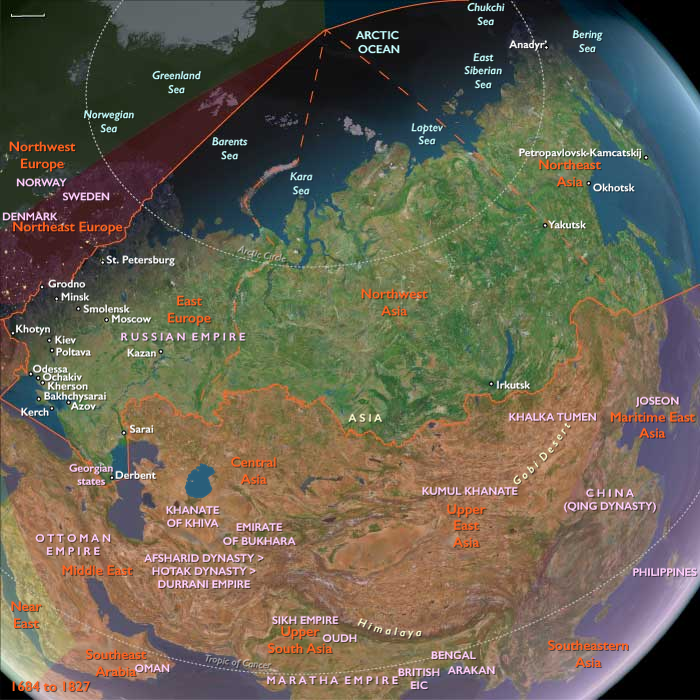
Subregions
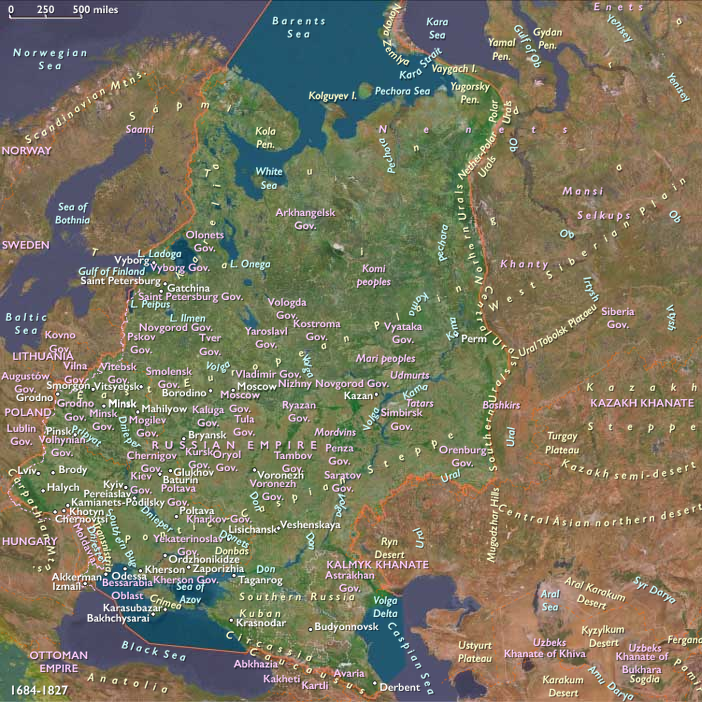
Related Events
Showing 10 events out of 21390 total
Years: 1812 - 1812
September
Locations
People
- Alexander I of Russia
- Duke Eugen of Württemberg
- Jérôme Bonaparte
- Louis-Nicolas Davout
- Michael Andreas Barclay de Tolly
- Mikhail Kutuzov
- Napoleon
- Pyotr Bagration
Groups
- Portuguese people
- Poles (West Slavs)
- Austria, Archduchy of
- Baltic Germans
- Russians (East Slavs)
- Cossacks
- Spaniards (Latins)
- Denmark-Norway, Kingdom of
- Portugal, Bragança Kingdom of
- Russian Empire
- Britain (United Kingdom of Great Britain and Ireland)
- Switzerland
- France, (first) Empire of
- Italy, Bonapartist Kingdom of
- Rhine, Confederation of the (Rhine Confederation)
- Naples, Bonapartist Kingdom of
- Warsaw, Duchy of
- Spain, Bonapartist Kingdom of
Topics
Commodoties
Subjects
Regions
Subregions