
Baldassare Castiglione was back in Mantua in …
Years: 1529 - 1529
Baldassare Castiglione was back in Mantua in 1516, where he married a very young Ippolita Torelli, descendant of another noble Mantuan family.
That Castiglione's love for Ippolita was of a very different nature from his former platonic attachment to Elisabetta Gonzaga is evidenced by the two deeply passionate letters he wrote to her that have survived.
Sadly, Ippolita died a mere four years after their marriage, while Castiglione was away in Rome as ambassador for the Duke of Mantua.
Pope Leo X had conceded to him the tonsura (first sacerdotal ceremony) in 1521 and thereupon began Castiglione's second, ecclesiastical career.
He maintains copious correspondence with personalities of his time.
Castiglione's principal work, The Book of the Courtier, published by Aldine Press is an ideal (and in certain respects also a factual) picture of the life of Renaissance court society, in which famous contemporaries such as Pietro Bembo, Bernardo Bibiena, and Giuliano de'Medici discuss the manners and virtues of the perfect courtier.
Considered the definitive account of Renaissance court life, it is cited frequently along with Stefano Guazzo's The civil conversation (1574) and Giovanni Della Casa's Galateo (1558) as among the most important Renaissance works of the Italian Renaissance.
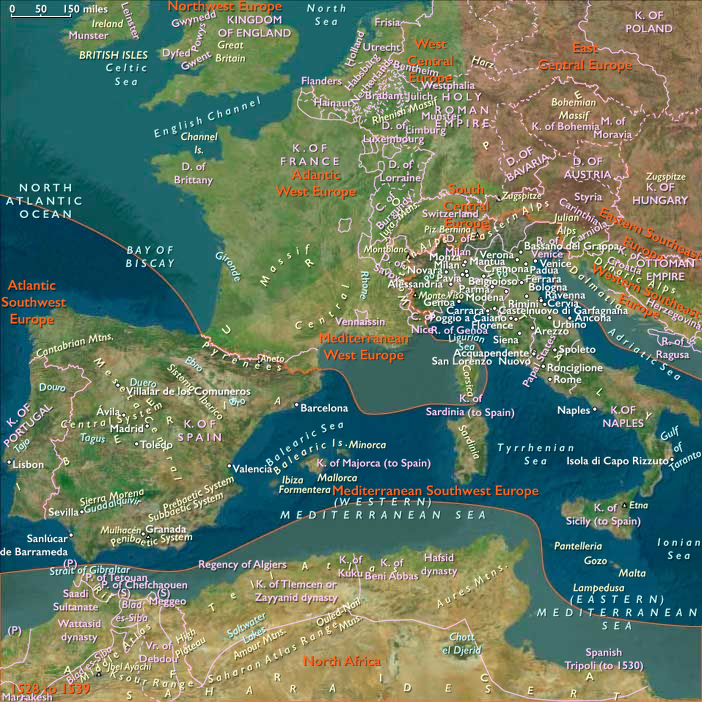
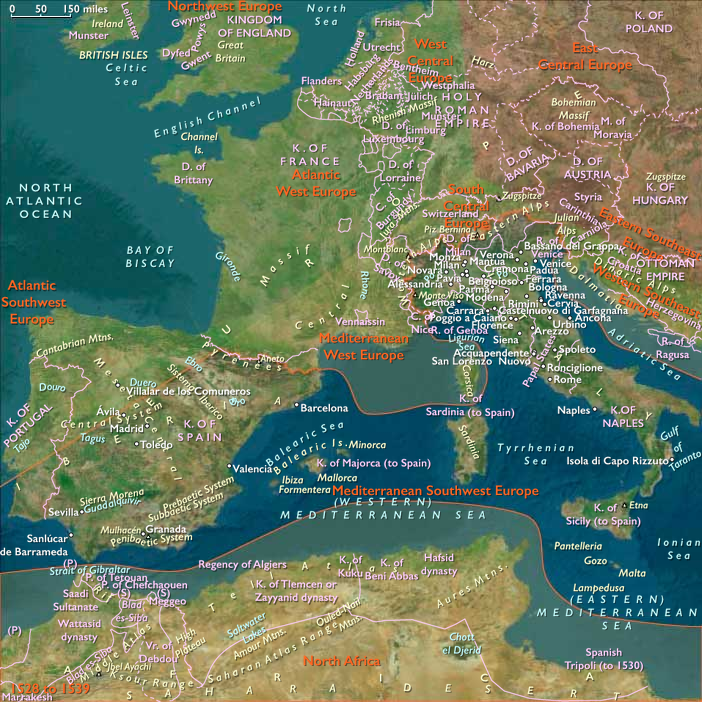
Pope Clement VII had sent the forty-seven-year-old Castiglione as apostolic nuncio to the court of Charles V in Spain in 1524, and in this role he followed court of Emperor Charles V to Toledo, Seville and Granada.
At the time of the Sack of Rome (1527) Pope Clement VII suspected Castiglione of having harbored a "special friendship" for the Spanish emperor: Castiglione, the Pope believed, should have informed the Holy See of Charles V's intentions, for it was his duty to investigate what Spain was planning against the Eternal City.
On the other hand, Alonso de Valdés, twin brother of the humanist Juan de Valdés and secretary of the emperor, publicly declared the sack to have been a divine punishment for the sinfulness of the clergy.
Castiglione answered both the Pope and Valdés in two famous letters from Burgos.
He took Valdés to task, severely and at length, in his response to the latter's comments about the Sack of Rome.
While in his letter to the Pope (dated December 10, 1527), he had the audacity to criticize Vatican policies, asserting that its own inconsistencies and vacillations had undermined its stated aim of pursuing a fair agreement with the emperor and had provoked Charles V to attack.
Against all expectations, Castiglione received the Pope's apologies and the emperor honored him with the offer of the position of Bishop of Avila.
Historians today believe that Castiglione had carried out his ambassadorial duties to Spain in an honorable manner and bore no responsibility for the sack of Rome.
He dies of the plague in Toledo in 1529.
Locations
People
Groups
- Papal States (Republic of St. Peter)
- Christians, Roman Catholic
- France, (Valois) Kingdom of
- England, (Tudor) Kingdom of
- Spain, Habsburg Kingdom of
- Urbino, Duchy of
Topics
Subjects
Regions
Subregions
Years: 1529 - 1529
Locations
People
Groups
- Papal States (Republic of St. Peter)
- Christians, Roman Catholic
- France, (Valois) Kingdom of
- England, (Tudor) Kingdom of
- Spain, Habsburg Kingdom of
- Urbino, Duchy of
Topics
Subjects
Regions
Subregions