
…Babylonia have begun to feel sympathy with …
Years: 337 - 337
…Babylonia have begun to feel sympathy with Roman policies for religious reasons.
The Sassanian emperors have consequently felt the need to consolidate their Zoroastrianism, and efforts have been made to perfect and enforce state orthodoxy.
Shortly after 337, the Persian king Shapur II, determined to reconquer lost Persian territory to the east and west and to assert his own authority, takes an important policy decision.
Although the state religion of the Sassanian Empire is Mazdaism (Zoroastrianism), Christianity flourishes within its boundaries.
Constantine had granted toleration to Christians in 313, and with the subsequent Christianization of the empire, Shapur, mistrustful of a potential force of a fifth column at home while he is engaged abroad, orders the persecution and forcible conversion of the Christians; this policy will be in force throughout his reign.
All heresy is proscribed by the state, defection from the official faith is made a capital crime, and persecution of the heterodox, the Christians in particular, begins.
Competition between Iran and Rome-Constantinople thus takes on a religious dimension.
A new war is inevitable.
Seeing an opportunity in the death of Constantine, Shapur sends his forces across the Tigris River, the uneasy frontier, to recover Armenia and Mesopotamia, which his predecessors had lost to the Romans.
Locations
People
Groups
- Zoroastrians
- Babylonia, Classical
- Syria Palæstina, Roman province of (Judea, Samaria, and Idumea)
- Mesopotamia (Roman province)
- Armenia, Kingdom of
- Persian Empire, Sassanid, or Sasanid
- Christianity, Arian
- Christianity, Nicene
- Roman Empire: Constantinian dynasty (Constantinople)
Topics
Commodoties
Subjects
Regions
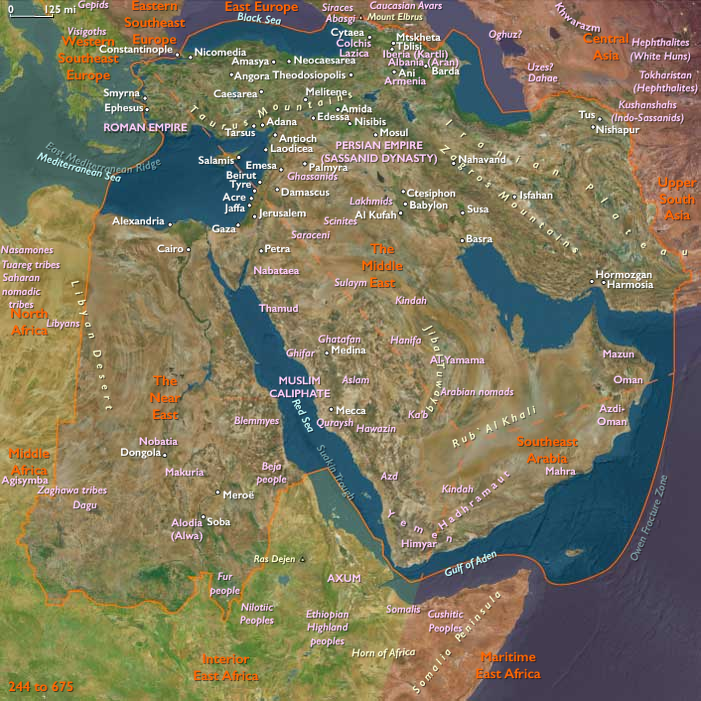
Subregions
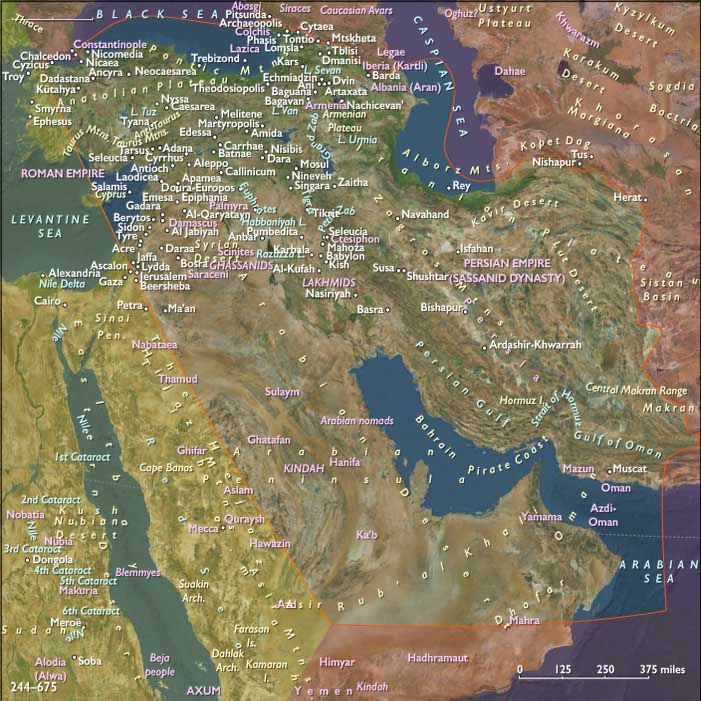
Related Events
Showing 10 events out of 59862 total
Years: 337 - 337
Locations
People
Groups
- Zoroastrians
- Babylonia, Classical
- Syria Palæstina, Roman province of (Judea, Samaria, and Idumea)
- Mesopotamia (Roman province)
- Armenia, Kingdom of
- Persian Empire, Sassanid, or Sasanid
- Christianity, Arian
- Christianity, Nicene
- Roman Empire: Constantinian dynasty (Constantinople)
Topics
Commodoties
Subjects
Regions
Subregions