
Axum, named by Mani as one of …
Years: 276 - 276
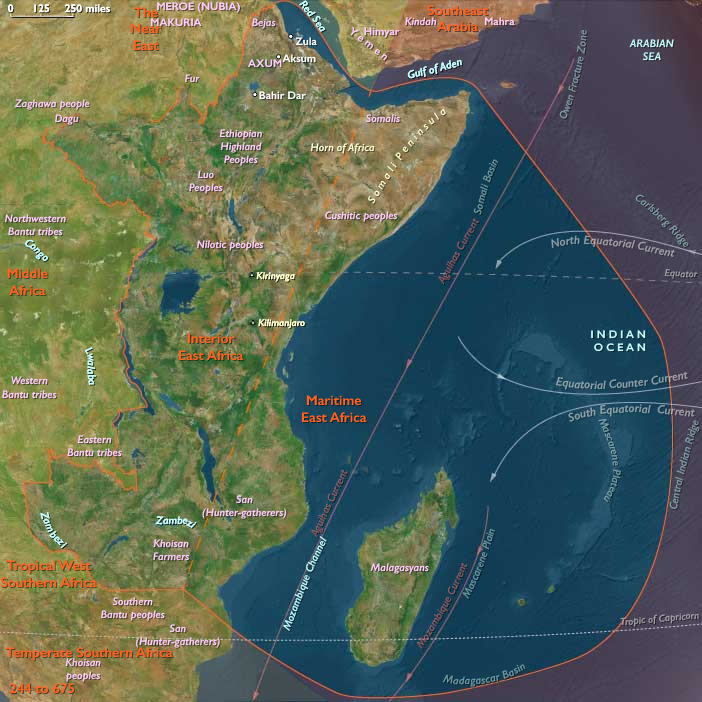
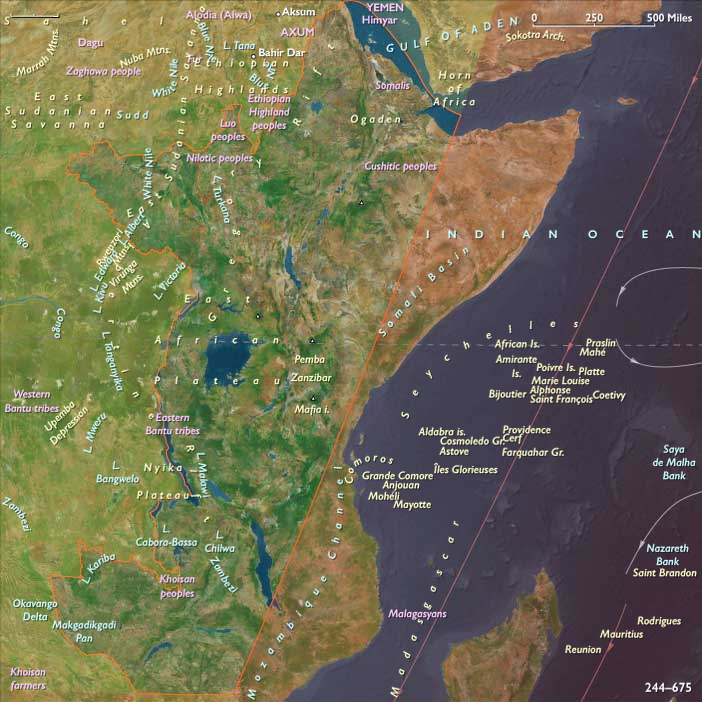
Axum, named by Mani as one of the four great powers of his time along with Persia, Rome, and China, has begun minting its own currency by the late third century.
Locations
People
Groups
- Aksum (or Axum), Kingdom of
- Persian Empire, Sassanid, or Sasanid
- Roman Empire (Rome): Non-dynastic
- Jin Dynasty, Western (265–317)
Topics
- Sub-Saharan Africa, Ancient
- Classical antiquity
- Crisis of the Third Century (Roman Civil “War” of 235-84)
Commodoties
Subjects
Regions
Subregions
Related Events
Filter results
Showing 10 events out of 60195 total
Aurelian’s Short but Decisive Reign (270–275 CE): The Emperor Who Saved Rome
Despite ruling for only five years (270–275 CE), Emperor Aurelian successfully reunited a fragmented empire, defended Italy from barbarian invasions, and laid the foundation for Rome’s eventual recovery from the Crisis of the Third Century. His leadership was crucial in preventing the empire from collapsing, though his untimely death prevented him from establishing a stable dynasty that could have ended Rome’s ongoing cycle of civil wars and assassinations.
1. Aurelian’s Role in Saving the Empire
- He reconquered the breakaway Gallic Empire (260–274 CE) and defeated Queen Zenobia’s Palmyrene Empire (270–273 CE), restoring imperial unity.
- He repelled barbarian invasions that had penetrated into Italy itself, securing the empire’s heartland.
- His victory at the Battle of Châlons (274 CE) ended the Gallic Empire, fully restoring Roman authority in the West.
Without Aurelian’s decisive military and political leadership, Rome might have collapsed under external invasions and internal divisions.
2. Aurelian’s Legacy and the Road to Stability
- Although he was assassinated before he could consolidate his rule, his actions strengthened the empire, allowing later rulers to continue his work.
- It would take another twenty years and the reforms of Diocletian (r. 284–305 CE) to fully end the Crisis of the Third Century.
- However, Aurelian’s achievements helped ensure that:
- The Western Roman Empire endured for two more centuries.
- The Eastern Roman Empire (Byzantium) survived for over a millennium.
- For his role in preserving Rome, Aurelian deserves much of the credit.
3. Aurelian’s Influence on Geography: The City of Orléans
- In Gaul, Aurelian rebuilt the devastated city of Cenabum and renamed it Aurelianum or Aureliana Civitas (City of Aurelian).
- Over time, this name evolved into Orléans, France.
- By extension, the city of New Orleans (La Nouvelle-Orléans), Louisiana, USA, was named after the French Orléans, indirectly tracing its name back to Emperor Aurelian.
Conclusion: Aurelian’s Lasting Impact
Although his reign was brief, Aurelian’s military successes, territorial reunification, and defensive reforms ensured that Rome survived one of its most dangerous periods. His name lives on not only in history but also in geography, symbolizing his enduring influence on the Roman world and beyond.
The Goths and the Heruli, the campaign against the Goths having been canceled with the murder of Aurelian, have once more crossed the Black Sea to wreak havoc on Asia Minor, plundering several towns in the Eastern Roman provinces.
Aurelian’s successor Tacitus, accompanied by his reported maternal half brother Marcus Annius Florianus, the Praetorian Prefect, leads the legions into Asia Minor and defeats the barbarians in battle in spring 276, which gains the emperor the title Gothicus Maximus.
He is on his way back west to deal with a Frankish and Alamannic invasion of Gaul when, (according to Aurelius Victor, Eutropius and the Historia Augusta), he dies in Tyana in Cappadocia in July.
It is reported that he began acting strangely, declaring that he would alter the names of the months to honor himself before succumbing to a fever.
In a contrary account, Zosimus claims he was assassinated, after appointing one of his relatives to an important command in Syria.
The Senate and the armies of the West tolerate the seizure, by Florian, of his late half-brother's' imperial position; however he mints coins bearing the "SC" legend, thus showing some bonds to the Senate.
Florian continues the campaign, driving the barbarians to the brink of defeat.
Florian has the support of Italia, Gaul, Hispania, Britain, Africa, and Mauretania.
Commanding superior forces, he immediately marches on his challenger.
The two armies close upon one another near Tarsus, but Probus manages to avoid a direct clash, resulting in a wary stalemate.
Florian's troops, largely drawn from bases along the Danube, are unused to the summer heat of the East, and heat exhaustion, sun stroke and similar ailments begin to erode morale in his camp until, on the eighty-eighth day of his reign, September 9, 276, he dies either at the hands of his own soldiers or by suicide.
The legions in Syria, however, within two or three weeks promote their own general, Marcus Aurelius Equitius Probus, in opposition to Florian.
Probus, the son of a Balkan military officer, has served with distinction in the army and is now (apparently) eastern praetorian prefect.
He claims that Tacitus had meant him to be his successor.
The influential Kartir has called for the persecution of adherents of other religions, in particular Manichaeans.
Under the guidance of Kartir, Bahram has had the prophet Mani, the founder of Manichaeism (and the author of the Shapurgan, which was dedicated to Bahram's father Shapur) sentenced to death.
Mani dies in his cell shortly before his execution.
However, rumors persist that Mani might have been flayed alive and his skin, stuffed with straw, suspended for some time over one of the gates of the great city of Shapur.
On Bahram’s orders, the prophet's death is followed by the persecution of his disciples.
Manichaeism is relatively well established by that time, and is supported by numerous priests under a hierarchy of religious leaders that include twelve apostles and seventy-two bishops.
Nearly all of them are handed over to the Zoroastrian clergy, who—under Kartir —consider Manichaeism a heresy and cause the followers of Mani to be executed or otherwise punished.
When Bahram dies, possibly of disease, later in 276, his son ascends the throne to rule as Bahram II; he will continue his predecessors' work of strengthening dynastic power as opposed to the nobility.
Probus, on reaching Rome, receives the senate's confirmation him as emperor, and returns the favor by according the senators great respect, allowing them to conduct civil administration.
Under his regime, the surviving murderers of Aurelian are executed.
Tacitus and Florian had largely dealt with the Gothic attack on Asia Minor, and the intermittent campaign against the Persians had been abandoned upon the death of Shapur, but Probus must address the situation along Rome's frontiers, where a series of attacks had taken place following the death of Aurelian.
The Germanic invasions across the Rhine have so far not been dealt with, and Probus will spend the next two years on campaign against the Franks, the Longiones, and the Vandals.
The empire remains divided and chaotic.
Probus, while en route to Syria, repels an invasion by the Getae, who have crossed the lower Danube.
The Franks, the Longiones, and the Vandals, despite their huge numbers, have all been defeated within two years.
At one point, Probus had captured the leader of the Longiones, called Semnon, and upon Semnon's acceptance of terms permitted his return to his homeland with his surviving people.
At one occasion during these successful campaigns, sixteen German chiefs are said to have knelt at Probus' feet.
Hostages are taken to ensure the peace and some sixteen thousand Germans are recruited into the Roman army.
In 279, the emperor sets out for Syria, desiring to reconquer Mesopotamia from Sassanid Persia.
A military campaign launched by the Jin Dynasty against the state of Eastern Wu in 280, towards the very end of the Three Kingdoms period, concludes with the fall of Wu and the reunification of China under the Jin Dynasty.
A civil war for power among princes and dukes of the Chinese Jin Dynasty from 291 to 306 is called the War of the Eight Princes, the term stemming from biographies of eight princes collected in chapter fifty-nine of the "History of Jin Dynasty" (Jinshu).
While initial conflicts are relatively minor and confined to the imperial capital of Luoyang and its surroundings, the scope of the war will expand with each new prince that enters the struggle.
Years: 276 - 276
Locations
People
Groups
- Aksum (or Axum), Kingdom of
- Persian Empire, Sassanid, or Sasanid
- Roman Empire (Rome): Non-dynastic
- Jin Dynasty, Western (265–317)
Topics
- Sub-Saharan Africa, Ancient
- Classical antiquity
- Crisis of the Third Century (Roman Civil “War” of 235-84)
