
The Reconquest and Repopulation of Ávila (1088 …
Years: 1088 - 1088
The Reconquest and Repopulation of Ávila (1088 CE)
After the fall of the Western Roman Empire, Ávila became a Visigothic stronghold, serving as an important defensive center. Following the Muslim conquest, it was renamed Ābila and remained under Arab control, though it suffered frequent attacks from the northern Christian kingdoms. Over time, the city became a virtually uninhabited no-man’s land, caught between the shifting Christian-Muslim frontier.
Raymond of Burgundy and the Fortification of Ávila
In 1088, after the definitive Christian reconquest of the area, Raymond of Burgundy, the son-in-law of King Alfonso VI of León and Castile, repopulates Ávila as part of Alfonso’s broader strategy to secure the central Iberian frontier.
To fortify the city, Raymond employs two foreign master builders, Casandro Romano and Florin de Pituenga, who oversee the construction of a stone frontier town and the massive defensive walls that still stand today.
The repopulation and fortification of Ávila mark its transformation into a key defensive stronghold during the Reconquista, ensuring Christian control over the region and solidifying León and Castile’s expansion southward.
Ávila had become a stronghold of the Visigoths after the fall of the Western Roman Empire.
Conquered by the Arabs (who called it Ābila), it had been repeatedly attacked by the northern Iberian Christian kingdoms, becoming a virtually uninhabited no man's land.
It is repopulated about 1088 following the definitive reconquest of the area by Raymond of Burgundy, son in law of Alfonso VI of León and Castile.
He employs two foreigners, Casandro Romano and Florin de Pituenga, to construct a stone frontier town and creating the walls that still stand.
Locations
People
Groups
- Arab people
- Moors
- Galicia, Kingdom of
- Muslims, Sunni
- León, Kingdom of
- Christians, Roman Catholic
- Castile, Kingdom of
Topics
Commodoties
Subjects
Regions
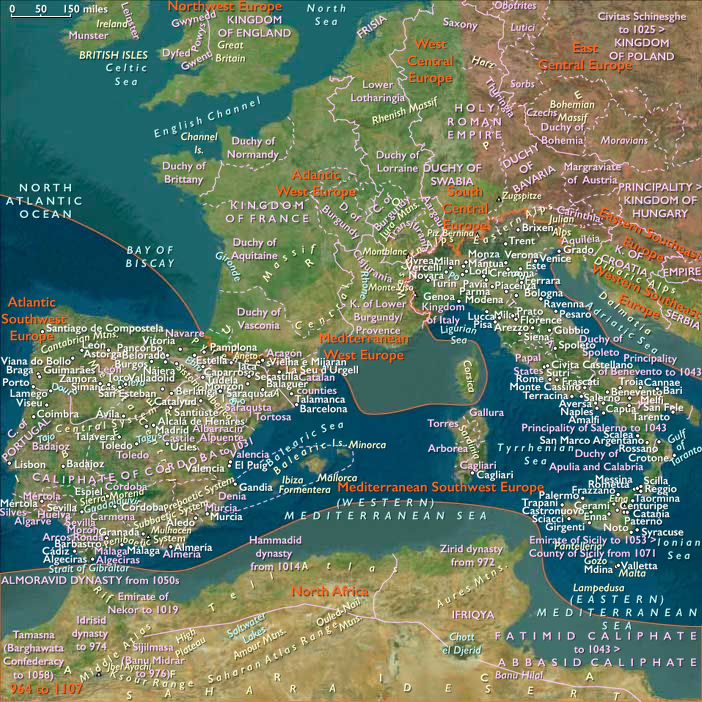
Subregions
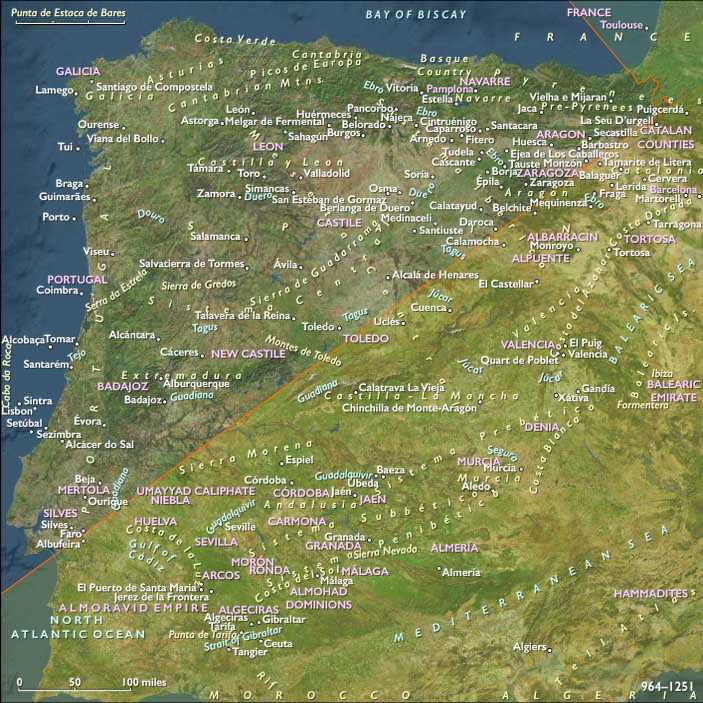
Related Events
Showing 10 events out of 50381 total
Years: 1088 - 1088
Locations
People
Groups
- Arab people
- Moors
- Galicia, Kingdom of
- Muslims, Sunni
- León, Kingdom of
- Christians, Roman Catholic
- Castile, Kingdom of
Topics
Commodoties
Subjects
Regions
Subregions