Australia begins exporting cheap grains to Europe …
Years: 1871 - 1871
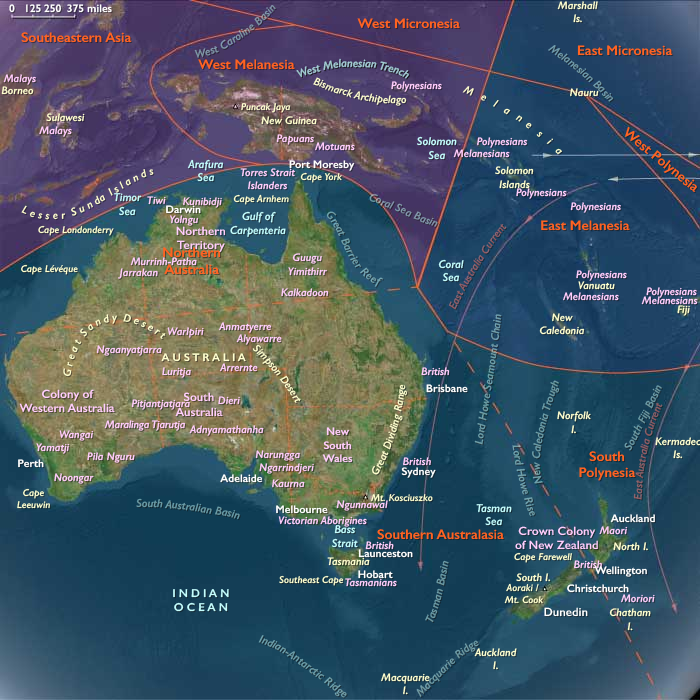
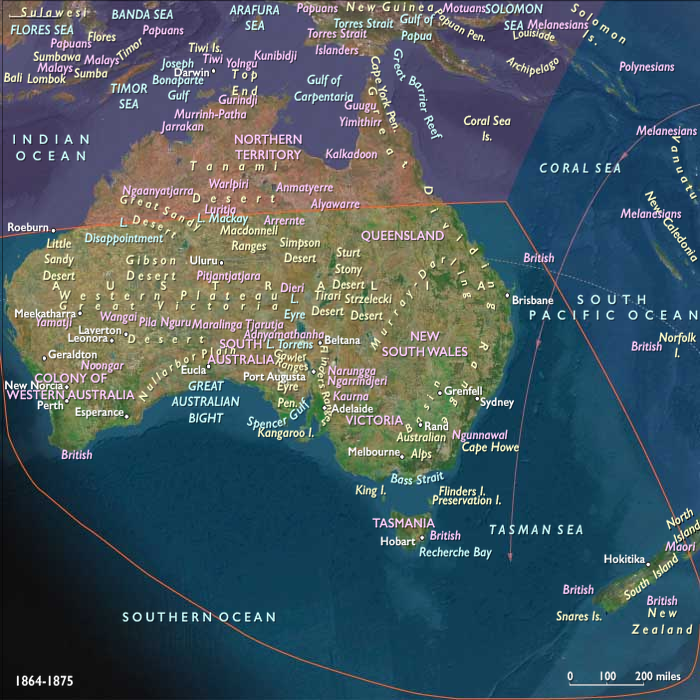
Australia begins exporting cheap grains to Europe in the 1870s.
Locations
Groups
- Australia, British
- New South Wales (British colony)
- Britain (United Kingdom of Great Britain and Ireland)
Topics
Commodoties
Subjects
Regions
Subregions
Related Events
Filter results
Showing 10 events out of 12734 total
St. Andrew's Cathedral had been planned under Kamehameha IV, but construction had started only in 1867.
Kamehameha V has initiated ambitious public projects.
He wants to create a credible and pleasing face for the government for those who visit.
Burmese scholars have been sent to France, Italy, the United States, and Great Britain during Mindon's reign in order to learn about the tremendous progress achieved by the Industrial Revolution.
Mindon had created the world's largest book in 1868, the Tipitaka, 729 pages of the Buddhist Pali Canon inscribed in marble and each stone slab housed in a small stupa at the Kuthodaw Pagoda at the foot of Mandalay Hill.
Mindon introduces the first machine-struck coins to Burma, and in 1871 also holds the Fifth Buddhist council in Mandalay.
In 1871 also, Mindon donates a new hti ('umbrella' or crown gilded and encrusted with precious diamonds and other gems) to the one hundred and five-meter- (three hundred and forty-four foot-) tall Shwedagon Pagoda, the most famous and venerated of the Burmese pagodas, although he is not allowed to visit, as it is located in British held-Yangon.
Tengku Dhiauddin Zainal Rashid, also known as Tengku Kudin, a prince from Kedah, had married into the Selangor royal family in 1867.
The Sultan had appointed his son-in-law as Vice Yamtuan and arbitrator twice during the Klang War; first on June 26, 1868 and again on July 22, 1871.
Raja Mahadi, however, had flatly refused the peace effort.
Offended by Raja Mahadi's blunt no, Tengku Kudin had sided with Raja Abdullah and Raja Ismail instead and this had precipitated a war.
The coalition against Raja Mahadi suffers a setback when Raja Abdullah dies of natural causes.
However, the influential Yap Ah Loy of Kuala Lumpur joins Tengku Kudin's cause.
Yap Ah Loy has been faced with internecine fighting among dissident Chinese groups from 1870, as well as attacks from Malay factions.
The two largest Chinese gangster organizations, the Hakka-dominated Hai San and the Cantonese-dominated Ghee Hin, frequently engage in warfare to gain control of tin production in the town.
The incessant warfare between the two factions brings tin mining to a standstill.
The British Straits Settlements are becoming increasingly dependent on the economy of Selangor.
Selangor is one of the world's major tin producers throughout the nineteenth (and the twentierh) century.
Since Selangor's security affects tin trade, the British government feels it needs to have a say in Selangor politics.
The British see Tengku Kudin as a ticket to reach out to Selangor's royal court.
Therefore, the Straits Settlements, under the governorship of Ord, implicitly support Tengku Kudin.
There is a power struggle in the Perak royal court after Sultan Ali dies in 1871.
The next in line for the throne is the Raja Muda or crown prince, Raja Abdullah.
Despite this fact, he is not present during the burial of the sultan.
As in the case of Tengku Hussein of Johor, Raja Abdullah is not appointed as the new sultan by the ministers of Perak.
Instead, the second in line, Raja Bendaraha Raja Ismail, becomes the sultan of Perak.
Raja Abdullah is furious and refuses to accept the news without protest.
He seeks and gathers political supports from various channels, including several of Perak's local chiefs and several British personnel with whom he had done business in the past, with the secret societies becoming their proxies in the fight for the throne.
Among these British individuals is British trader Read.
Furthermore, he promises to accept a British advisor if the British recognize him as the legitimate ruler of Perak.
Unfortunately for Raja Abdullah, the Straits Settlements governor at this time is Sir Harry Ord, a friend of Ngah Ibrahim, who has unresolved issues with Raja Abdullah.
With Ord's aid, Ngah Ibrahim sends sepoy troops from India to prevent Raja Abdullah from actively claiming the throne and extending control over the Chinese secret societies.

The Third Larut War is rumored to have erupted over a scandalˆan extramarital relationship involving the Ghee Hin leader and the wife of a nephew of the Hai San leader, Chung Keng Quee, in 1871.
Upon discovery, the adulterous couple is caught, tortured, put into a pig basket and thrown into a disused mining pond where they drown.
Avenging the death of their leader, Ghee Hin has four thousand professional fighting men imported from mainland China via Penang to attack the Hai Sans and for the first time, the Hai Sans are driven out of Larut.
About ten thousand Hai San men seek refuge in Penang.
Within several months, Hai Sans supported by Ngah Ibrahim recover their Matang and Larut mines.
At this time, Raja Abdullah, a claimant to the throne of Perak and an enemy of Ngah Ibrahim, takes sides against the Hai Sans and Ngah Ibrahim and the wars between the Chinese miners transform into a civil war involving the Malay chiefs of Perak.
The Iwakura Mission, dispatched by Japan in 1871, travels the world in order to renegotiate the unequal treaties with the United States and European countries that Japan had been forced into during the Tokugawa shogunate, and to gather information on western social and economic systems, in order to effect the modernization of Japan.
Renegotiation of the unequal treaties is universally unsuccessful, but close observation of the American and European systems inspire members on their return to bring about modernization initiatives in Japan.
Prominent reforms of the Meiji government include the 1871 abolition of the domain system, by which the feudal domains and their hereditary rulers are replaced by prefectures with governors appointed by the emperor.
Others include the introduction of compulsory schooling and the abolition of Confucian class distinctions.
A Japanese ministry of education is set up the same year to try to provide universal education.
The United States confronts Korea militarily in 1871 in response to the burning of the General Sherman, killing two hundred and forty-three Koreans in Ganghwa Island before withdrawing.
This incident is called the Sinmiyangyo in Korea.
The Muslim Hui (Russian Dungan), and Taranchi tribes had staged a rebellion and evicted the Chinese authorities from the Ili River region in in 1864.
Huiyuan, located near the Ili River, some thirty kilometers to the west of Yining, had suffered severe damage during the Muslim Rebellion of the 1860s, with the besieged Qing Governor Genera of Ili, Mingsioi, blowing himself up in his palace in March 1866 , together with his family, staff, treasury, and tea, rather than surrendering to the rebels.
As the Chinese imperial authority in Xinjiang has collapsed due to the Muslim Rebellion, the Russian government, which controls the territory adjacent to Kashgaria, fears the revolt will spread to their lands and with this pretext send Russian troops to occupy the northern areas of Turkistan around Kuldja on the Ili River, including the Taranchi sultanate, in 1871.
Years: 1871 - 1871
Locations
Groups
- Australia, British
- New South Wales (British colony)
- Britain (United Kingdom of Great Britain and Ireland)