
The Maratha Empire or the Maratha Confederacy …
Years: 1684 - 1827
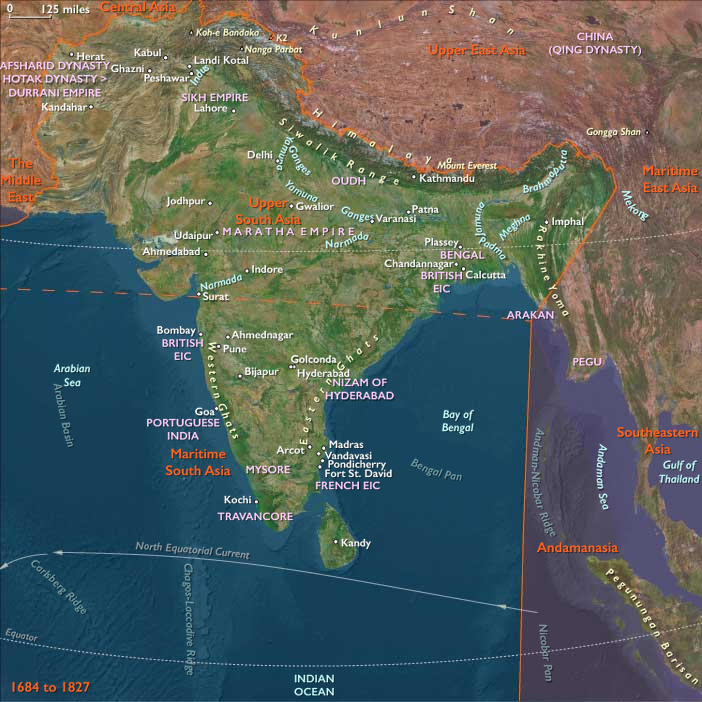
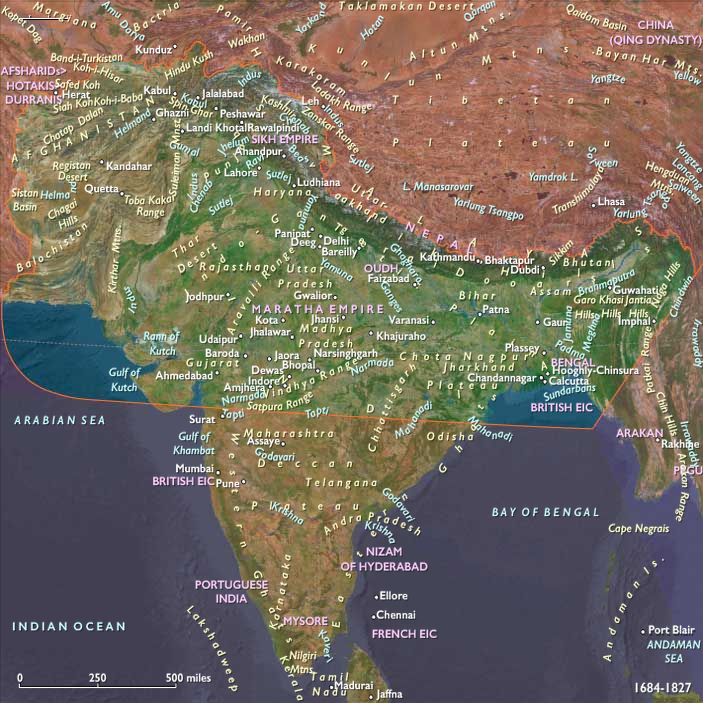
The Maratha Empire or the Maratha Confederacy is an Indian imperial power that exists from 1674 to 1818.
At its peak, the empire covers much of the subcontinent, encompassing a territory of over two point eight million square kilometers.
The Marathas, a yeoman Hindu warrior group from the western Deccan (present day Maharashtra), are credited with ending the Mughal rule in India.
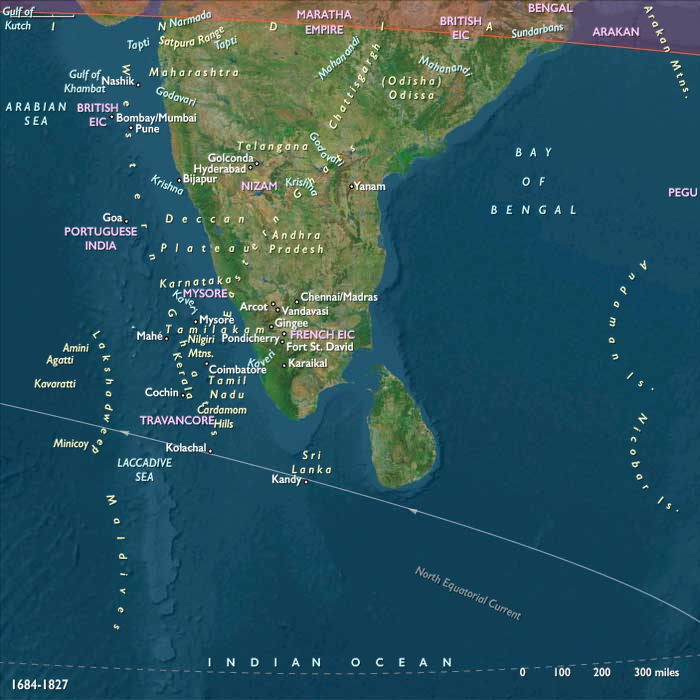
Maratha chieftains were originally in the service of Bijapur sultans in the western Deccan, which was under siege by the Mughals.
Shivaji Bhonsle (1627-80), a tenacious and fierce fighter recognized as the "father of the Maratha nation," had taken advantage of this conflict and carved out his own principality near Pune, which later became the Maratha capital.
Adopting guerrilla tactics, he waylaid caravans in order to sustain and expand his army, which soon had money, arms, and horses.
Shivaji led a series of successful assaults in the 1660s against Mughal strongholds, including the major port of Surat.
In 1674 he assumed the title of "Lord of the Universe" at his elaborate coronation, which signaled his determination to challenge the Mughal forces as well as to reestablish a Hindu kingdom in Maharashtra, the land of his origin.
Shivaji's battle cries are swaraj (translated variously as freedom, self-rule, independence), swadharma (religious freedom), and goraksha (cow protection).
Aurangzeb relentlessly pursues Shivaji's successors between 1681 and 1705 but eventually retreats to the north as his treasury becomes depleted and as thousands of lives had been lost either on the battlefield or to natural calamities.
In 1717 a Mughal emissary signs a treaty with the Marathas confirming their claims to rule in the Deccan in return for acknowledging the fictional Mughal suzerainty and remission of annual taxes.
Yet the Marathas soon capture Malwa from Mughal control and later move east into Orissa and Bengal; southern India also comes under their domain.
Recognition of their political power finally comes when the Mughal emperor invites them to act as auxiliaries in the internal affairs of the empire and still later to help the emperor in driving the Afghans out of Punjab.
Locations
People
Groups
- Hinduism
- Pashtun people (Pushtuns, Pakhtuns, or Pathans)
- Indian people
- Rajputs
- Islam
- Muslims, Sunni
- Maratha
- Sikhs
- Persia, Safavid Kingdom of
- Mughal Empire (Delhi)
- Maratha Empire
Topics
Subjects
Regions
Subregions
Years: 1684 - 1827
Locations
People
Groups
- Hinduism
- Pashtun people (Pushtuns, Pakhtuns, or Pathans)
- Indian people
- Rajputs
- Islam
- Muslims, Sunni
- Maratha
- Sikhs
- Persia, Safavid Kingdom of
- Mughal Empire (Delhi)
- Maratha Empire
Topics
Subjects
Regions
Subregions