
Augustus II the Strong, Imperial Prince-Elector of …
Years: 1733 - 1733
Augustus II the Strong, Imperial Prince-Elector of Saxony and monarch of the Polish–Lithuanian Commonwealth, dies on February 1, 1733.
The Marquis de Monti, France's ambassador in Warsaw, persuades the rival Potocki and Czartoryski families to unite behind Stanisław Leszczyński.
Teodor Potocki, Primate of Poland and interrex following the death of Augustus, calls a convocation sejm in March 1733.
Delegates to this sejm pass a resolution forbidding the candidacy of foreigners; this will explicitly exclude both Emmanuel of Portugal and Augustus II's son, Frederick August II, the Elector of Saxony.
Frederick August, the only legitimate son of Augustus II by his wife, Christiane Eberhardine of Brandenburg-Bayreuth, had been groomed to succeed his father as King of Poland and Grand Duke of Lithuania, and thus, in 1712, had converted to Catholicism.
This had been publicly announced in 1717, to the anger among the nobility in his native Saxony.
France throughout the spring and summer of 1733 begins building up forces along its northern and eastern frontiers, while the emperor masses troops on Polish borders, reducing garrisons in the Duchy of Milan for the purpose.
While the aging Prince Eugene of Savoy had recommended to the emperor a more warlike posture against potential actions by France in the Rhine valley and northern Italy, only minimal steps are taken to improve imperial defenses on the Rhine.
Frederick August negotiates agreements with Austria and Russia in July 1733.
In exchange for Russian support, he agrees to give up any remaining Polish claims to Livonia, and promises to Anna of Russia her choice of successor to the Duchy of Courland, a Polish fief (of which she had been duchess prior to her ascension to the Russian throne) which will otherwise come under direct Polish rule on the death of the current duke, Ferdinand Kettler, who has no heirs.
To the Austrian emperor, he promises recognition of the Pragmatic Sanction of 1713, a document designed to guarantee inheritance of the Austrian throne to Maria Theresa, Charles' oldest child.
Polish nobles gather in August for the election sejm.
Thirty thousand Russian troops under Field Marshal Peter Lascy enter Poland on August 11 in a bid to influence the sejm's decision.
France on September 4, openly declares its support for Leszczyński, who on September 12 is elected king by a sejm of twelve thousand delegates.
A group of nobles, led by Lithuanian magnates including Duke Michael Wiśniowiecki (the former Lithuanian grand chancellor nominated by Augustus II), crosses the Vistula River to Praga and the protection of Russian troops.
This group, numbering about three thousand, on October 5 elects Frederick August II King of Poland as Augustus III.
Despite the fact that this group is a minority, Russia and Austria, intent on maintaining their influence within Poland, recognize Augustus as king.
France on October 10 declares war on Austria and Saxony.
Louis XV is later joined by his uncle, King Philip V of Spain, who hopes to secure territories in Italy for his sons by his second marriage to Elizabeth Farnese.
Specifically, he hopes to secure Mantua for the elder son, Don Carlos, who is already Duke of Parma and has the expectation of the Grand Duchy of Tuscany, and the Kingdoms of Naples and Sicily for the younger son, Don Felipe.
The two Bourbon monarchs are also joined by Charles Emmanuel of Savoy, who hopes to secure gains from the Austrian Duchies of Milan and Mantua.
Locations
People
- André-Hercule de Fleury
- Anna of Russia
- Augustus II the Strong
- Augustus III of Poland
- Charles VI, Holy Roman Emperor, King of the Romans (King of Germany)
- Eugene of Savoy
- Frederick William I of Prussia
- Louis XV of France
- Maria Theresa
- Michał Serwacy Wiśniowiecki
- Philip V of Spain
- Stanisław Leszczyński
Groups
- Milan, Archdiocese of
- Austria, Archduchy of
- Lorraine, (second) Duchy of
- Saxony, Electorate of
- Naples, Kingdom of
- Parma and Piacenza, Duchies of
- Courland and Semigallia, Duchy of
- Tuscany, Grand Duchy of
- Polish-Lithuanian Commonwealth (Commonwealth of the Two Nations)
- France, (Bourbon) Kingdom of
- Habsburg Monarchy, or Empire
- Portugal, Bragança Kingdom of
- Spain, Bourbon Kingdom of
- Prussia, Kingdom of
- Sardinia, Kingdom of (Savoy)
- Russian Empire
Topics
Subjects
Regions
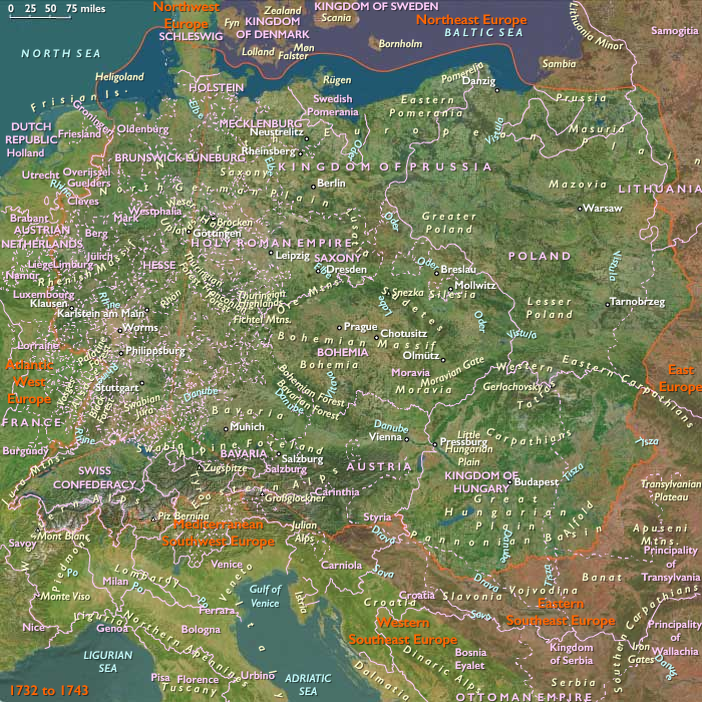
Subregions
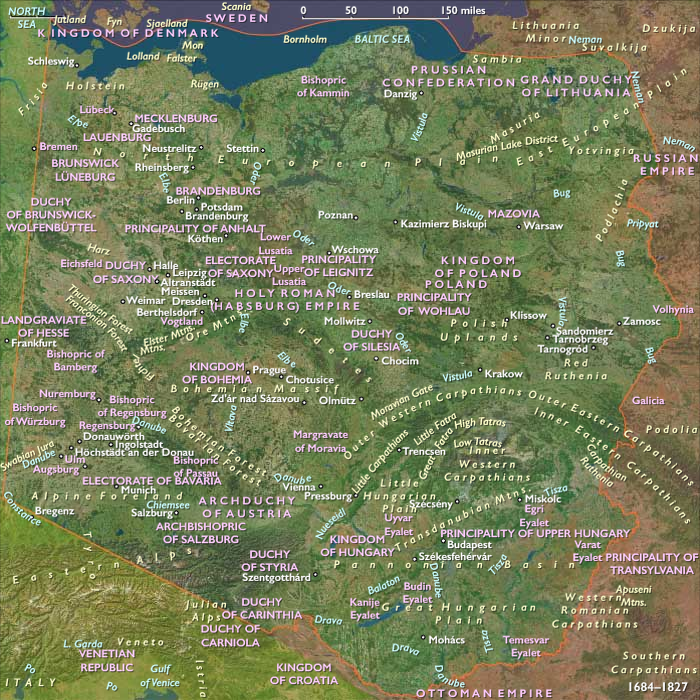
Years: 1733 - 1733
Locations
People
- André-Hercule de Fleury
- Anna of Russia
- Augustus II the Strong
- Augustus III of Poland
- Charles VI, Holy Roman Emperor, King of the Romans (King of Germany)
- Eugene of Savoy
- Frederick William I of Prussia
- Louis XV of France
- Maria Theresa
- Michał Serwacy Wiśniowiecki
- Philip V of Spain
- Stanisław Leszczyński
Groups
- Milan, Archdiocese of
- Austria, Archduchy of
- Lorraine, (second) Duchy of
- Saxony, Electorate of
- Naples, Kingdom of
- Parma and Piacenza, Duchies of
- Courland and Semigallia, Duchy of
- Tuscany, Grand Duchy of
- Polish-Lithuanian Commonwealth (Commonwealth of the Two Nations)
- France, (Bourbon) Kingdom of
- Habsburg Monarchy, or Empire
- Portugal, Bragança Kingdom of
- Spain, Bourbon Kingdom of
- Prussia, Kingdom of
- Sardinia, Kingdom of (Savoy)
- Russian Empire
Topics
Subjects
Regions
Subregions